
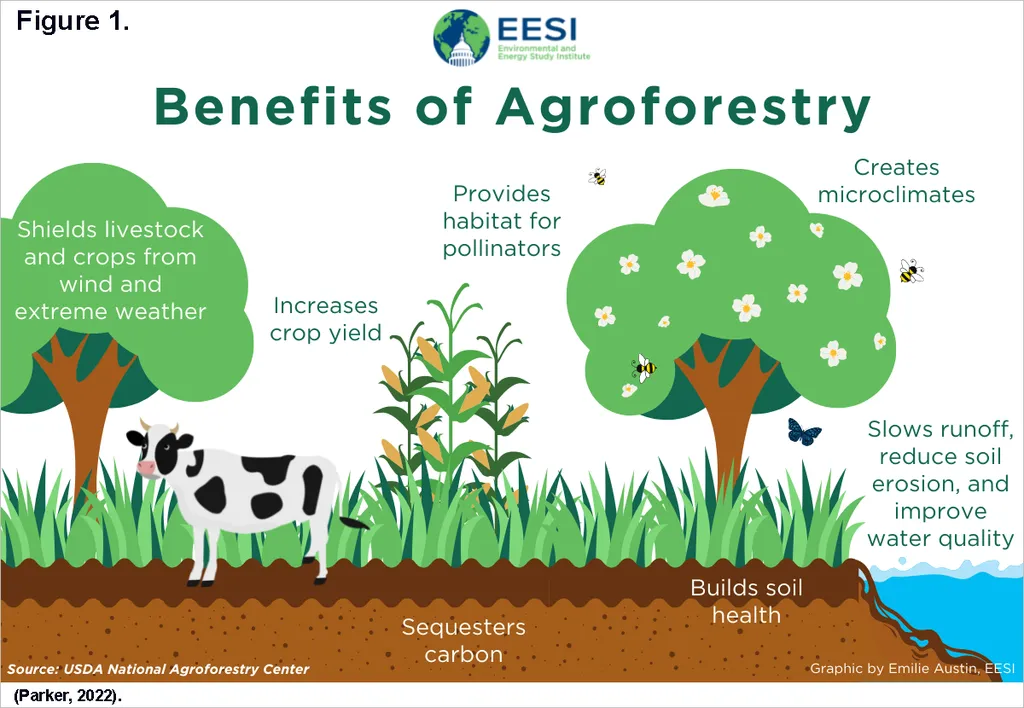
In the face of escalating climate change, particularly in semi-arid regions, farmers are grappling with dwindling crop productivity and degraded soil health. A recent systematic review published in *Discover Agriculture* offers a beacon of hope, highlighting agroforestry and integrated nutrient management (INM) as climate-smart agro-technologies that could revolutionize agriculture in these vulnerable areas. The study, led by Andrew Tapiwa Kugedera from the Department of Research and Agriculture at Morgenster Teachers College, meticulously analyzed 200 articles to uncover how these practices can mitigate climate change and bolster food security.
The research reveals that agroforestry practices such as improved fallow, biomass transfer, and alley cropping significantly enhance soil health. These methods reduce soil bulk density, increase organic matter, and improve soil structure, creating a more hospitable environment for crops. “Agroforestry trees, often legumes, play a pivotal role in improving nitrogen availability through biological nitrogen fixation and enhancing soil fertility by capturing exchangeable cations from deeper soil layers,” explains Kugedera. This not only supports plant growth but also sequesters carbon, reducing greenhouse gas emissions and mitigating climate change.
Integrated nutrient management (INM) complements these benefits by restoring soil fertility and conserving moisture, which is crucial during dry spells. By integrating agroforestry and INM, farmers can support climate-resilient agriculture, reduce the need for synthetic fertilizers, and minimize soil disturbances. “This approach not only improves crop productivity but also facilitates essential ecosystem services in dry regions,” Kugedera adds.
The commercial implications for the agriculture sector are profound. As climate change continues to threaten food security, adopting these climate-smart practices could provide a sustainable solution for farmers in semi-arid regions. By enhancing soil health and reducing reliance on synthetic inputs, these methods can lead to more resilient and productive agricultural systems. The research suggests that agroforestry and INM are key drivers of climate-smart agriculture, offering a pathway to improved crop yields and environmental sustainability.
This study could shape future developments in the field by encouraging policymakers, agricultural practitioners, and researchers to prioritize and invest in these climate-smart technologies. As the agriculture sector seeks innovative solutions to combat climate change, the findings from this review provide a compelling case for the adoption of agroforestry and INM practices. By doing so, the sector can not only enhance productivity but also contribute to global efforts in mitigating climate change and ensuring food security for future generations.