
In the ever-evolving landscape of agricultural technology, a new review published in *Discover Plants* sheds light on the transformative potential of genome editing, offering a beacon of hope for crop improvement and sustainable farming. The study, led by Omkar Maharudra Limbalkar of the ICAR-Indian Institute of Agricultural Biotechnology, delves into the intricate world of programmable site-directed nucleases (SDNs), highlighting their pivotal role in revolutionizing plant breeding.
Genome editing technologies have come a long way, evolving from the early days of Mega-Nucleases (MegNs) to the more refined Zinc Finger Nucleases (ZFNs) and Transcription Activator-like Effector Nucleases (TALENs). However, it is the CRISPR-Cas system that has truly stolen the spotlight. “CRISPR’s precision and high-throughput capability for targeted gene modification through double-strand breaks in the host genome offer unprecedented opportunities for improving crop traits,” Limbalkar explains. This precision is a game-changer, allowing scientists to make targeted changes in plant genomes with remarkable accuracy.
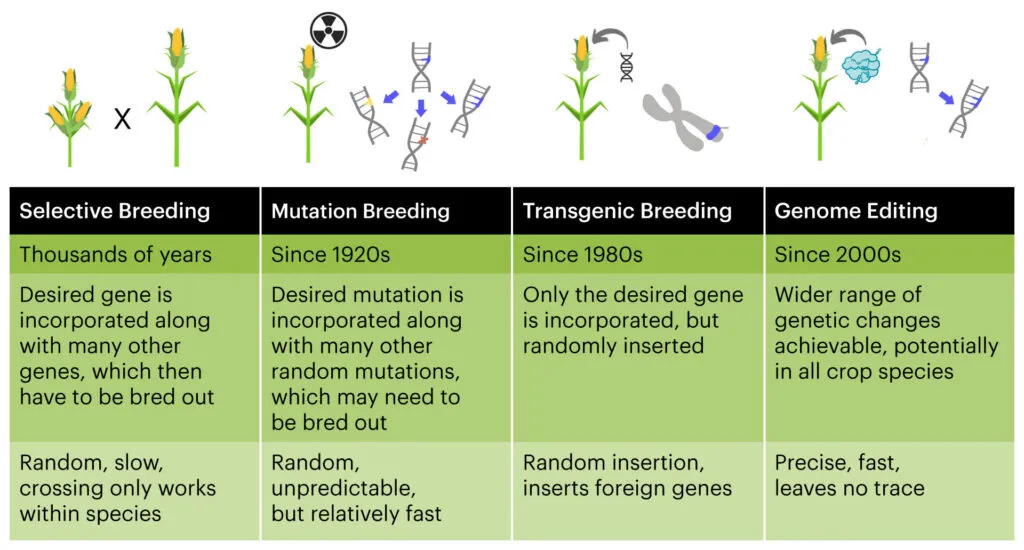
The review provides a comprehensive overview of the evolution of SDNs, tracing their progression from first-generation systems to the current CRISPR-based platforms. Each class of SDN has its unique molecular mechanisms, efficiency, and specificity, all of which contribute to the repair pathways—non-homologous end joining and homology-directed repair—that govern the editing outcomes. “The collective progress in these SDN-based technologies has transformed plant breeding from a time-consuming, random process into a precise, knowledge-driven discipline,” Limbalkar notes.
The implications for the agriculture sector are profound. Genome editing promises to accelerate the development of crops with improved traits, such as disease resistance, drought tolerance, and enhanced nutritional value. This could lead to increased yields and more resilient crops, ultimately benefiting farmers and consumers alike. “By summarizing these advances and their successful implementation across major crop species, this review underscores the immense potential of genome editing as a cornerstone for next-generation sustainable agriculture,” Limbalkar states.
As we look to the future, the continuous evolution of sequence-specific genome editing holds the key to addressing some of the most pressing challenges in agriculture. The CRISPR-Cas system, in particular, shows great promise for minimizing off-target effects and improving the efficiency of gene editing. This ongoing refinement of genome editing tools is set to shape the future of crop improvement, paving the way for a more sustainable and productive agricultural sector.
In the words of Limbalkar, “The continuous evolution of sequence-specific genome editing has brought a significant breakthrough in agricultural research.” As we stand on the brink of a new era in agriculture, the insights provided by this review offer a glimpse into the exciting possibilities that lie ahead. The journey from traditional breeding methods to the precision of genome editing is not just a scientific advancement; it is a testament to human ingenuity and our relentless pursuit of a better future for agriculture.