
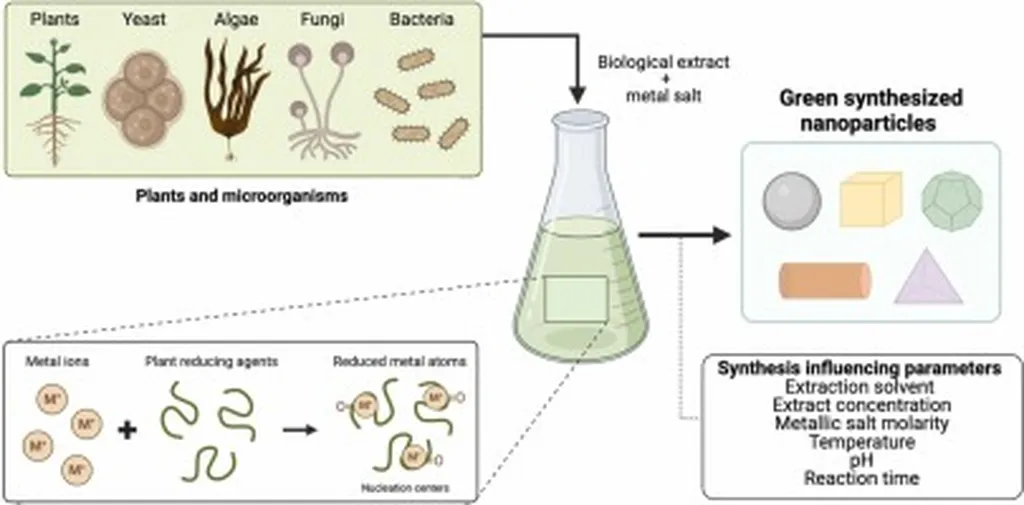
In the ever-evolving landscape of agricultural technology, a groundbreaking study published in the *Journal of Agricultural Sciences* is making waves. Researchers, led by Gülden Kılıç of Alanya Hamdullah Emin Paşa Üniversitesi, have uncovered a novel approach to nanoparticle synthesis using beneficial microorganisms commonly found in fermented foods. This method not only promises a sustainable and eco-friendly alternative to conventional synthesis techniques but also opens up a plethora of potential applications in agriculture and beyond.
The study focuses on the green synthesis of nanoparticles (NPs) using microorganisms such as *Lactobacillus acidophilus*, *Lactiplantibacillus plantarum*, *Limosilactobacillus fermentum*, *Secundilactobacillus kimchicus*, *Saccharomyces boulardii*, and *S. cerevisiae*. These microorganisms, often used as starter cultures in fermented foods, have been found to synthesize a variety of nanoparticles, including silver (Ag), selenium (Se), zinc oxide (ZnO), palladium (Pd), antimony trioxide (Sb2O3), and titanium dioxide (TiO2).
The implications for the agriculture sector are profound. “The use of beneficial microorganisms in nanoparticle synthesis presents a sustainable and eco-friendly alternative to conventional methods,” Kılıç explains. “This aligns with the principles of green synthesis, offering a clean, non-toxic route to nanoparticle production.”
The synthesized nanoparticles have shown high potential for use in drug delivery systems, agriculture, and the food industry. They exhibit antimicrobial, antioxidant, and anticancer properties, making them valuable tools in combating plant diseases and improving crop yields. The study suggests that these nanoparticles could be integrated into agricultural practices to enhance plant health and productivity, ultimately contributing to food security.
Moreover, the green synthesis of nanoparticles could revolutionize the way we approach pest management and soil health. By utilizing beneficial microorganisms, farmers can reduce their reliance on chemical pesticides and fertilizers, promoting a more sustainable and environmentally friendly approach to agriculture.
The research also highlights the need for further investigation into the advantages and disadvantages of nanoparticle synthesis and its applications. “Further research is necessary on nanoparticle synthesis, novel sources for nanoparticle synthesis, and applications in various fields,” Kılıç emphasizes. This calls for a collaborative effort between scientists, agronomists, and policymakers to explore the full potential of this innovative technology.
As the agricultural industry continues to evolve, the integration of nanotechnology offers a promising avenue for addressing some of the sector’s most pressing challenges. The study by Kılıç and her team represents a significant step forward in this direction, paving the way for a more sustainable and productive future in agriculture.
In the words of the lead author, “The potential applications of nanoparticles synthesized by beneficial microorganisms are vast and varied. This research opens up new possibilities for innovation in agriculture, food science, and beyond.” As we look to the future, the green synthesis of nanoparticles holds the key to unlocking a new era of agricultural advancements, benefiting farmers, consumers, and the environment alike.