
In the rapidly evolving world of Internet of Things (IoT) and unmanned aerial vehicles (UAVs), optimizing energy consumption is a critical challenge. A recent study published in the *Journal of Big Data* tackles this issue head-on, presenting innovative algorithms that could significantly enhance the efficiency of UAV-enabled IoT data collection systems. The research, led by Dina A. Elmanakhly of the Department of Mathematics at Suez Canal University, introduces three new variants of metaheuristic algorithms designed to minimize energy consumption in these systems.
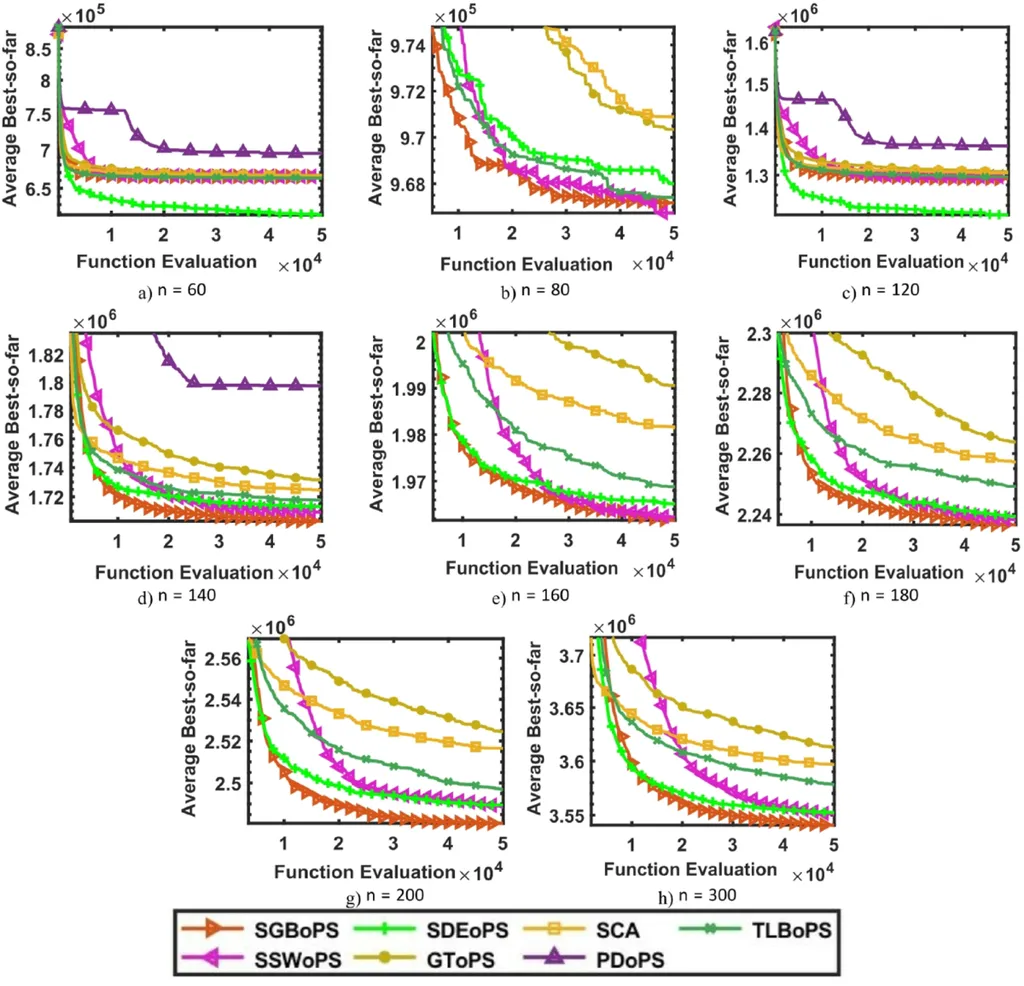
The study focuses on adapting three recent metaheuristic algorithms—the spider wasp optimizer (SWO), the gradient-based optimizer (GBO), and differential evolution (DE)—using an optimized population size (oPS)-based encoding mechanism. The new variants, named SSWoPS, SGBoPS, and SDEoPS, incorporate a sequential replacement mechanism that improves the algorithms’ ability to explore and exploit during optimization. This enhancement reduces the likelihood of getting stuck in local optima and accelerates convergence, leading to more efficient energy consumption.
“Our goal was to develop algorithms that could handle the complexities of UAV-enabled IoT data collection systems more effectively,” said Elmanakhly. “By improving the population size mechanism and replacing stop points sequentially, we’ve managed to achieve significant improvements in performance.”
The proposed algorithms were tested and validated at small, medium, and large scales using sixteen instances with varying numbers of IoT devices, ranging from 60 to 1100. The results were compared against thirteen competing algorithms, and the new variants showed superior performance in most instances. Notably, SGBoPS outperformed all comparable algorithms, followed by SSWoPS and SDEoPS.
The implications of this research are far-reaching, particularly for sectors like precision agriculture, where UAVs are increasingly used for data collection and monitoring. “Efficient energy consumption is crucial for the scalability and sustainability of UAV-enabled IoT systems,” Elmanakhly explained. “Our algorithms can help reduce operational costs and extend the lifespan of UAVs, making them more viable for large-scale agricultural applications.”
The study’s findings suggest that the enhanced oPS-based mechanism can significantly improve the performance of optimization algorithms in minimizing energy consumption in UAV-enabled IoT data collection systems. This could pave the way for more efficient and cost-effective data collection methods in various applications, including smart cities, disaster response, and precision agriculture.
As the field of agritech continues to evolve, the development of robust optimization algorithms will play a pivotal role in shaping future advancements. The research led by Elmanakhly and published in the *Journal of Big Data* offers a promising step forward, highlighting the potential of innovative metaheuristic algorithms to address critical challenges in UAV-enabled IoT systems.