
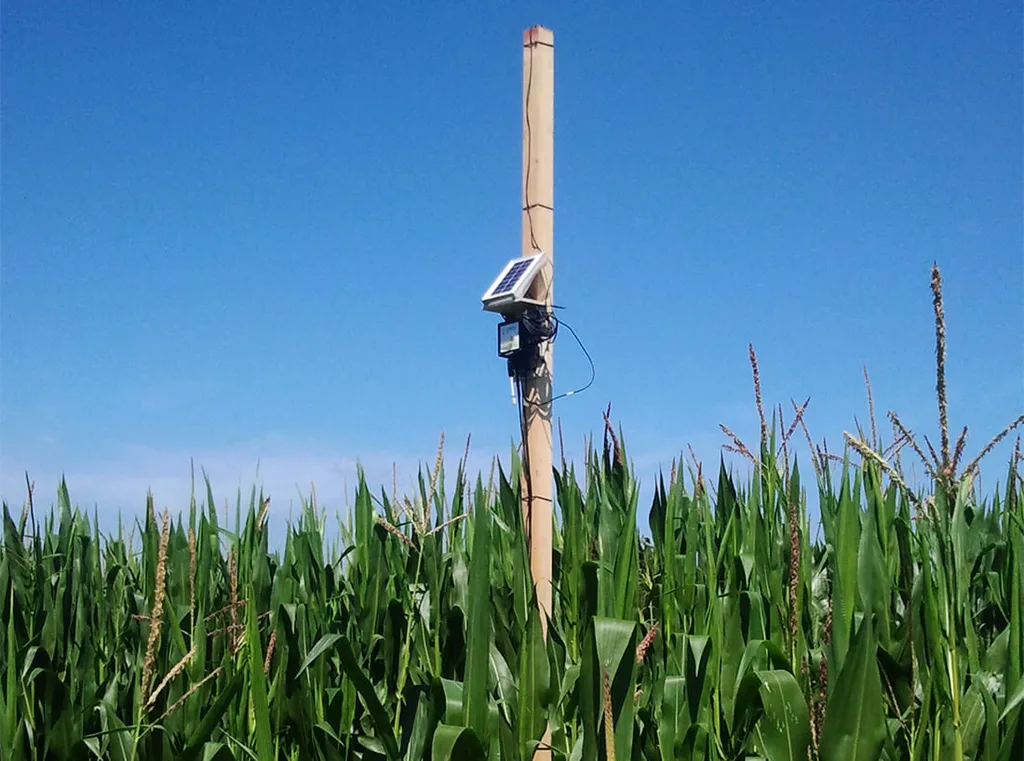
In the ever-evolving landscape of precision agriculture, researchers have developed a novel tool that could revolutionize how farmers monitor and respond to abiotic stresses in maize. A recent study published in *Plant Methods* introduces a wireless leaf movement sensor system (WLMS) that promises early detection of environmental stresses, potentially saving crops before damage becomes irreversible.
Abiotic stresses—such as drought, temperature extremes, and salinity—are silent saboteurs in agriculture, stealthily reducing crop yield and quality. Traditional methods of detecting these stresses often rely on visual inspections or destructive sampling, which can lag behind the actual onset of stress. The WLMS, however, offers a non-invasive, real-time solution. By attaching a lightweight inertial measurement unit (IMU) to maize leaves, the system tracks subtle changes in leaf movement, which can indicate stress before visible symptoms appear.
“The IMU is designed to be lightweight and flexible, allowing it to attach seamlessly to the leaves without causing any damage,” explains lead author Xu Zhang from the College of Mechanical and Electronic Engineering at Shandong Agricultural University. “This flexibility ensures that the sensor doesn’t interfere with the natural movement of the leaves, providing accurate and reliable data.”
The system’s real-time data transmission and analysis capabilities are particularly noteworthy. The IMU collects high-resolution data (with an error margin of just ±0.25°) and transmits it wirelessly to a host computer. The data is then analyzed using linear fitting techniques to extract movement characteristics unique to stressed plants. According to the study, the WLMS can detect the presence of abiotic stress within a day and identify the specific type of stress within 5–7 days—offering a crucial 2-day lead time compared to other non-destructive methods like RGB imaging and hyperspectral analysis.
For the agriculture sector, the implications are profound. Early detection of abiotic stresses means farmers can take timely corrective actions, such as adjusting irrigation schedules, applying protective treatments, or modifying planting strategies. This proactive approach could significantly mitigate crop losses and improve overall yield quality, ultimately enhancing farm profitability.
Beyond maize, the technology holds promise for other crops as well. The adaptability of the WLMS to different plant species could make it a versatile tool in the precision agriculture toolkit. “This system has the potential to be a game-changer in how we monitor plant health,” Zhang adds. “By providing early warnings, it allows farmers to make informed decisions that can save their crops and improve sustainability.”
As the agriculture industry continues to embrace technology-driven solutions, the WLMS represents a significant step forward in the quest for smarter, more efficient farming practices. With further refinement and commercialization, this innovative sensor system could become a staple in modern agriculture, helping farmers stay one step ahead of environmental challenges.