
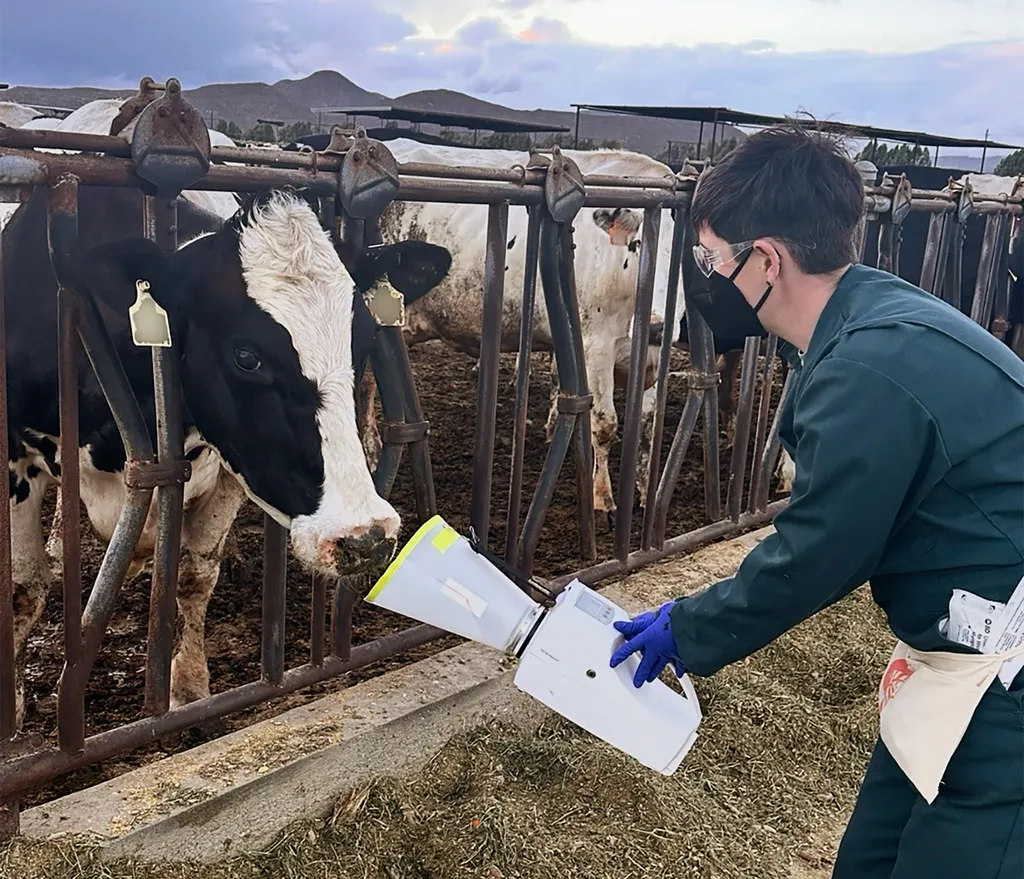
In the heart of intensive dairy farming, an invisible world thrives—one of bacteria, floating in the air, potentially impacting both animal and human health. A recent study published in *Frontiers in Microbiology* has shed light on this microbial ecosystem, revealing its complexity and the environmental factors that shape it. The research, led by Qianqian Zhang from the School of Chemistry and Biological Engineering at the University of Science and Technology Beijing, employed third-generation sequencing to analyze airborne bacteria in different zones of cattle farms, offering insights that could reshape how we approach livestock farming and public health.
The study identified a diverse range of bacterial phyla, with Firmicutes and Proteobacteria being particularly abundant. These include genera like Staphylococcus, Acinetobacter, Enterococcus, and Bacillus, as well as an unidentified family within Enterobacteriaceae. These bacteria are known to be associated with various infections and chronic diseases, highlighting the potential health risks posed by bacterial bioaerosols in intensive dairy farms.
“Understanding the microbial communities in these environments is crucial for developing targeted interventions to mitigate these risks,” Zhang explained. The study found that environmental factors, particularly ultraviolet (UV) radiation and global horizontal irradiance (GHI), significantly influence the distribution of microbial species. This finding could pave the way for innovative strategies to control and manage bacterial populations in livestock farming environments.
The research also revealed that the alpha diversity—the variety of different species within a particular area or ecosystem—was highest in samples related to manure management, such as fermenting manure, fresh manure, and piled-up manure after fermentation. This suggests that waste management areas could be hotspots for microbial diversity, potentially influencing the overall microbial landscape of the farm.
Moreover, the study found that the relative abundance of the Kocuria genus was significantly different between the waste management area and the milking parlor. This could have implications for the design and management of different farm zones, with targeted interventions potentially reducing the spread of harmful bacteria.
The commercial impacts of this research are substantial. By understanding the microbial ecosystems in livestock farming environments, farmers and agribusinesses can develop strategies to improve animal health, reduce disease transmission, and enhance overall productivity. This could lead to more sustainable and efficient farming practices, benefiting both the agriculture sector and public health.
As we look to the future, this research underscores the importance of integrating advanced sequencing technologies and environmental science in agriculture. It opens up new avenues for exploring the complex interactions between microbes, animals, and their environments, ultimately shaping the future of livestock farming and public health.
In the words of Qianqian Zhang, “This is just the beginning. There’s so much more to discover and understand about these microbial ecosystems, and the potential for improving both animal and human health is immense.” With further research and innovation, we can harness this knowledge to create healthier, more sustainable farming environments for all.