
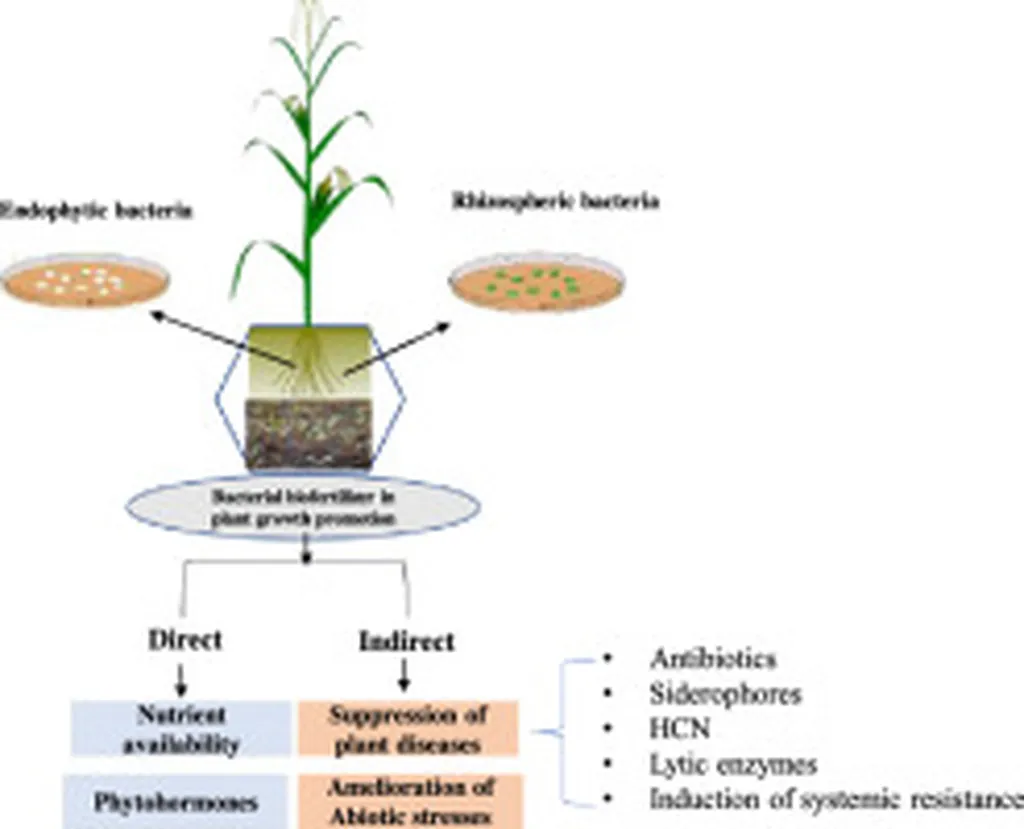
In the quest for sustainable agriculture, researchers have been exploring innovative solutions to combat plant diseases and enhance crop growth. A recent study published in the *Journal of Crop Protection* offers promising insights into the use of biofertilizers as a viable alternative to chemical treatments for managing Rhizoctonia root rot in bean plants. The research, led by Nahid Moarrefzadeh from the Department of Plant Protection at Razi University in Iran, investigates the efficacy of mealworm frass, mycorrhiza, and vermicompost in controlling Rhizoctonia solani, a pathogen that significantly impacts bean plant yields.
The study found that applying these biofertilizers, either individually or in combination, reduced disease severity and incidence, with the combination of mealworm frass and vermicompost showing the most significant results. “The combination of mealworm frass and vermicompost had the best effect on both disease severity and incidence,” Moarrefzadeh noted. This finding is particularly encouraging for farmers who have long relied on chemical treatments, which can have detrimental environmental impacts.
Beyond disease control, the biofertilizers also positively influenced the growth parameters of bean plants. Treatments increased dry root weight, fresh root and foliage weight, and root length. Notably, the combination of mealworm frass and vermicompost, as well as mycorrhiza and vermicompost, led to the highest growth in foliage parameters and root length. “The highest growth of foliage parameters, root length, and fresh and dry root weight was observed in the combination treatments,” Moarrefzadeh added.
The study also highlighted the importance of mycorrhizal colonization, with the highest colonization rates observed in treatments involving mycorrhiza and vermicompost. This suggests that the synergistic effects of these biofertilizers could be key to enhancing plant health and resilience.
The implications for the agriculture sector are substantial. As the demand for sustainable and eco-friendly farming practices grows, biofertilizers offer a promising alternative to chemical treatments. “The tested biofertilizers and their combinations could be considered as promising tools for reducing the use of chemicals and enhancing sustainable agriculture and disease management,” Moarrefzadeh stated.
While the study provides a strong foundation, further research is needed to determine the optimal timing and application rates for these biofertilizers in field experiments. Nonetheless, the findings offer a glimpse into the future of agriculture, where sustainable practices and innovative solutions could revolutionize crop protection and management.
As the agriculture sector continues to evolve, the integration of biofertilizers into farming practices could not only improve crop yields but also contribute to a healthier environment. The research led by Moarrefzadeh, published in the *Journal of Crop Protection*, underscores the potential of these biofertilizers and sets the stage for future developments in sustainable agriculture.