
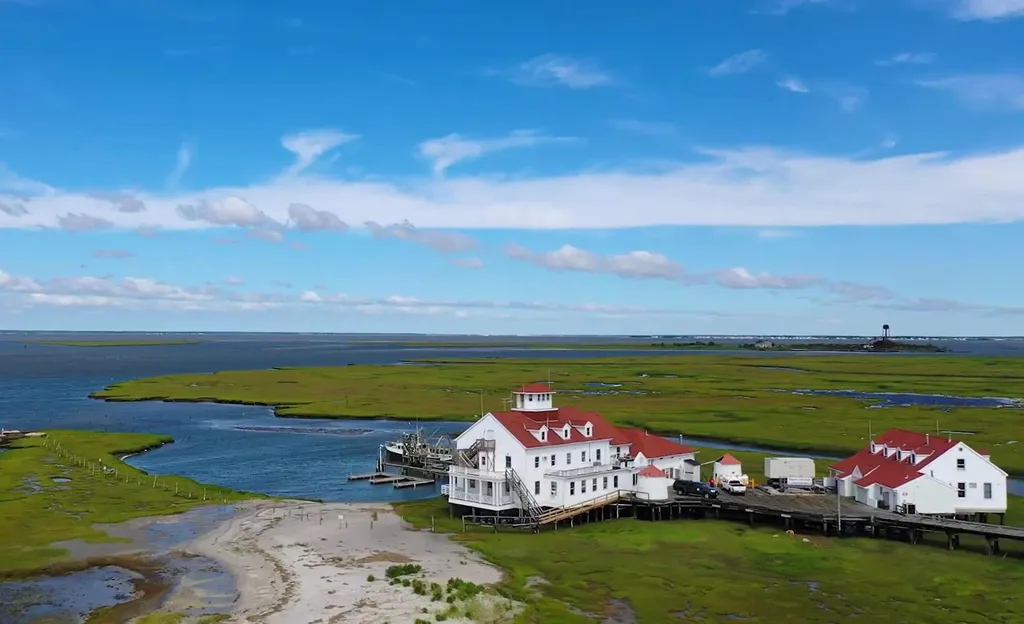
Nestled in the coastal waters of New Jersey, the Rutgers Marine Field Station stands as a testament to both the beauty of marine ecosystems and the relentless march of climate change. Researchers at the station are on the front lines, documenting the impacts of rising sea levels, a phenomenon that will eventually force them to abandon the facility they have long called home. This poignant scenario is captured in the film “Marine Field Station: THE RETREAT,” directed by Academy Award-winning filmmaker Thomas Lennon, in collaboration with a team of Rutgers University students.
The film showcases the serene and unspoiled marshland that surrounds the station, providing a stark contrast to the looming threat of sea level rise. The researchers have turned their predicament into an opportunity, using the station’s unique position to study the transformation of the marsh and its ecosystem. Fish ecologist Thomas Grothues explains, “We can study that transformation of the marsh as it happens, right here, until we have to let [the station] go.” The goal is to document the changes and withdraw gracefully while gaining valuable insights.
The implications of rising sea levels extend far beyond the confines of the Rutgers Marine Field Station, particularly for the agriculture sector and investors. Coastal agricultural lands are particularly vulnerable to sea level rise, which can lead to saltwater intrusion, soil salinization, and habitat loss. These changes can severely impact crop yields and the viability of farmland, posing significant challenges for farmers and the broader agricultural industry.
For investors, the situation presents both risks and opportunities. On one hand, the degradation of coastal farmland could lead to financial losses for those invested in agriculture. On the other hand, there is a growing need for innovative solutions to mitigate the effects of climate change. Investments in sustainable agriculture practices, such as salt-tolerant crop varieties and improved water management systems, could yield long-term benefits. Additionally, there is potential for investment in research and development aimed at understanding and adapting to the changing environment.
The Rutgers Marine Field Station’s experience underscores the importance of proactive measures in the face of climate change. As researchers continue to document the transformation of the marsh, their work provides valuable data that can inform policy decisions and agricultural practices. The station’s retreat serves as a reminder of the need for resilience and adaptation in the face of an evolving climate, a lesson that resonates across various sectors, including agriculture and investment.