
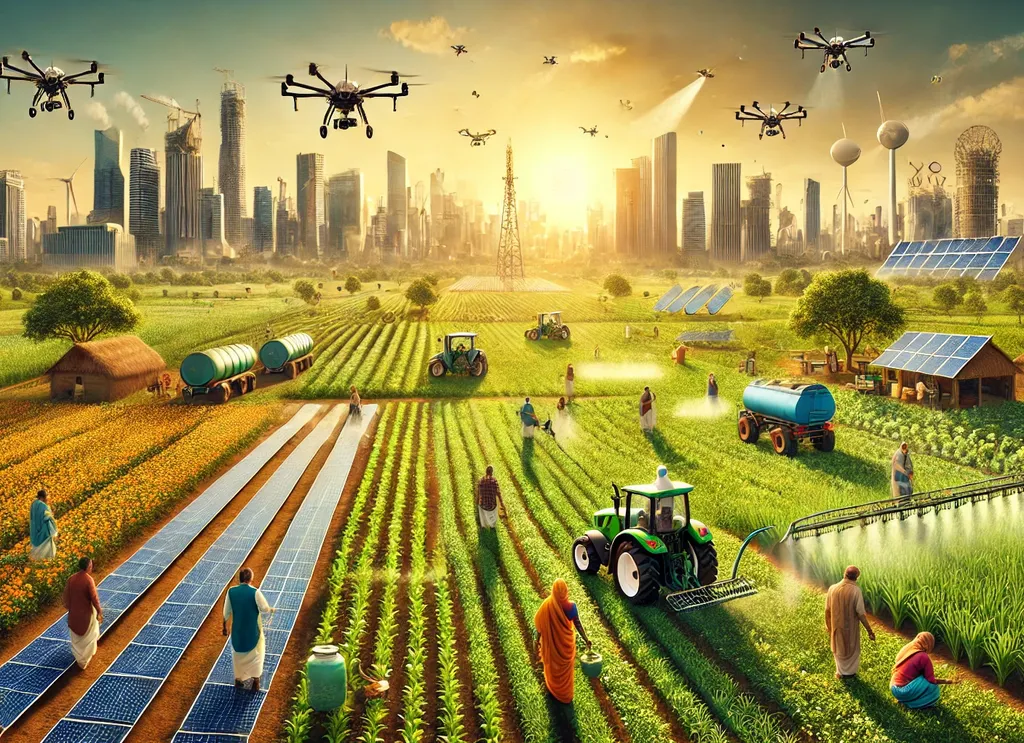
The Government of India’s vision for Viksit Bharat 2047, a developed India by the time the nation celebrates its centenary of independence, is taking shape with a multi-pronged approach that includes economic growth, social progress, environmental responsibility, and transparent governance. Central to this vision is the empowerment of India’s youth, who are expected to lead the nation’s progress. The Prime Minister’s call for ideas from young people through the “Ideas from Youth for Viksit Bharat 2047” initiative underscores the importance of engaging the largest demographic group in the country’s developmental journey.
In the realm of agriculture, affordable agri-tech stands out as a critical component of this vision. With agriculture supporting a significant portion of India’s population, integrating advanced yet affordable technologies is essential for boosting productivity, protecting the environment, and ensuring sustainable income for farmers. However, the high cost of machinery, limited rural infrastructure, and fragmented markets often pose challenges, particularly for small and marginal farmers who constitute the majority.
Public-Private Partnerships (PPPs) combined with shared equipment and service-based models offer a promising solution to bridge these gaps. These models make technology more accessible, lower farming costs, and strengthen rural economies. The scope of affordable agri-tech in India is vast, encompassing mechanisation, digital agriculture, climate-resilient tools, and improved supply chains. Community machinery banks, custom hiring centres, digital advisory platforms, and shared cold storage units are just a few examples of how technology can be democratised to benefit farmers.
The objectives behind promoting affordable agri-tech through PPPs align directly with the developmental goals of a future-ready India. These efforts aim to provide universal access to modern tools, reduce financial stress on farmers, improve farm profitability, and support greater market integration. Strengthening rural infrastructure, incubating innovation, and building digital agriculture ecosystems are additional objectives that empower farmers with knowledge, tools, and real-time data insights. Climate resilience is a key priority, with accessible technologies designed to help farmers cope with risks such as droughts, floods, and pest outbreaks. These models also create new employment and entrepreneurship opportunities for rural youth, enabling them to manage drone operations, run soil-testing services, maintain IoT devices, and support digital advisory centres.
Key developments highlight the transformative potential of PPP-driven agri-tech adoption. Custom hiring centres and shared equipment hubs allow farmers to utilise expensive machinery without bearing ownership costs, reducing labour dependency and enhancing efficiency. Drone services for spraying, soil mapping, and crop monitoring have become increasingly accessible through rental-based models. Digital advisory services that deliver location-specific guidance help farmers make timely decisions on irrigation, fertilisation, and pest control. IoT-based irrigation systems, moisture sensors, and automated pumps contribute to efficient water use, while shared cold storage units and post-harvest facilities significantly reduce losses and improve crop quality. Financing platforms integrated with government subsidies, simplified digital loans, and credit guarantees further support farmers in adopting new technologies. Skill-building programmes run jointly by government agencies, private companies, and educational institutions ensure that farmers and rural youth are well-trained to use and manage emerging technologies. The rise of agri-tech startups, supported by favourable policies and investment incentives, is driving continuous innovation across robotics, biotechnology, data analytics, and sustainable farming practices.
Looking ahead, the future of affordable agri-tech in India holds immense promise. A nationwide digital and physical infrastructure for agriculture is likely to take shape, supported by robust PPP networks that ensure reliable connectivity, data availability, and equipment access even in remote regions. Precision farming tools such as drones, sensors, and automated systems are expected to become widespread and affordable through subscription or cooperative-based models. Rural entrepreneurship will grow as young people establish service enterprises offering drone operations, equipment rentals, crop advisory, or soil analytics. Climate-resilient farming will become the norm through intelligent forecasting, micro-irrigation systems, and climate-adapted crop varieties. With technology-enabled supply chains, better logistics, and transparent traceability tools, India’s agricultural exports may strengthen significantly. Farmer Producer Organisations and cooperatives will likely play a major role in adopting shared machinery and digital tools, enhancing bargaining power and improving income stability. Supportive policies, investor facilitation, and innovation-friendly regulations will further accelerate the adoption of affordable agri-tech across the country.
Promoting affordable agri-tech through Public–Private Partnerships and shared equipment models is essential for realising the vision of Viksit Bharat 2047. These approaches make advanced technology accessible to all farmers, reduce production costs, build rural resilience, and enhance agricultural sustainability. By combining government policy support, private-sector innovation, and grassroots participation, India can create a modern, productive, and inclusive agricultural ecosystem. Empowering farmers with cost-effective, efficient, and environmentally sustainable solutions will play a central role in transforming India into a developed nation by 2047