
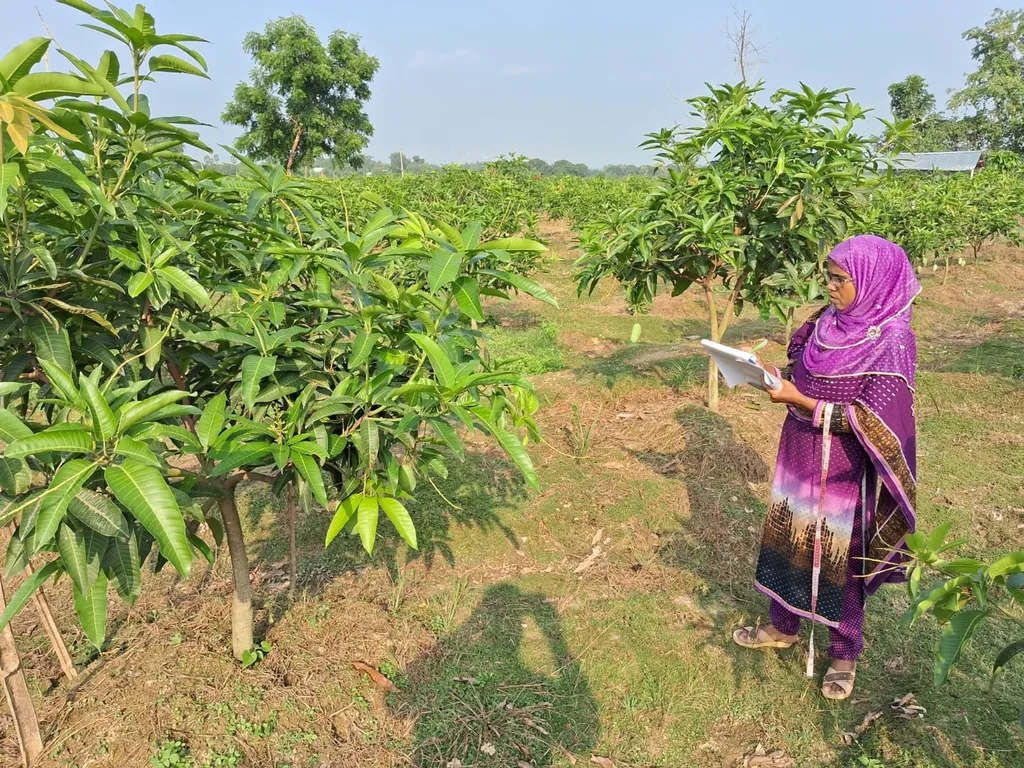
In the heart of Bangladesh, where the pressures of feeding a growing population meet the challenges of declining soil health, a new study offers a beacon of hope for sustainable agriculture. Published in the Turkish Journal of Agriculture: Food Science and Technology, the research led by Mahmuod Abubakar Bashir from the Department of Agroforestry and Environment at HSTU in Dinajpur, Bangladesh, explores how intensive agroforestry systems could revolutionize food productivity and soil management.
The study delves into the potential of high-density, multispecies cropping systems, which not only boost crop yields but also restore soil fertility and enhance ecosystem services. “Intensive agroforestry systems, such as homestead gardening and multi-storey cropping, are not just about growing more food; they’re about creating a sustainable ecosystem that benefits both the environment and the farmer,” Bashir explains. These systems contribute to nutrient cycling, biodiversity conservation, and climate resilience, offering a holistic approach to agriculture that goes beyond traditional methods.
One of the critical issues addressed in the research is the widespread use of chemical fertilizers, which, while initially boosting yields, degrade soil quality over time. The study advocates for an integrated nutrient management (INM) framework that combines organic and biofertilizers. This approach improves soil structure, increases nutrient availability, and supports long-term agricultural productivity. “By integrating organic and biofertilizers, we can create a more sustainable and productive agricultural system that benefits both the environment and the farmer,” Bashir notes.
The commercial impacts of this research are significant. For the agriculture sector, adopting intensive agroforestry systems could mean higher yields, improved soil health, and greater resilience to climate change. This, in turn, can lead to increased profitability and food security. The study also emphasizes the need for policy interventions to promote balanced fertilizer use, incentivize sustainable practices, and enhance extension services. These policy changes could pave the way for widespread adoption of sustainable agriculture practices, benefiting both farmers and consumers.
The research also highlights the importance of local case studies and regional models in understanding the potential of agroforestry. By learning from successful examples, farmers and policymakers can implement strategies that are tailored to their specific needs and conditions. This localized approach ensures that the benefits of agroforestry are maximized and sustainable in the long term.
As the world grapples with the challenges of feeding a growing population while protecting the environment, the insights from this study offer a promising pathway forward. By embracing intensive agroforestry and diversified fertilizer management, Bangladesh and other countries can achieve sustainable food production, ecological balance, and improved rural livelihoods. The research led by Mahmuod Abubakar Bashir, published in the Turkish Journal of Agriculture: Food Science and Technology, provides a roadmap for a more sustainable and productive future for agriculture.