
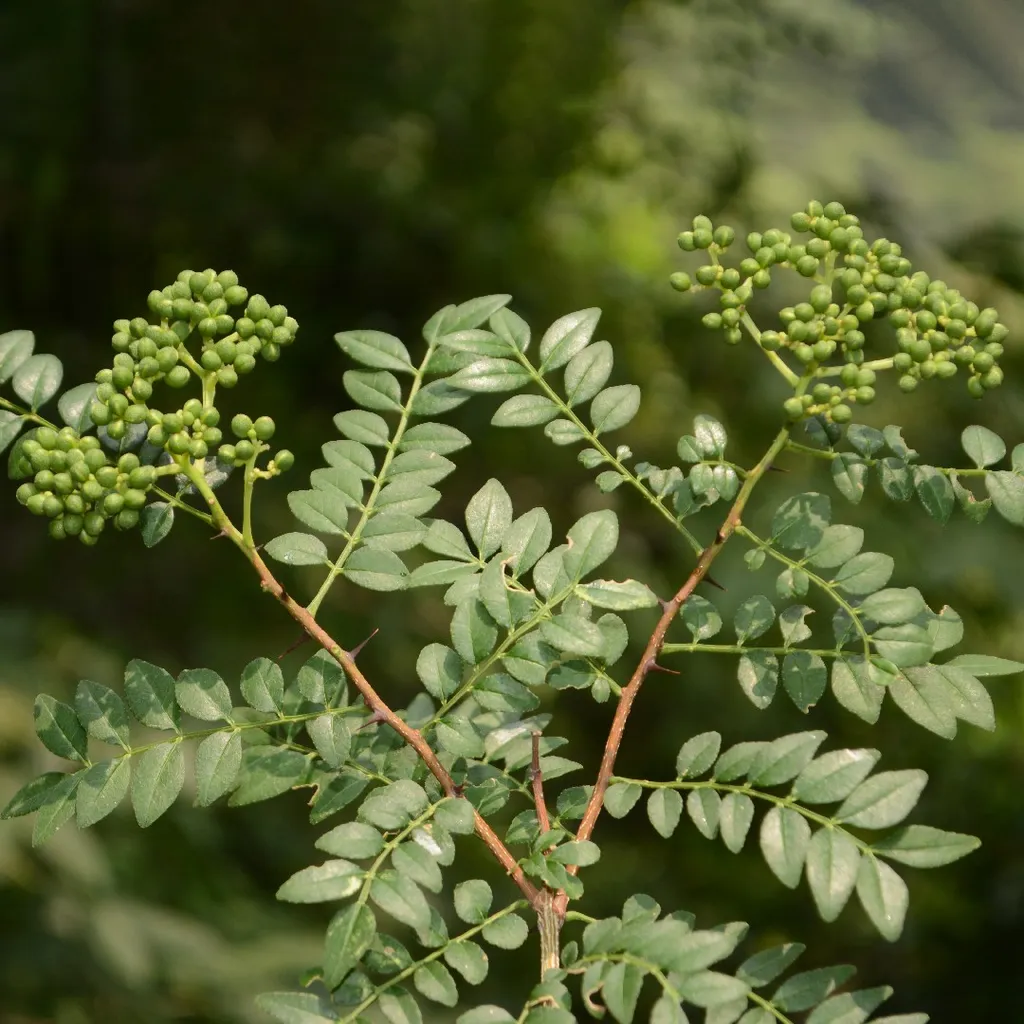
In the heart of China, researchers have unlocked new insights into the diverse world of prickly ash, a plant with significant commercial potential in the horticulture and agriculture sectors. A recent study published in the *European Journal of Horticultural Science* has systematically examined the morphological variations in foliage characteristics across prickly ash germplasm collections, shedding light on how these traits could influence future cultivation and breeding strategies.
The study, led by Rui He from the College of Smart Agriculture at Chongqing University of Arts and Sciences, evaluated fifteen leaf traits of 36 prickly ash germplasm resources. The findings revealed substantial variability across all measured foliar characteristics, with an average variation coefficient of 19.80% per trait. This diversity is not just a matter of botanical interest; it has profound implications for the agricultural industry.
“Leaf dimensions, such as length and surface area, emerged as pivotal diagnostic parameters for evaluating prickly ash germplasm,” He explained. This discovery could revolutionize how farmers and breeders select and cultivate prickly ash, potentially leading to more resilient and productive varieties.
The research employed cluster analysis and principal component analysis (PCA) to categorize the specimens into two primary clusters. The first cluster, characterized by elongated, broader, and more slender petioles, reduced leaf surface area, and lower foliar water content, was identified as red prickly ash varieties. These morphological adaptations, particularly compact leaf size and lower moisture retention, are likely to enhance cold tolerance, making them ideal for cultivation in colder climates.
On the other hand, the second cluster, comprising green prickly ash varieties, exhibited thicker, expanded foliage with greater surface area, elevated chlorophyll concentrations, and a reduced chlorophyll a/b ratio. These traits suggest improved light capture efficiency and environmental adaptability, which could be beneficial for cultivation in diverse and challenging environments.
The implications for the agriculture sector are significant. Understanding these phenotypic divergences can help in developing new cultivars tailored to specific environmental conditions, thereby enhancing crop resilience and productivity. “This study contributes significantly to advancing the understanding of genetic diversity within prickly ash species and enriches the theoretical framework of plant phenotypic trait research,” He noted.
The methodological approach and technical strategies used in this research offer valuable insights and references for analogous studies on other plant species. This could pave the way for broader applications in horticulture and agriculture, ultimately benefiting farmers and consumers alike.
As the world grapples with climate change and the need for sustainable agriculture, studies like this one are crucial. They provide the foundational knowledge necessary for developing crops that can withstand environmental stresses and thrive in various conditions. The research not only advances our understanding of prickly ash but also sets a precedent for future studies in plant phenotypic trait research, potentially shaping the future of agriculture.