
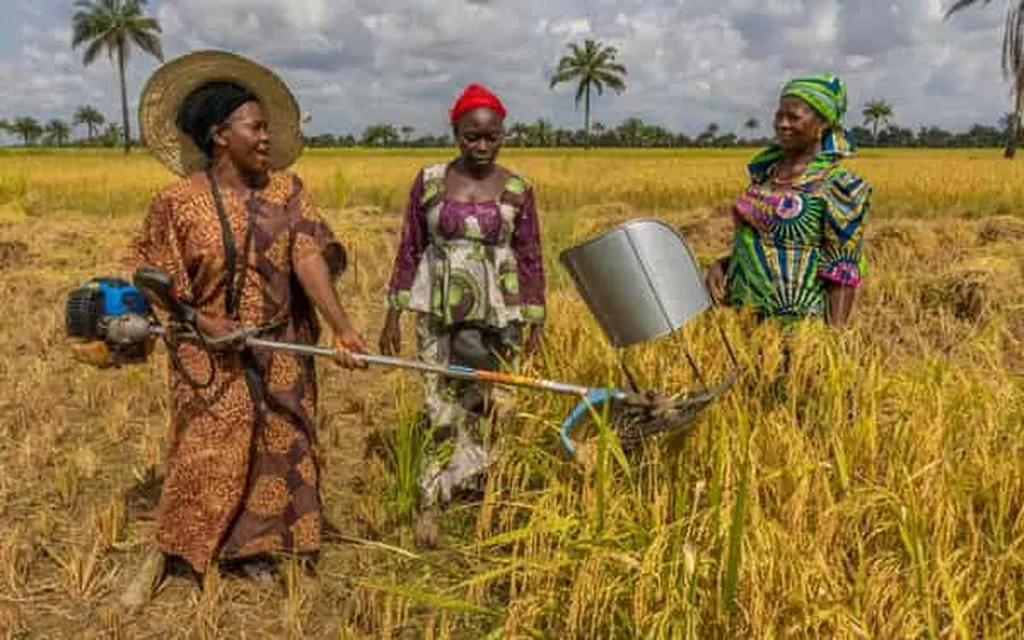
In the lush, green landscapes of Ebonyi State, Nigeria, a quiet revolution is taking root, one rice paddy at a time. A recent study published in the Torkwase Journal of Agricultural Research has shed light on the intricate communication networks that are driving the adoption of Climate-Smart Agriculture (CSA) among rice farmers, with significant implications for the agriculture sector.
The study, led by Sunday Samuel Ameh from the Department of Mass Communication at the University of Nigeria, Nsukka, reveals that farmers are not just tilling the soil; they are also cultivating knowledge through a web of communication channels. Traditional community leaders and radio programs are the most trusted sources of information, with mean effectiveness scores of 3.94 and 3.61, respectively. However, the most effective communication channel, by a significant margin, is peer-to-peer networking, with a mean score of 4.51.
“This study underscores the power of social networks in driving agricultural innovation,” Ameh said. “Farmers are not isolated entities; they are part of a vibrant community that shares knowledge and experiences.”
The commercial impacts of these findings are substantial. By understanding and leveraging these communication networks, agricultural extension services can more effectively promote CSA practices, leading to increased productivity and sustainability. The study found that network size, diversity, and interaction frequency all positively correlate with CSA adoption, suggesting that larger, more diverse networks with frequent interactions are more likely to embrace new practices.
However, the study also highlights some challenges. Digital platforms and printed materials, while promising, have shown limited impact, particularly among older farmers. This digital divide could hinder the widespread adoption of CSA practices if not addressed.
Looking ahead, this research could shape future developments in agricultural extension services. By prioritizing farmer-to-farmer networks and local demonstration sites, and providing targeted support through traditional community leaders, extension services can more effectively promote CSA adoption. Moreover, bridging the digital divide could unlock the potential of digital platforms in disseminating agricultural knowledge.
As the world grapples with the challenges of climate change, the insights from this study offer a beacon of hope. By harnessing the power of communication networks, we can empower farmers to adopt climate-smart practices, ensuring sustainable rice production for generations to come.