
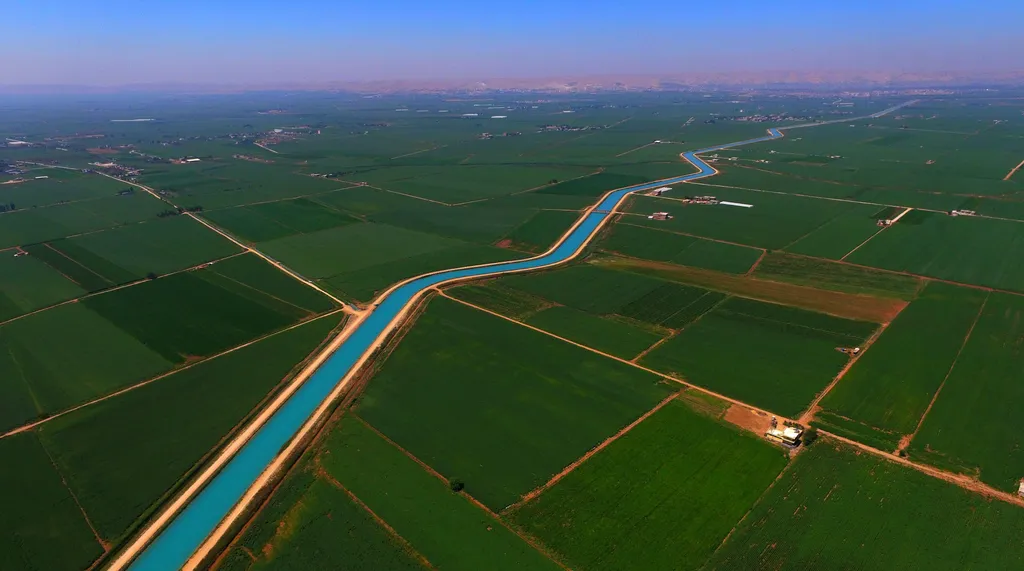
In the heart of Türkiye’s semi-arid landscapes, a silent revolution is taking place, one that could redefine the future of agriculture. A recent study published in the *Turkish Journal of Agriculture: Food Science and Technology* has shed light on how nutrient use efficiency (NUE) in crops is being shaped by a complex interplay of climatic, economic, and irrigation-related factors. The research, led by Can Mavruk from Nigde Omer Halisdemir University, offers a nuanced understanding of how these elements interact, with significant implications for the agricultural sector.
The study, which spans nearly three decades (1994-2020), reveals a fascinating shift in the drivers of nutrient efficiency. Before 2004, rainfall variability and fertilizer prices were the primary influencers. However, post-2004, the expansion of national irrigation infrastructure has altered the dynamics, with irrigation system performance and crop diversification emerging as key players.
“This structural change is significant,” Mavruk explains. “It indicates that the expansion of irrigation has fundamentally changed the production-environment relationship in Turkish agriculture.” This shift is not merely academic; it has profound commercial implications. By understanding these drivers, farmers and policymakers can make informed decisions that enhance nutrient management strategies, ultimately leading to more sustainable and profitable agricultural practices.
The study’s findings suggest that the expansion of irrigation has reduced the sector’s dependency on rainfall, a critical factor in semi-arid regions. This reduction in risk could attract more investment, boost crop yields, and diversify production. Moreover, by optimizing nutrient use, farmers can reduce input costs and minimize environmental impact, a win-win for both the industry and the planet.
Looking ahead, this research could shape future developments in several ways. For instance, it underscores the need for continued investment in irrigation infrastructure and technology. It also highlights the importance of monitoring and managing fertilizer prices, as they remain a significant factor in nutrient use efficiency.
Furthermore, the study’s quantitative methods offer a robust framework for future research. By applying similar methodologies to other regions or crops, researchers can gain a deeper understanding of the complex interplay of factors influencing nutrient efficiency. This, in turn, can inform policy design and rural planning, fostering more sustainable and resilient agricultural systems.
In the words of Mavruk, “This research is just the beginning. It opens up new avenues for exploration and offers valuable insights for stakeholders in the agricultural sector.” As Türkiye continues to navigate the challenges and opportunities of semi-arid agriculture, this study serves as a beacon, guiding the way towards a more sustainable and prosperous future.