
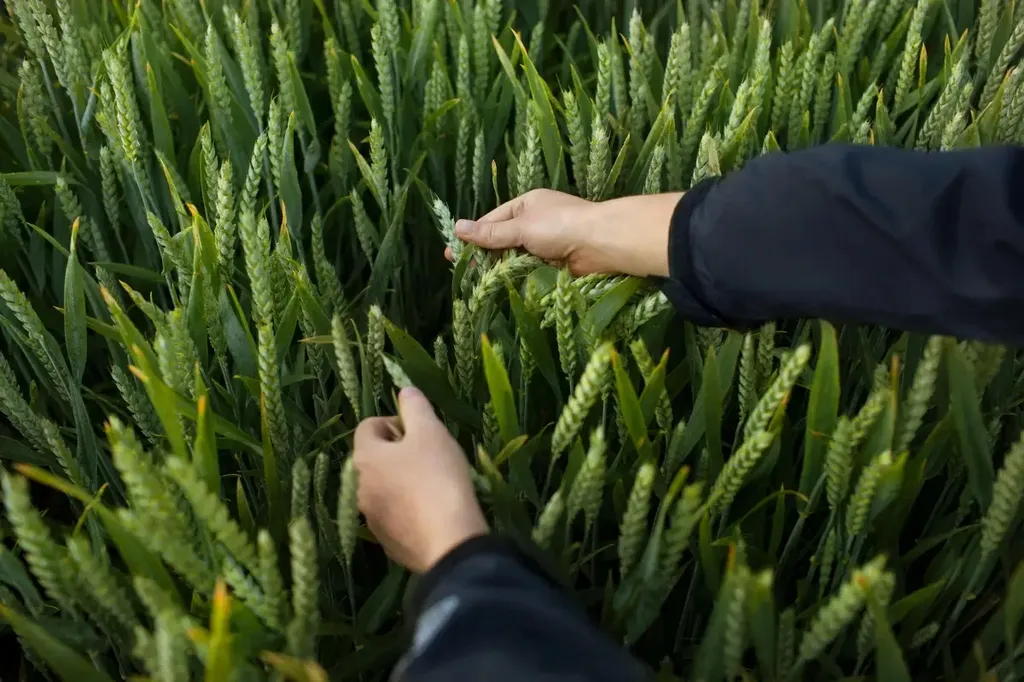
In the ever-evolving landscape of agricultural technology, researchers are constantly seeking innovative solutions to enhance crop yields and combat the persistent challenge of weed infestation. A recent study published in *Weed Technology* offers promising insights into the efficacy of herbicides for weed control in wheat production, with significant implications for the agriculture sector.
The study, led by Leandro Galon, an Associate Professor in the Department of Agronomy at the Federal University of Fronteira Sul in Brazil, evaluated the selectivity and efficacy of various herbicides applied alone or in combination for controlling major weed species infesting wheat. The research, conducted over two years using a randomized complete block design, provides valuable data on the performance of different herbicide treatments.
One of the key findings of the study is the high phytotoxicity observed with terbuthylazine (500 and 750 g ha⁻¹) combined with an adjuvant, carfentrazone-ethyl (120 g ha⁻¹), and saflufenacil and pyraflufen-ethyl (3.75 and 5 g ha⁻¹) combined with clodinafop-propargyl. These treatments showed the highest levels of phytotoxicity to wheat, indicating their potential for effective weed control.
However, the best physiological performance of wheat was observed with terbuthylazine (750 g ha⁻¹), carfentrazone-ethyl (80 g ha⁻¹), 2,4-D, and terbuthylazine combined with clodinafop-propargyl (750 + 96 g ha⁻¹). These treatments resulted in optimal internal CO₂ concentration, photosynthesis and transpiration rates, stomatal conductance, water use, and carboxylation efficiencies, highlighting their potential for enhancing wheat productivity.
The study also revealed that terbuthylazine (500 and 750 g ha⁻¹) and pyraflufen-ethyl (3.75 and 5 g ha⁻¹) combined with clodinafop-propargyl (96 g ha⁻¹) provided the most effective control of wild radish and ryegrass, leading to the highest grain yields. “The combination of these herbicides not only controlled the weeds effectively but also resulted in significant improvements in grain yield components such as the number of plants per meter, number of spikes, spike length, number of filled and sterile grains, hectoliter weight, thousand-grain mass, and grain yield,” said Galon.
The research underscores the importance of effective weed control in wheat production. In the absence of weed control, average grain yield losses reached a staggering 91%, emphasizing the critical need for robust weed management strategies. The herbicides terbuthylazine and pyraflufen-ethyl demonstrated potential for controlling broadleaf weeds, such as wild radish, which exhibit resistance to acetolactate synthase inhibitors and where 2,4-D is less effective under low-temperature conditions.
While the study provides promising results, further research is needed to validate the use of these herbicides in wheat production. “Additional studies using commercial formulations, adjuvants, and varietal tolerance tests are essential to ensure the safe and effective application of these herbicides in the field,” Galon noted.
The findings of this study have significant implications for the agriculture sector, particularly in regions where wheat production is a major economic activity. By identifying effective herbicide combinations, farmers can enhance their crop yields and reduce the economic impact of weed infestation. The research also highlights the need for continued innovation and investment in agricultural technology to address the challenges faced by the sector.
As the agriculture industry continues to evolve, the insights gained from this study will undoubtedly shape future developments in weed management strategies. By leveraging the latest scientific research, farmers and agronomists can work together to create sustainable and productive agricultural systems that meet the growing demands of a global population.
The study, titled “Selectivity and Efficacy of Terbuthylazine as an Alternative Herbicide Applied Alone or in Combination for the Control of Weeds in Wheat,” was published in *Weed Technology* and led by Leandro Galon, an Associate Professor in the Department of Agronomy at the Federal University of Fronteira Sul in Brazil.