
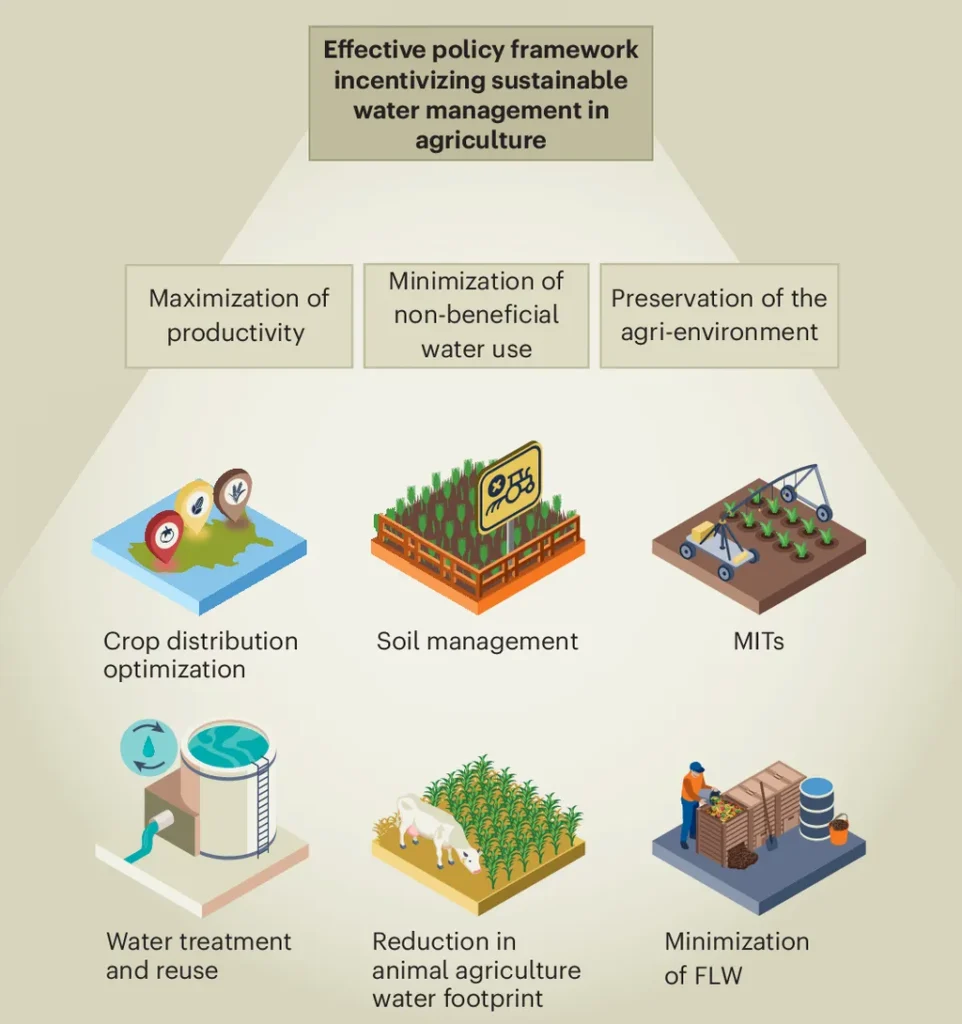
In a world grappling with water scarcity and climatic uncertainty, the quest for sustainable agriculture has taken a significant leap forward. A recent study published in *Frontiers in Sustainable Food Systems* offers a fresh perspective on farmland water use efficiency (WUE), emphasizing the critical role of farmer behavior and institutional frameworks. Led by Xianghua Liu from the College of Economic and Management at Henan Agricultural University, the research integrates bibliometric analysis with case-based validation to provide a comprehensive overview of the field.
The study reveals a notable shift in the academic landscape, moving away from technology-driven irrigation efficiency toward a more holistic approach that incorporates behavioral and institutional perspectives. This transition reflects a growing recognition that sustainable water governance must be farmer-centered, adaptive, and participatory.
“Enhancing farmland water use efficiency is not just about adopting new technologies; it’s about understanding the complex interplay between farmers’ behaviors, institutional frameworks, and policy incentives,” Liu explained. The research analyzed over 1,700 publications, identifying China, the United States, and India as leading contributors to the field. Thematic clustering and burst analysis highlighted a conceptual evolution, underscoring the importance of integrating behavioral and institutional dimensions into water governance strategies.
To validate these findings, the study conducted case-based analyses across representative regions. These empirical insights revealed how institutional coordination, behavioral heterogeneity, and policy incentives collectively shape farmland WUE. The results suggest that a more integrated approach—one that links macro-level knowledge with micro-level practices—could significantly enhance water use efficiency and promote sustainable agricultural transformation.
The commercial implications of this research are profound. For the agriculture sector, adopting a farmer-centered approach to water governance could lead to more efficient water use, reduced costs, and improved crop yields. By understanding and addressing the behavioral and institutional factors that influence water use, farmers and policymakers can develop more effective strategies for sustainable agriculture.
As the global population continues to grow and climate change exacerbates water scarcity, the need for innovative and adaptive water governance strategies has never been greater. This research provides a roadmap for advancing farmer-oriented water governance, offering both theoretical guidance and practical implications for the future of sustainable agriculture. By embracing a more holistic and participatory approach, the agriculture sector can navigate the challenges of water scarcity and build a more resilient and sustainable future.