
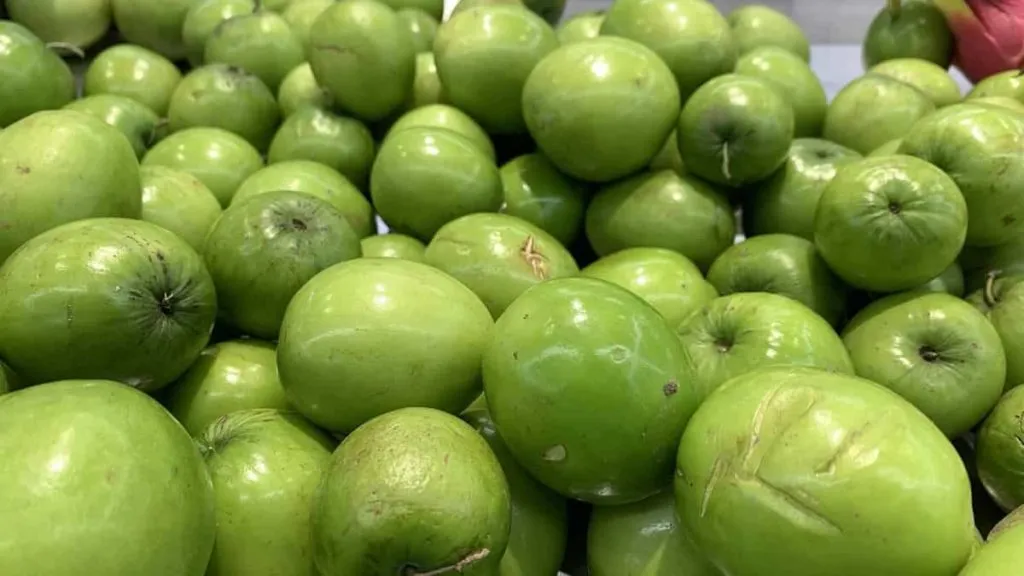
In the heart of India, researchers have uncovered a promising approach to boost the growth, yield, and quality of ber (Zizyphus mauritiana Lamk.) fruits, particularly the popular ‘Banarasi Karaka’ variety. The study, conducted at the Chandra Shekhar Azad University of Agriculture and Technology in Kanpur, Uttar Pradesh, offers valuable insights for farmers and the agriculture sector, emphasizing sustainable practices and integrated nutrient management.
The research, published in the ‘International Journal of Bio-Resource and Stress Management’, explored the effects of different pruning severities and nutrient applications on ber plants. The lead author, Vikas Kumar from the Department of Fruit Science, and his team found that a combination of reduced chemical fertilizers, organics, and biofertilizers yielded the best results.
The most effective treatment, labeled T7, involved applying 50% of the recommended dose of fertilizers (RDF), along with vermicompost, Azotobacter, phosphate-solubilizing bacteria (PSB), and Azospirillum. This combination led to significant improvements in vegetative growth, fruit morphometric traits, and yield. “The integrated application of organics, biofertilizers, and reduced chemical fertilizers not only enhanced vegetative growth and yield but also improved fruit quality,” Kumar explained.
The T7 treatment resulted in the highest vegetative growth, with an average of 34.14 shoots per plant, each measuring about 4.05 meters in length and 3.45 centimeters in diameter. The canopy spread was also substantial, covering approximately 32.15 square meters. The fruit morphometric traits were equally impressive, with fruits averaging 3.57 centimeters in length, 3.30 centimeters in diameter, and 21.89 grams in weight. The yield was equally notable, with each plant producing around 30.11 kilograms of fruit.
Quality parameters were also maximized under the T7 treatment. The fruits exhibited the lowest acidity (0.13%) and superior values for total soluble solids (TSS) at 20.47°Brix, a TSS to acid ratio of 146.27, ascorbic acid content of 70.13 mg per 100 grams, and total sugars at 9.26%.
The commercial implications of this research are substantial. By adopting integrated nutrient management practices, farmers can potentially reduce their dependency on chemical fertilizers, leading to cost savings and more sustainable farming practices. The improved yield and quality of ber fruits can enhance marketability and profitability, benefiting both farmers and consumers.
The study also highlights the importance of pruning severity, which played a crucial role in the overall growth and yield of the ber plants. The findings suggest that moderate pruning, combined with the right nutrient application, can optimize plant performance and fruit quality.
As the agriculture sector continues to evolve, research like this paves the way for more sustainable and efficient farming practices. The integration of organics and biofertilizers, as demonstrated in this study, offers a promising avenue for enhancing crop productivity while minimizing environmental impact. This approach could be a game-changer for ber cultivation and potentially for other fruit crops as well.
The research conducted by Vikas Kumar and his team at the Chandra Shekhar Azad University of Agriculture and Technology, Kanpur, U.P., and published in the ‘International Journal of Bio-Resource and Stress Management’, provides a blueprint for future developments in the field of ber cultivation and sustainable agriculture.