
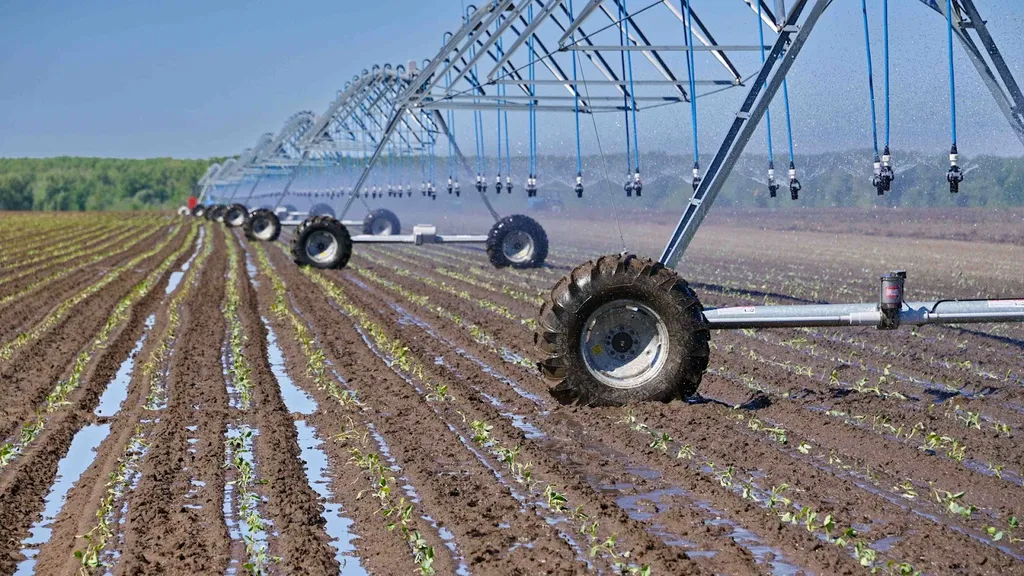
In the arid expanses of Kazakhstan, where water is a precious commodity, researchers are pioneering an integrated approach to enhance irrigation efficiency, with significant implications for the global agriculture sector. A recent study published in *Frontiers in Sustainable Food Systems* sheds light on how water-saving technologies and optimized irrigation regimes can transform agricultural productivity and sustainability.
The research, led by Ulzhan Onglassyn from the Department of Water Resources and Reclamation at the Kazakh National Agrarian Research University in Almaty, focuses on the Kurty irrigation massif. This region, like many others, faces the dual challenge of water scarcity and the need to maximize crop yields. Onglassyn’s team discovered that the depth and mineralization of groundwater play a crucial role in determining the efficiency of irrigation. “When groundwater is close to the surface, it’s essential to minimize irrigation rates to reduce water losses and enhance water use efficiency,” Onglassyn explains. This finding underscores the importance of tailoring irrigation strategies to local hydrogeological conditions.
The study involved a detailed analysis of irrigation regimes at various levels of water availability (50, 75, and 95%). By comparing calculated and actual water consumption data, the researchers identified significant overruns and inefficiencies in the current irrigation system. These inefficiencies not only waste precious water resources but also impact the economic viability of agricultural operations.
Onglassyn highlights the multifaceted factors influencing water use efficiency, including technical, organizational, and economic aspects. “Optimizing irrigation regimes and adopting water-saving technologies are critical steps towards sustainable agricultural development,” she asserts. The study provides actionable recommendations for improving irrigation practices, emphasizing the need for a holistic approach to water resource management.
The commercial implications of this research are profound. For the agriculture sector, which is increasingly grappling with water scarcity and climate change, the findings offer a roadmap for enhancing productivity while conserving water. By implementing the recommended strategies, farmers can reduce water wastage, lower operational costs, and improve crop yields. This not only boosts profitability but also contributes to environmental sustainability.
Looking ahead, the research by Onglassyn and her team could shape future developments in irrigation technology and water management practices. The emphasis on an integrated approach—combining technological innovation with localized strategies—could become a benchmark for agricultural regions worldwide. As the global population grows and water resources become increasingly strained, such insights are invaluable for ensuring food security and sustainable development.
In a world where every drop counts, the work of Onglassyn and her colleagues offers a beacon of hope and a practical guide for the future of agriculture.