
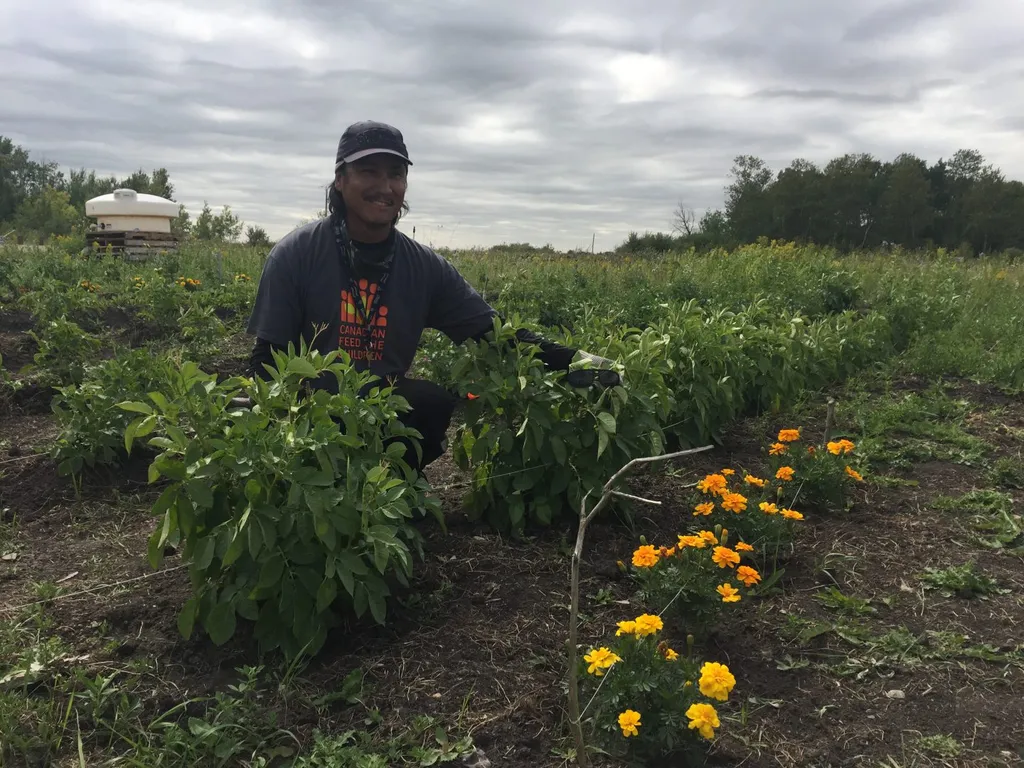
In the vast and challenging landscapes of northern Canada, communities are grappling with food insecurity, a problem intensified by climate change, soaring food costs, and limited access to traditional and nutritious foods. Amid these struggles, a beacon of hope emerges from Kakisa, Northwest Territories (NWT), where a community garden initiative is not only addressing immediate food needs but also paving the way for sustainable food system transformation. A recent study published in *Canadian Food Studies* sheds light on the innovative strategies employed by the Ka’a’gee Tu First Nation to leverage community agroecological values across scales, offering valuable insights for the broader agriculture sector.
The study, led by Jennifer Temmer from the University of Waterloo, employs a Participatory Action Research approach, engaging community members in identifying both available resources and those necessary for maintaining their community garden. By applying the Community Agroecological Values Framework (CAVF) to food system planning, the research highlights the importance of both short-term regional support and long-term local capacity building.
“While the community has successfully leveraged regional and extra-regional resources by building relationships with organizations outside the territory, barriers such as unstable relationships and conflicting perspectives regarding land use and agriculture have constrained access to critical regional supports,” Temmer explains. These supports include gardening knowledge networks, funding, and training opportunities.
The findings underscore the necessity for collaborative strategies to build well-being and promote the sustainable transformation of food systems in northern Indigenous communities. The study contributes to the design of a community food system action plan, emphasizing the importance of fostering foundational knowledge and enthusiasm for food production over time.
For the agriculture sector, the implications are significant. The research highlights the potential for community gardens and participatory action research to address food insecurity and promote sustainable food systems. By building relationships with organizations outside the territory, communities can access valuable resources and expertise, ultimately enhancing their capacity for food production.
Moreover, the study’s focus on regionality and sustainable food systems offers a blueprint for similar initiatives in other northern communities. The emphasis on community planning and participatory action research provides a model for engaging community members in the development of sustainable food systems, fostering a sense of ownership and commitment to the project.
As the agriculture sector continues to evolve, the lessons learned from Kakisa’s community garden initiative offer valuable insights into the potential for community-based solutions to address food insecurity and promote sustainable food systems. By leveraging community agroecological values and fostering collaborative relationships, the agriculture sector can play a pivotal role in shaping the future of food systems in northern Canada and beyond.
The study, “Leveraging community agroecological values across scales for food system transformation in Ka’a’gee Tu First Nation, Northwest Territories,” was published in *Canadian Food Studies* and led by Jennifer Temmer from the University of Waterloo. The research not only contributes to the academic discourse on community capitals, community planning, northern food systems, participatory action research, regionality, and sustainable food systems but also offers practical insights for the agriculture sector. As the world grapples with the challenges of climate change and food insecurity, the innovative strategies employed by the Ka’a’gee Tu First Nation serve as a testament to the power of community-based solutions in shaping the future of food systems.