
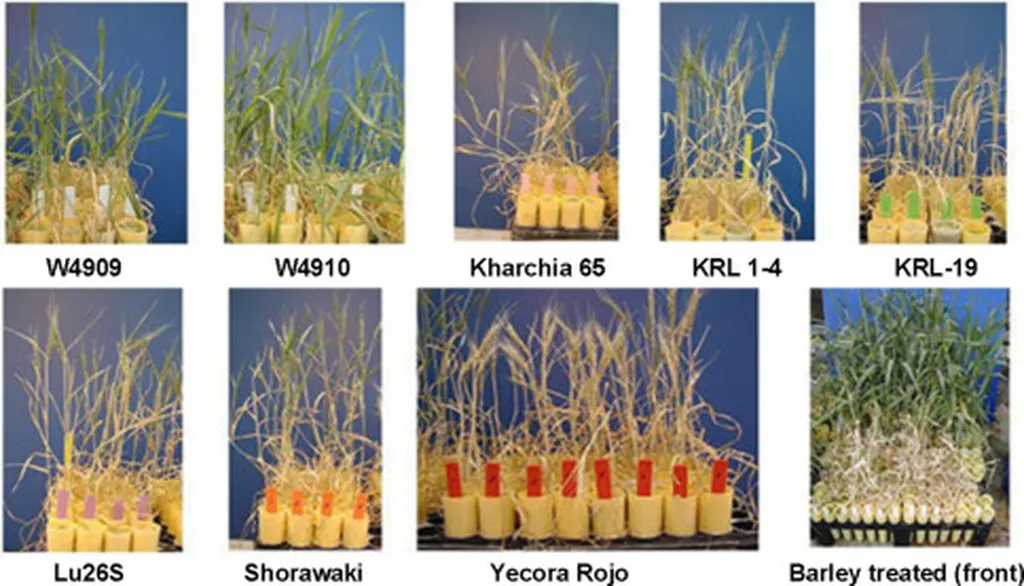
In the quest to bolster agricultural resilience against salt stress, scientists are turning to a lesser-known genus of grasses, Thinopyrum, which could hold the key to enhancing salt tolerance in wheat and forage crops. A recent study published in *Frontiers in Plant Science* sheds light on how these coastal-dwelling species might revolutionize sustainable agriculture.
Thinopyrum species, native to saline coastal regions, have evolved sophisticated mechanisms to thrive in high-salt environments. These include efficient sodium exclusion, potassium retention, and the production of compatible solutes for osmoregulation. “These species have naturally adapted to harsh conditions, making them a valuable genetic resource for improving salt tolerance in crops,” explains lead author Wei Li of the State Key Laboratory of Seed Innovation at the Chinese Academy of Sciences.
The study highlights the potential of Thinopyrum species like Th. ponticum, Th. elongatum, Th. bessarabicum, and Th. distichum, which have already shown promise in transferring salt tolerance to wheat through various genetic techniques. “By integrating these traits into wheat, we can develop varieties that are more resilient to saline soils, which are becoming increasingly prevalent due to climate change and poor irrigation practices,” Li adds.
The research also delves into the genetic underpinnings of salt tolerance in Thinopyrum, identifying key genes located primarily on homologous chromosomes group 3 and group 5. Transcriptomic and proteomic analyses have revealed a plethora of differentially expressed genes and proteins involved in the salt tolerance response, although further functional characterization is needed.
The commercial implications of this research are substantial. Salt-tolerant wheat varieties could significantly enhance crop yields in saline-affected regions, which make up about 20% of irrigated land globally. Additionally, the development of salt-tolerant forage crops, such as Tritipyrum and perennial wheat, could provide sustainable feed options for livestock in marginal lands.
“We are on the cusp of a new era in agricultural biotechnology,” Li notes. “By harnessing the genetic potential of Thinopyrum, we can create crops that are not only more resilient but also more productive, contributing to food security and economic stability in agriculture.”
As researchers continue to unravel the genetic networks underlying salt tolerance in Thinopyrum, the future of sustainable agriculture looks increasingly promising. This study, with its focus on distant hybridization, transcriptomics, and proteomics, sets the stage for innovative breeding programs that could transform the agricultural landscape.