
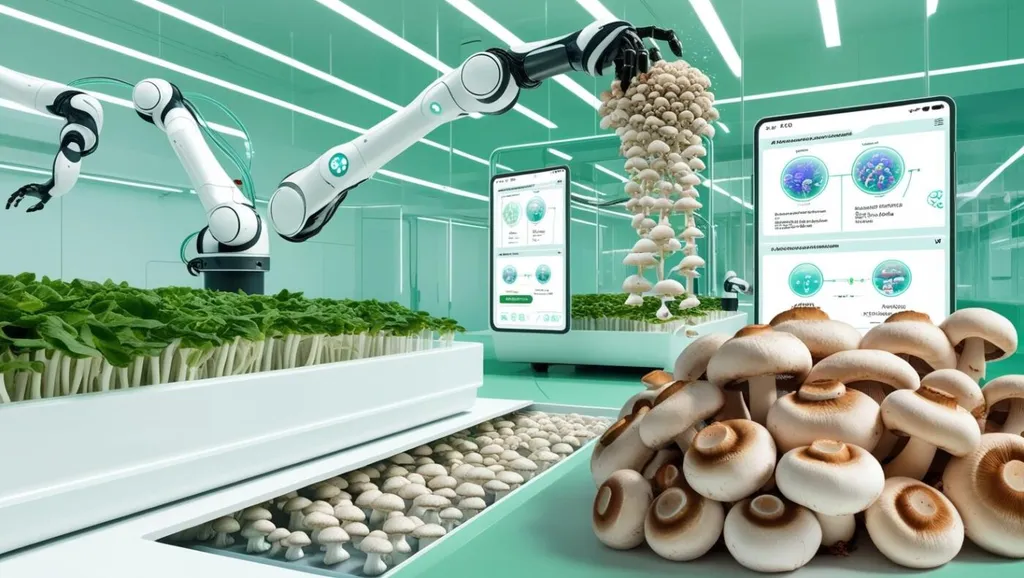
In the heart of Florida, researchers are harnessing the power of artificial intelligence (AI) to transform the way we interact with the natural world, particularly in agriculture. A recent article published in EDIS, titled “How AI Can Analyze Images: An Introductory Case Study Using Mushroom Detection,” offers a fascinating glimpse into the potential of AI and computer vision to revolutionize precision agriculture. The lead author, Namrata Dutt from the University of Florida, and her colleague Daeun Choi, have provided a clear and accessible introduction to these cutting-edge technologies, using mushroom detection as a case study.
The article begins by explaining the basics of image analysis through AI, a process that involves teaching computers to interpret and understand visual data. This is achieved through complex algorithms and machine learning techniques, which enable computers to recognize patterns and make decisions based on the information they process. “The goal is to mimic the human ability to see, learn, and make decisions using visual data,” Dutt explains. By using mushrooms as an example, the authors illustrate how AI can be trained to detect and classify objects within an image, a skill that has significant implications for the agricultural sector.
One of the most promising applications of this technology is in the field of precision agriculture, where AI can be used to monitor and manage crops more efficiently. For instance, AI-powered image analysis can help farmers detect diseases, pests, and other issues that might affect their crops, allowing them to take targeted action and minimize losses. This not only improves yields but also reduces the need for harmful pesticides and fertilizers, promoting more sustainable farming practices.
The commercial impacts of this research are substantial. By automating the process of crop monitoring, AI can help farmers save time and resources, making their operations more efficient and profitable. Moreover, the data collected through AI image analysis can provide valuable insights into crop health and growth patterns, enabling farmers to make more informed decisions about planting, irrigation, and harvesting.
Looking ahead, the potential for AI in agriculture is vast. As the technology continues to evolve, we can expect to see even more sophisticated applications, such as autonomous farming equipment and AI-driven crop breeding programs. These advancements could revolutionize the way we produce food, making it more sustainable, efficient, and resilient in the face of climate change and other challenges.
In the words of Dutt, “The future of agriculture lies in our ability to harness the power of technology to work in harmony with nature.” With ongoing research and development in AI and computer vision, we are well on our way to achieving this vision, paving the way for a more sustainable and productive future. The article, published in EDIS by the UF/IFAS Department of Agricultural and Biological Engineering, serves as a testament to the exciting possibilities that lie ahead in the intersection of AI and agriculture.