
In the heart of Indonesia, where agriculture is the lifeblood of the economy and the majority of the population relies on farming for their livelihood, a groundbreaking study is set to revolutionize the way we predict agricultural commodity production. The research, led by Rina Wahyuni from the Institut Pemerintahan Dalam Negeri and published in ‘Knowbase’, leverages the power of Artificial Intelligence (AI) to bring stability and foresight to the agricultural sector.
The study focuses on the development of an Artificial Neural Network (ANN) prediction model using the Backpropagation Algorithm. This technology is not just a scientific marvel; it’s a practical tool that can significantly impact the agricultural industry. By predicting production and prices, the government can estimate yields and set strategies to maintain price stability, ensuring food availability and preventing fluctuations that could harm society.
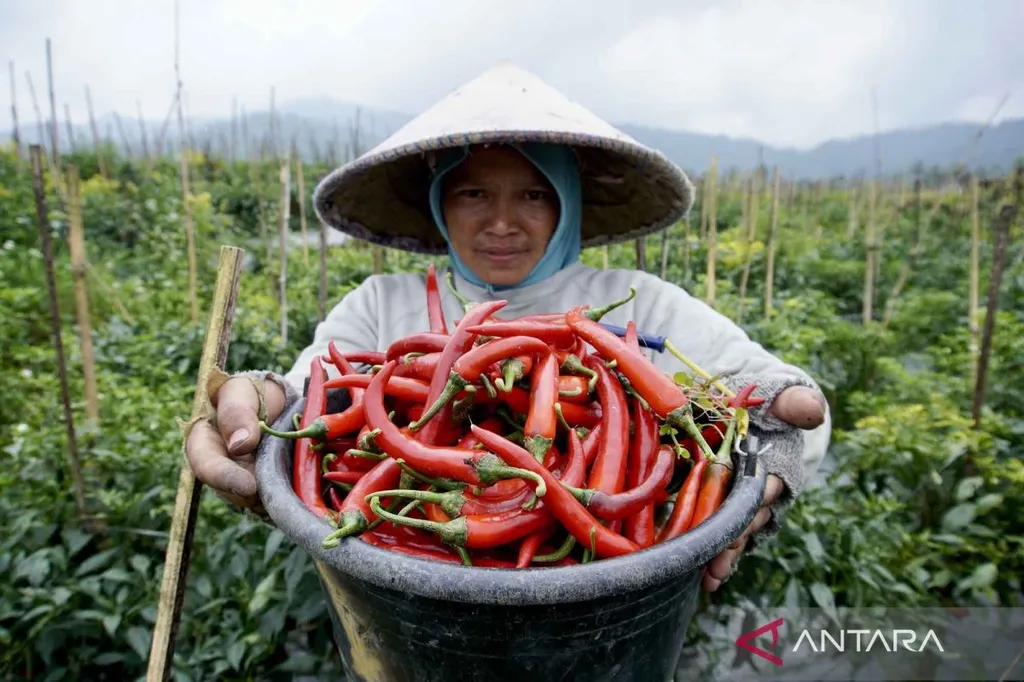
The ANN model, developed using the Altair AI Studio, was trained on data from chili commodities, a staple in Indonesian cuisine and a vital part of the local economy. The research identified the optimal network architecture for predicting the production of large chili and bird’s eye chili pepper, with the 12-25-1 model excelling for large chili and the 12-15-1 model proving best for bird’s eye chili pepper.
“This model is a game-changer,” says Wahyuni. “It helps with production planning, supply distribution arrangements, and maintaining price and supply stability. It’s not just about predicting numbers; it’s about empowering agencies to make informed decisions that can benefit millions of farmers and consumers.”
The commercial impacts of this research are profound. Accurate predictions can lead to better resource allocation, reduced waste, and improved profitability for farmers. It can also help traders and retailers plan their inventories more effectively, ensuring a steady supply of chili and other commodities. Moreover, by stabilizing prices, the model can contribute to economic stability and food security, which are crucial for a country like Indonesia where agriculture is a cornerstone of the economy.
Looking ahead, this research opens up exciting possibilities for the future of agricultural technology. The success of the ANN model in predicting chili production could pave the way for similar models to be developed for other commodities. Imagine a future where AI-driven predictions are the norm, where farmers and policymakers have access to real-time data and insights that can guide their decisions and strategies.
As we stand on the brink of this AI-driven agricultural revolution, one thing is clear: the work of researchers like Rina Wahyuni is not just shaping the future of agriculture; it’s shaping the future of our society. And with each prediction, each model, and each insight, we are taking a step closer to a more stable, sustainable, and prosperous future for all.