
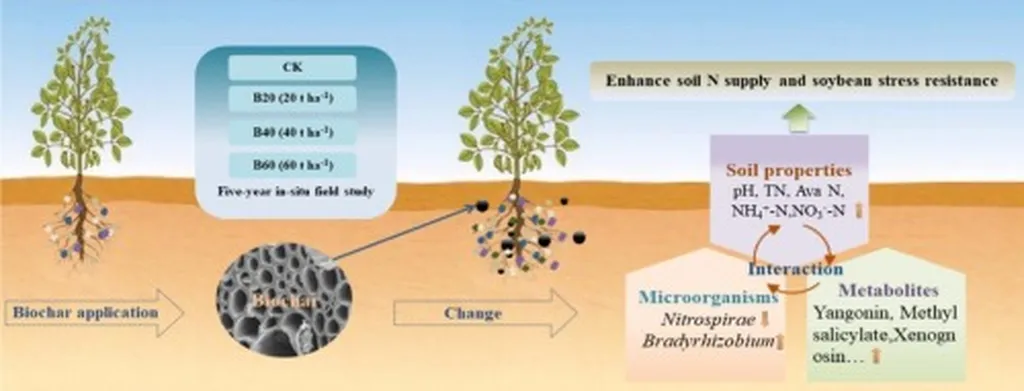
In the heart of Jilin Province, China, a groundbreaking study is reshaping our understanding of sustainable agriculture. Researchers have discovered that combining biochar, a carbon-rich product derived from organic waste, with Bradyrhizobium japonicum, a nitrogen-fixing bacterium, can significantly enhance soil health and boost soybean yields. This innovative approach, detailed in a recent study published in *Frontiers in Plant Science*, offers a promising solution to the pressing challenges of declining soil fertility and reduced microbial diversity in intensive farming systems.
The study, led by Sikandar Aziz from the College of Resources and Environment at Jilin Agricultural University, explored the effects of B. japonicum inoculation and biochar amendment on soil properties, microbial communities, and soybean yield. The findings are nothing short of transformative. “The combination of biochar and B. japonicum not only improved soil fertility but also enhanced microbial diversity, creating a more robust and productive agricultural ecosystem,” Aziz explained.
The research involved four treatments: a control group, B. japonicum alone, biochar alone, and a combination of both. The results were striking. The combined treatment significantly increased soil pH, total nitrogen, available phosphorus, available potassium, and soil organic matter. These improvements translated into a substantial boost in soybean yield, with the combined treatment outperforming the control by nearly 20%.
The implications for the agriculture sector are profound. As intensive farming practices continue to degrade soil health, innovative solutions like this one are crucial for ensuring long-term productivity and sustainability. “This study provides a roadmap for farmers and agronomists to enhance soil health and crop yields through sustainable practices,” Aziz noted. “By integrating biochar and microbial inoculants, we can create a more resilient agricultural system that benefits both the environment and the bottom line.”
The research also sheds light on the intricate relationships between soil microorganisms and plant health. The combined treatment enriched beneficial soil bacteria and fungi, promoting nutrient cycling and overall soil health. This holistic approach to soil management could revolutionize agricultural practices, offering a sustainable alternative to conventional fertilizers and pesticides.
As the global population continues to grow, the demand for sustainable and productive agricultural practices will only increase. This study highlights the potential of biochar and microbial inoculants to meet these challenges head-on. By fostering healthier soils and higher yields, this innovative approach could shape the future of agriculture, ensuring food security and environmental stewardship for generations to come.
In the ever-evolving landscape of agritech, this research stands as a testament to the power of innovation and sustainability. As farmers and researchers alike seek to balance productivity with environmental responsibility, the integration of biochar and microbial inoculants offers a beacon of hope for a more sustainable future.