
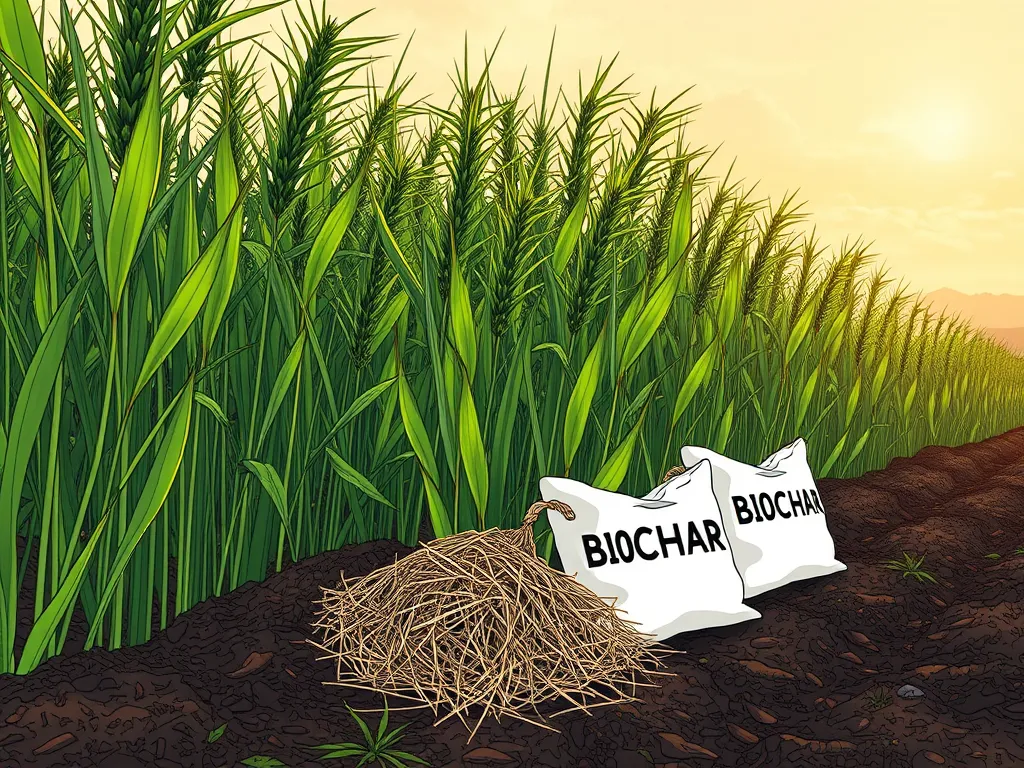
In a groundbreaking study published in the *Journal of Applied Science and Engineering*, researchers have uncovered promising insights into the combined effects of biochar amendments with organic waste products on hemp cultivation. The study, led by Chutiphan Sangsoda of the Industrial Toxicology and Risk Assessment Graduate Program at Chulalongkorn University in Bangkok, Thailand, explored how biochar mixed with chicken manure, vermicompost, and wastewater sludge (WWS) can enhance hemp growth, soil health, and microbial communities while mitigating heavy metal risks.
Hemp, a versatile crop with applications ranging from textiles to pharmaceuticals, has gained significant attention in recent years. However, its cultivation often faces challenges related to soil health and contamination. This research offers a sustainable solution by leveraging organic amendments and biochar, a carbon-rich material produced from the pyrolysis of organic waste.
The study involved growing three hemp cultivars—Rosella, Superwoman S1, and Red Robin—in substrates containing 10% biochar mixed with 20% of different organic amendments. The results were striking. Vermicompost, a nutrient-rich product of worm digestion, emerged as the most effective amendment, particularly for the Superwoman S1 cultivar, which grew up to 140 cm. “Vermicompost not only enhanced growth but also improved soil nutrient retention,” noted Sangsoda, highlighting its potential for sustainable agriculture.
Chicken manure, another organic amendment, showed variability in its effects on different hemp cultivars. While it effectively increased soil nutrient retention, its impact on growth varied, suggesting that its application might need to be tailored to specific cultivars. Meanwhile, wastewater sludge (WWS) treatments demonstrated notable growth enhancement, especially in the Red Robin cultivar, indicating its potential for sustainable reuse in agricultural and industrial hemp cultivation.
One of the most significant findings was the accumulation of heavy metals in plant roots, which minimized contamination risks in the shoots and leaves. This is a crucial discovery for the agriculture sector, as it addresses concerns about heavy metal contamination in crops. “The root microbial communities identified in this study play a pivotal role in nutrient cycling, plant growth promotion, and heavy metal remediation,” explained Sangsoda. The study found that different substrate treatments led to the enrichment of beneficial bacteria such as Solirubrobacter, Devosia, and Sphingomonas, which are known for their roles in promoting plant growth and remediating heavy metals.
The implications of this research are far-reaching. For the agriculture sector, the use of biochar-amended organic amendments offers a sustainable and cost-effective way to enhance crop yields while improving soil health and mitigating contamination risks. This could revolutionize hemp cultivation, making it more viable and environmentally friendly. Additionally, the findings highlight the potential for wastewater sludge to be repurposed, addressing both waste management and agricultural needs.
As the world seeks sustainable solutions to feed a growing population and address environmental challenges, this research provides a blueprint for integrating waste products into agricultural practices. By leveraging biochar and organic amendments, farmers can enhance soil fertility, promote plant growth, and reduce contamination risks, ultimately contributing to a more sustainable and resilient agriculture sector.
In the words of Sangsoda, “This study demonstrates the significant role of different organic substrate amendments with biochar in promoting hemp cultivation, improving soil health, mitigating heavy metal risks, and shaping beneficial root microbial communities.” The findings offer practical strategies for sustainable agriculture and nutrient recovery, paving the way for future developments in the field.