
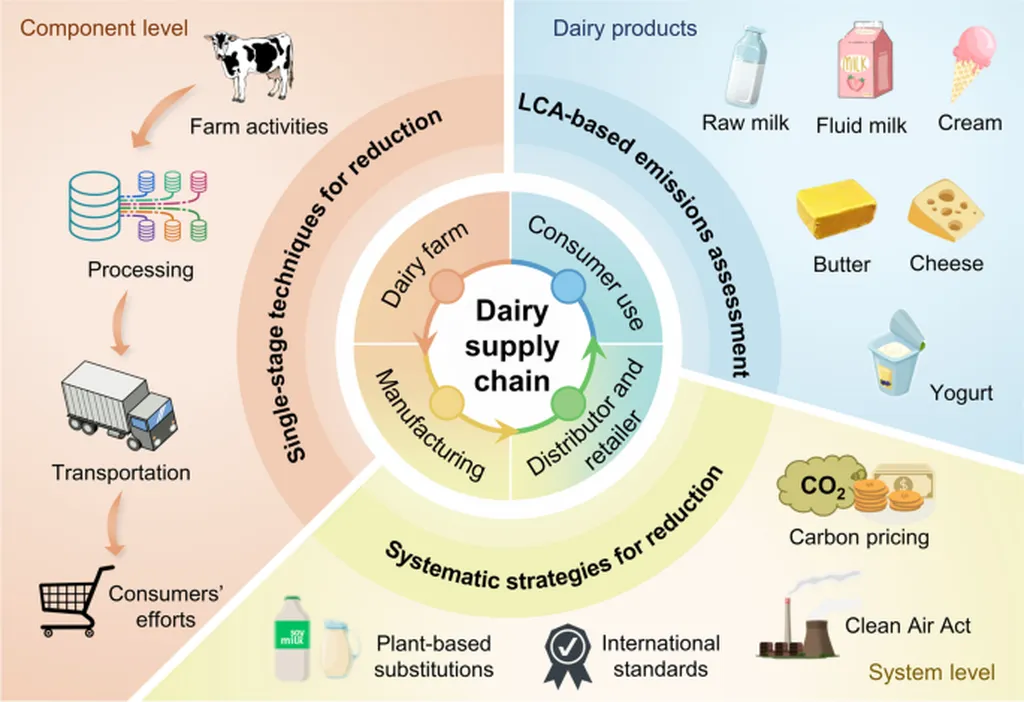
In the quest to understand and mitigate the environmental impact of dairy farming, a critical review published in *Letters in Animal Biology* offers a comprehensive analysis of carbon footprints in the dairy sector. Led by Gokul Tamilselvan from the ICAR – National Dairy Research Institute in Karnal, India, the study focuses on the Life Cycle Assessment (LCA) method, a globally recognized tool for evaluating the environmental impact of products throughout their life cycles.
The review underscores the pressing issue of global warming, driven by greenhouse gas emissions from various sources, including agriculture and livestock farming. “The dairy sector is a significant contributor to these emissions, and understanding the carbon footprint of milk production is crucial for developing sustainable practices,” Tamilselvan explains. The study delves into the application of the LCA method at the farm level, detailing the stages involved in the life cycle assessment and providing an in-depth discussion on the carbon footprint up to the farm gate level and beyond.
One of the key findings of the review is the significant contribution of large ruminants, such as cattle and buffaloes, to enteric methane emissions. “A substantial portion of the carbon footprint in dairy farming arises from these animals, making it essential to focus on mitigating emissions from this source,” Tamilselvan notes. The review meticulously presents total carbon footprint values for milk production, derived from the cumulative emissions associated with diverse activities involved in the production of milk.
The commercial implications of this research are profound. As consumers and regulatory bodies increasingly demand transparency and sustainability in the food industry, dairy farmers and processors must adopt practices that reduce their carbon footprint. “This study provides a roadmap for the dairy sector to understand its environmental impact and take steps towards sustainability,” Tamilselvan says. By implementing the findings of this review, the dairy industry can enhance its environmental stewardship, meet regulatory requirements, and cater to the growing market demand for sustainable products.
The research also highlights the need for further studies and innovations to reduce the carbon footprint of dairy farming. Future developments in the field may include the adoption of new technologies and practices that minimize emissions, such as improved feed efficiency, manure management, and the use of renewable energy sources. Additionally, the study underscores the importance of collaboration between researchers, policymakers, and industry stakeholders to drive sustainable practices in the dairy sector.
In conclusion, this critical review published in *Letters in Animal Biology* offers valuable insights into the carbon footprint of dairy farming and the role of the LCA method in assessing environmental impact. The findings have significant commercial implications for the agriculture sector, emphasizing the need for sustainable practices to mitigate the carbon footprint associated with milk production. As the dairy industry continues to evolve, the adoption of these findings will be crucial in shaping a more sustainable and environmentally responsible future.