
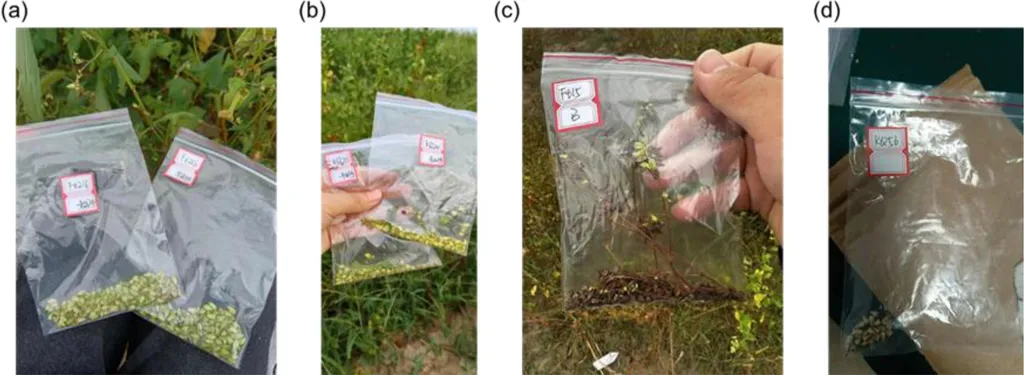
In the ever-evolving landscape of precision agriculture, a groundbreaking study has emerged that could revolutionize how we approach crop maturity classification. Researchers have turned to the power of generative adversarial networks (GANs) to augment spectroscopy data, specifically for buckwheat, a crop known for its nutritional benefits and versatility. This innovative approach not only enhances the accuracy of maturity classification but also opens up new avenues for agricultural technology.
The study, led by Huihui Wang, leverages the capabilities of GANs to generate synthetic spectroscopy data, which in turn improves the performance of machine learning models. “By augmenting the existing data with synthetic samples, we can significantly enhance the robustness and accuracy of our models,” Wang explains. This is particularly crucial for crops like buckwheat, where the maturity stage directly impacts the quality and market value.
The implications for the agriculture sector are profound. Accurate maturity classification is essential for optimizing harvest times, ensuring product quality, and maximizing yield. With the integration of GANs and spectroscopy, farmers and agribusinesses can make more informed decisions, leading to increased efficiency and profitability. “This technology has the potential to transform the way we manage crops, making the process more precise and data-driven,” says Wang.
The use of near-infrared (NIR) spectroscopy in this research is noteworthy. NIR spectroscopy is a non-destructive, rapid, and cost-effective method for analyzing the chemical composition of agricultural products. By combining NIR with GANs, the researchers have developed a powerful tool that can be easily integrated into existing agricultural workflows.
The study, published in *Frontiers in Plant Science*, highlights the potential of machine learning and advanced data augmentation techniques in agriculture. As the field continues to evolve, the integration of such technologies will be crucial in addressing the challenges of food security and sustainability.
The research led by Wang at an undisclosed affiliation underscores the importance of interdisciplinary collaboration in driving agricultural innovation. By bridging the gap between data science and agronomy, this study paves the way for future developments in precision agriculture. As we look ahead, the fusion of advanced technologies with traditional farming practices holds the key to a more sustainable and efficient agricultural future.
In the broader context, this research could inspire similar applications in other crops and agricultural practices. The ability to augment data and improve model performance has far-reaching implications, from quality control to supply chain management. As the agriculture sector continues to embrace digital transformation, the insights gained from this study will be invaluable in shaping the future of farming.
In conclusion, the integration of GANs with spectroscopy data augmentation represents a significant leap forward in agricultural technology. By enhancing the accuracy of maturity classification, this research not only benefits buckwheat farmers but also sets a precedent for the wider adoption of advanced technologies in agriculture. As we navigate the complexities of modern farming, the fusion of data science and agronomy will be instrumental in achieving a more sustainable and productive future.