
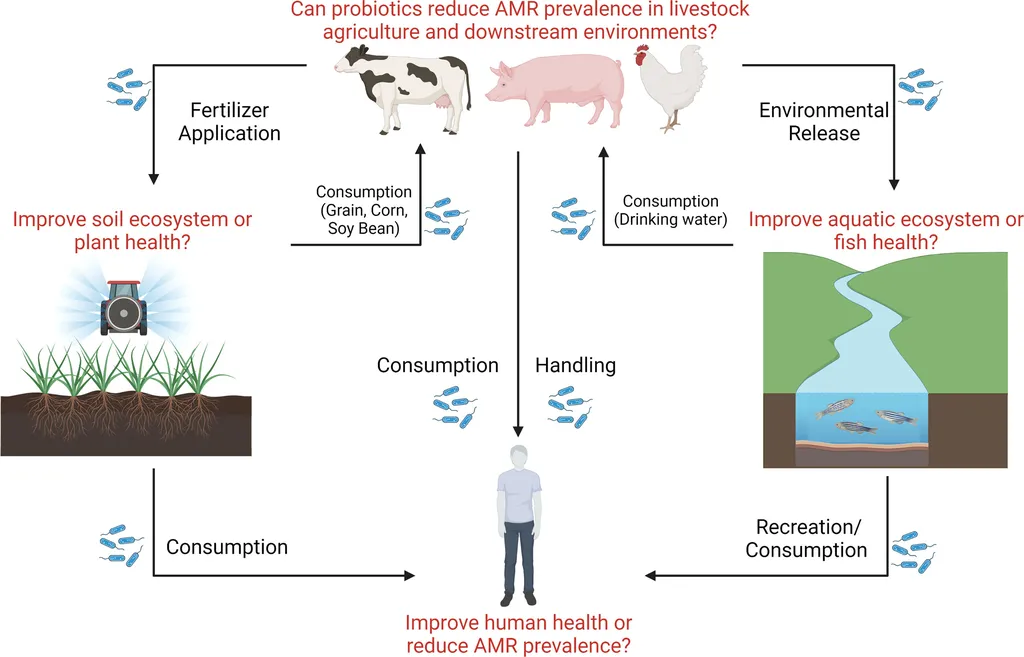
In the quest for sustainable livestock production, researchers are turning to probiotics as a promising alternative to antibiotic growth promoters (AGPs). A recent narrative review published in *Letters in Animal Biology* sheds light on the mechanisms, applications, and future perspectives of probiotics in livestock farming, offering a beacon of hope for an industry grappling with antimicrobial resistance and the need for more sustainable practices.
The review, led by Peter Ayodeji Idowu from the Section Veterinary Public Health at the University of Pretoria, systematically summarizes the current knowledge about probiotics as scientifically defined alternatives to conventional AGPs. With the global demand for AGP-free livestock on the rise, the need for effective, sustainable solutions has never been more urgent.
Probiotics exert a complex array of antimicrobial mechanisms, including direct pathogen antagonism, gut microbiome modulation, intestinal barrier enhancement, immune system stimulation, and metabolic optimization. These mechanisms collectively contribute to improved growth performance, increased disease resistance, and better breeding performance in a variety of livestock species, including ruminants, poultry, pigs, and rabbits.
“The application of probiotics has repeatedly shown positive results on rumen fermentation, caecal microbiota composition, nutrient digestibility, and immunological responses,” Idowu notes. This underscores the potential of probiotics to revolutionize sustainable animal agriculture and address the serious public health concern of antimicrobial resistance.
However, the review also highlights several challenges that need to be addressed to fully realize the potential of probiotics. Variations in strain-specific probiotic efficacy, environment-dependent outcomes, and the lack of production standardization remain significant hurdles. Moreover, knowledge gaps persist in areas such as interaction with the environment, production standardization, and the long-term effects of sustainability.
Despite these challenges, emerging innovations offer promising solutions. Postbiotics, precision livestock farming integration using AI and the Internet of Things, and multi-strain synbiotic formulations are just a few examples of the cutting-edge technologies that could shape the future of probiotic use in livestock production.
The commercial impacts of this research are substantial. For the agriculture sector, the shift towards probiotics could lead to more efficient resource use, reduced environmental impact, and improved economic viability. As the industry continues to grapple with the threat of antimicrobial resistance, probiotics offer a sustainable and scientifically backed alternative to AGPs.
In the words of Idowu, “This review summarizes the opportunities and challenges associated with probiotic use in livestock production systems and underscores their potential to revolutionize sustainable animal agriculture.” As the field continues to evolve, the insights gleaned from this research could pave the way for a more sustainable and resilient future for livestock production.