
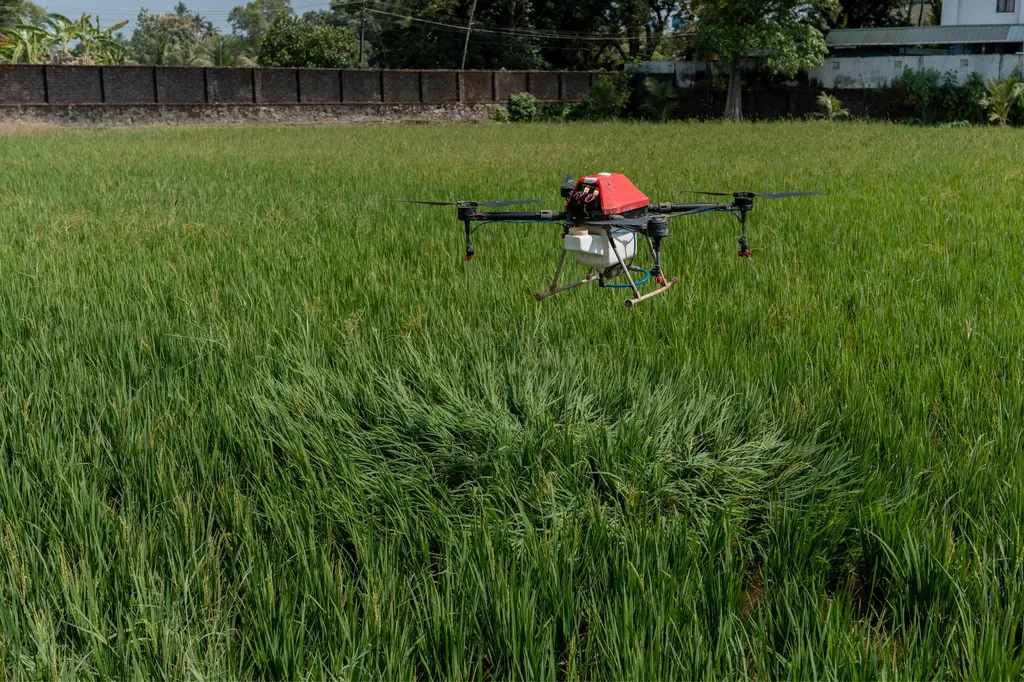
In the heart of India’s economic engine, mining activities have long been a double-edged sword, fueling growth while exacting a heavy toll on the environment. A recent study published in the ‘ISPRS Annals of the Photogrammetry, Remote Sensing and Spatial Information Sciences’ sheds light on the transformative potential of AI and drone-based monitoring in mitigating these impacts, with significant implications for the agriculture sector.
The research, led by S. Bhakat from Aereo in Bangalore, delves into the critical environmental dimensions of mining, offering a roadmap for more sustainable practices. “We’re talking about a paradigm shift in how we approach environmental baseline data collection, site selection for ecological rehabilitation, and Monitoring, Reporting, and Verification (MRV) during and after mining operations,” Bhakat explains.
The study highlights the stark reality of environmental degradation in India’s eastern coal belt, where forest cover has dwindled by 7.3–17.6% between 1994 and 2022, and agricultural land has dropped by 3–5%. These changes not only threaten biodiversity but also pose a challenge to the agriculture sector, which is intricately linked with the availability of water bodies and fertile land.
The research advocates for the adoption of AI-integrated MRV frameworks, which can automate data ingestion, orthomosaic, land use and land cover (LULC) analysis, and change detection. This shift from manual, error-prone methods to fast, scalable, and auditable insights could revolutionize how we monitor and manage our natural resources.
For the agriculture sector, the implications are profound. Accurate, real-time data on land use changes and environmental impacts can inform better plantation strategies, ensuring that reforestation and afforestation efforts are targeted and effective. Moreover, centralized data repositories can facilitate better planning and decision-making, promoting sustainable practices that benefit both the environment and the economy.
The study also underscores the importance of real-time plantation validation, which can help mining PSUs meet their ambitious targets, such as planting 60–75 million trees across 24,000–30,000 hectares by 2030. This not only aids in ecological rehabilitation but also creates opportunities for the agriculture sector, from timber and non-timber forest products to eco-tourism.
As we look to the future, the integration of AI and drone-based monitoring in mining could pave the way for more sustainable and accountable practices. It’s a call to action for policymakers, industry leaders, and technologists to come together and harness the power of technology for a greener, more prosperous future.
The research, led by S. Bhakat from Aereo, #3, MCHS Layout, Jakkur, Bangalore, Karnataka, 560064, India, offers a glimpse into the transformative potential of AI and drone-based monitoring in the mining sector, with far-reaching implications for the environment and the agriculture sector.