
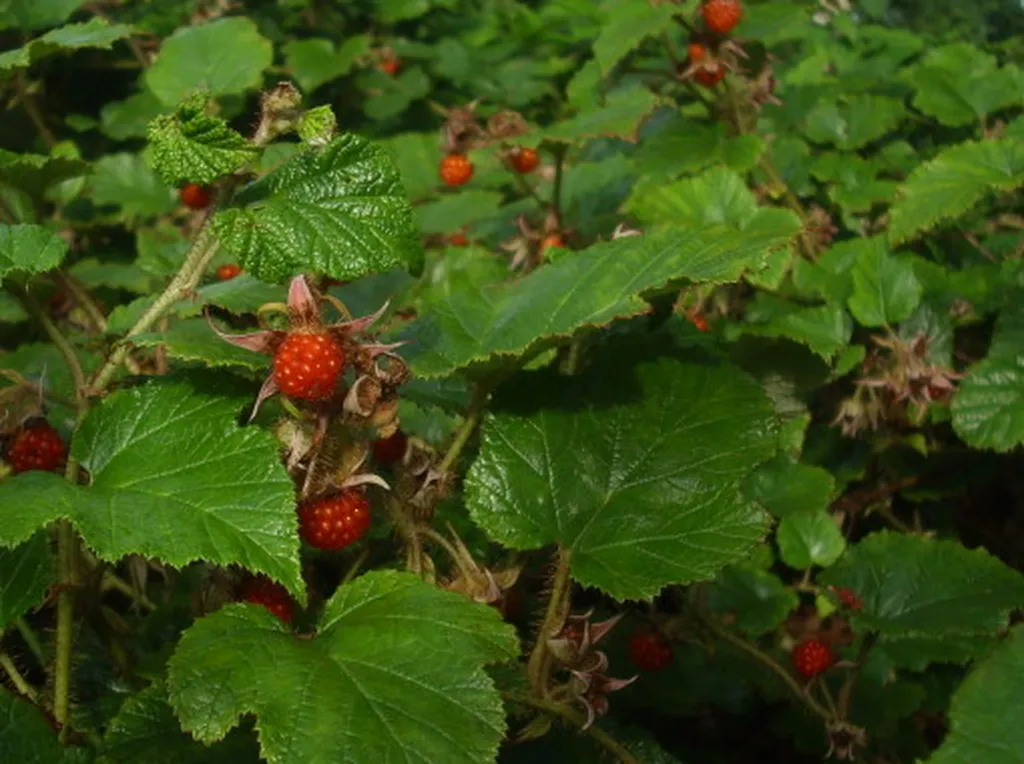
In the heart of China, a humble fruit is gaining attention not just for its traditional medicinal uses, but for the microscopic world thriving within it. Rubus chingii, a bramble fruit known in Chinese medicine, is the subject of a groundbreaking study published in *Frontiers in Plant Science*. The research, led by Yin Xie from the Laboratory of Traditional Chinese Medicine Development and Application at Jiangxi Provincial Institute of Traditional Chinese Medicine, sheds light on the intricate dance between the fruit’s ripening process, its metabolic changes, and the dynamic community of endophytic microbes residing within.
The study reveals that as Rubus chingii fruits ripen, their internal microbial communities undergo significant shifts. These changes are not merely coincidental; they are closely tied to the accumulation of key secondary metabolites, such as ellagic acid, flavonoids, and phenolic acids, which are prized for their health benefits. “We found that specific microbial taxa, like the bacterial genera Geodermatophilus and Brevundimonas, and the fungal yeasts Metschnikowia and Starmerella, were positively correlated with the accumulation of these beneficial metabolites,” explains Xie. This finding suggests that the endophytic microbiome plays a crucial role in determining the fruit’s quality and medicinal value.
The implications of this research extend far beyond the realm of traditional medicine. In the agriculture sector, understanding and manipulating the endophytic microbiome could revolutionize the way we cultivate crops, particularly those used for medicinal purposes. By harnessing the power of these microbial communities, farmers and horticulturists could potentially enhance the production of valuable secondary metabolites, leading to higher-quality crops and increased market value.
Moreover, the study’s findings open up new avenues for sustainable horticulture. As the global population grows and agricultural practices come under increasing scrutiny, the need for sustainable and eco-friendly farming methods has never been greater. By leveraging the natural processes occurring within plants, such as the interplay between the endophytic microbiome and metabolome, we can develop more sustainable and efficient agricultural practices.
The research also highlights the importance of further exploring the role of the microbiome in plant biology. As Xie notes, “This study provides the first evidence of a structured succession in the endophytic microbiome of Rubus chingii fruit and its close association with the dynamics of medically relevant metabolites.” By delving deeper into these complex interactions, we can unlock new insights into plant physiology and develop innovative strategies for improving crop quality and yield.
In the coming years, we can expect to see a greater focus on microbiome-based approaches in agriculture. From developing probiotic treatments for crops to designing microbial consortia tailored to specific plants, the possibilities are vast. As the agriculture sector continues to evolve, the integration of microbial science will undoubtedly play a pivotal role in shaping the future of sustainable and efficient farming practices.
In the meantime, the humble Rubus chingii fruit serves as a reminder of the intricate and often overlooked world of microbes that coexist with us and the plants around us. By understanding and harnessing the power of these microscopic communities, we can pave the way for a more sustainable and prosperous future in agriculture.