
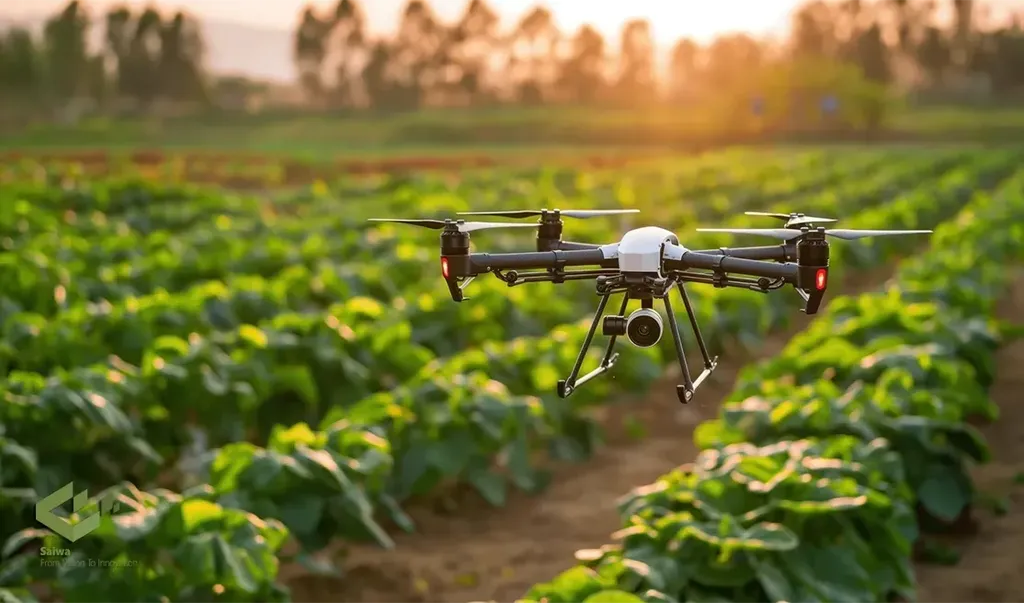
In the ever-evolving landscape of agricultural technology, a new study is shedding light on the growing role of Remotely Piloted Aircraft Systems (RPAS), commonly known as drones, in monitoring crop health. Published in ‘Acta Scientiarum: Technology’, the research led by Fernando Coelho Eugenio from Universidade Federal de Santa Maria, offers a comprehensive global literature review, highlighting the potential of this technology to revolutionize pest and disease management in agriculture.
The study, which analyzed 29 scientific articles from platforms like Web of Science, Scopus, and Google Scholar, reveals a significant trend: the use of RPAS in agriculture is on the rise. The technology’s flexibility and ability to quickly acquire high-resolution data have made it an invaluable tool for farmers and agronomists alike. “The interest in this technology segment is mainly due to its flexibility to acquire high-resolution data quickly,” the study notes, emphasizing the practical advantages that have driven its adoption.
China and the United States emerged as the leading countries in this research field, contributing the most publications. The study also found that multirotor platforms are more commonly used compared to fixed-wing platforms, and RGB (Red, Green, and Blue) and Multispectral sensors are the most frequently employed, accounting for 25% and 40.44% of the cases respectively. These sensors enable the detection of subtle changes in crop health, allowing for early intervention and potentially saving farmers from significant losses.
The commercial impacts of this technology are substantial. By providing real-time, high-resolution data, RPAS can help farmers make more informed decisions about pest and disease management. This proactive approach can lead to reduced crop losses, lower pesticide use, and ultimately, increased profitability. “It is expected that technological advances and RPAS improvement increasingly strengthened the control of pests and diseases in crops, contributing to a greater appreciation of the benefits of this system,” the study concludes, hinting at a promising future for this technology in the agricultural sector.
As we look ahead, the findings of this study suggest that RPAS technology is poised to play an even more significant role in agriculture. With ongoing advancements and improvements in RPAS, we can expect to see more efficient and effective pest and disease monitoring systems. This could lead to a paradigm shift in how we approach crop management, making it more data-driven and precise.
In the words of the lead author, Fernando Coelho Eugenio from Universidade Federal de Santa Maria, this technology holds the potential to transform the agricultural landscape, making it more sustainable and productive. As the technology continues to evolve, it will be fascinating to see how it shapes the future of farming and contributes to global food security.