
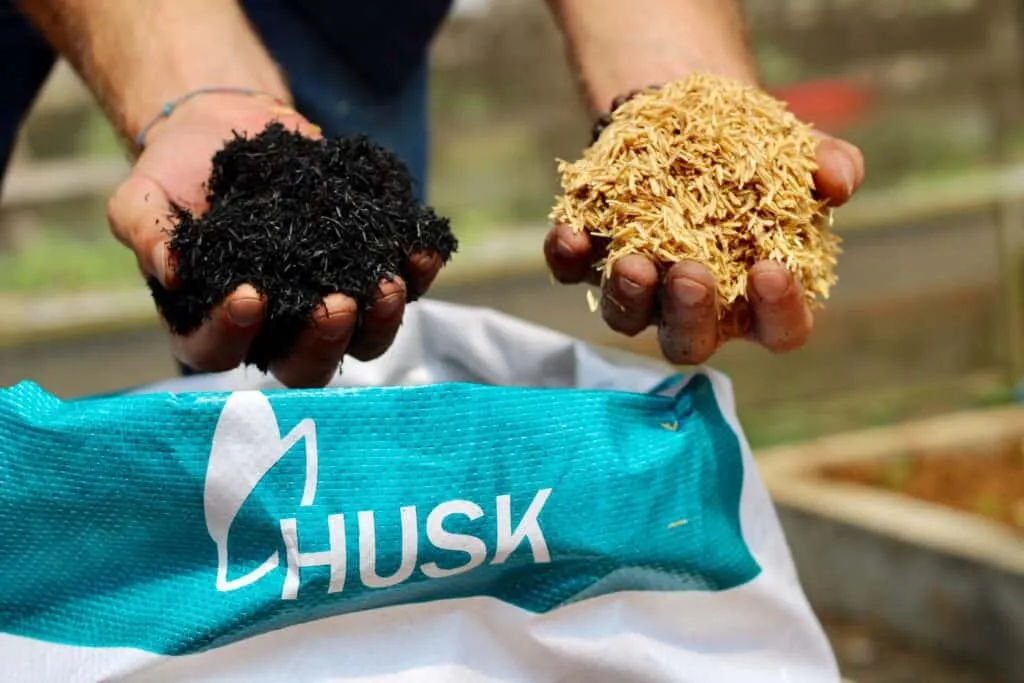
In the heart of East Java, a humble agricultural byproduct is being transformed into a powerful tool for sustainable farming. Rice husks, often discarded or underutilized, are now at the center of a promising study that could redefine how we approach soil enhancement and nutrient management in agriculture.
Rice husks, which make up about 20% of the total paddy biomass, have long been overlooked despite their abundance. However, a recent study published in the ‘BIO Web of Conferences’ is shedding light on their potential. Led by Aisyah Nur Azmina from the Department of Biology at Institut Teknologi Sepuluh Nopember, the research explores the conversion of rice husks into biochar through pyrolysis—a process that involves heating the husks in a low-oxygen environment.
The resulting biochar is not just any ordinary charcoal. It is rich in silica, with a composition of 80.03% SiO2, along with significant amounts of phosphorus, potassium, and calcium. This makes it an excellent candidate for soil amendment and nutrient carrier. “The biochar exhibited a water holding capacity of 81.09% and a pH of 6.23, indicating its potential as a soil enhancer,” Azmina explained.
The implications for the agriculture sector are substantial. Biochar can improve soil structure, increase water retention, and enhance nutrient availability, leading to better crop yields and more sustainable farming practices. This is particularly relevant in regions like Tuban, East Java, where soil fertility and water management are critical for agricultural productivity.
The study also highlights the economic potential of rice husk biochar. By converting an underutilized agricultural residue into a valuable product, farmers and agribusinesses can create new revenue streams and reduce waste. This aligns with the growing trend towards circular economy practices in agriculture, where waste is minimized, and resources are used more efficiently.
Looking ahead, the research opens up exciting possibilities for future developments. As Azmina noted, “The dual role of rice husk biochar as a bio-silica source and soil enhancer promotes sustainable residue-based agriculture.” This could pave the way for innovative applications in soil management, nutrient delivery, and even carbon sequestration.
In a world grappling with the challenges of climate change and food security, the transformation of rice husks into biochar offers a glimmer of hope. It is a testament to the power of scientific research in driving sustainable agricultural practices and shaping a more resilient future for the sector.