
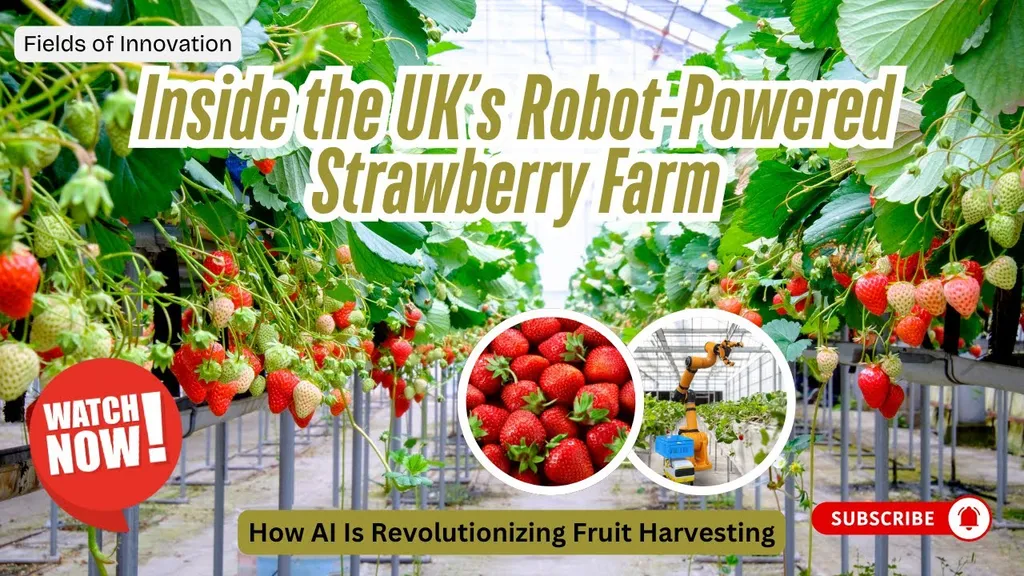
In the ever-evolving landscape of agricultural technology, a groundbreaking study published in the ‘BIO Web of Conferences’ is set to revolutionize the way farmers approach fruit harvesting. The research, led by Tu Pham Vu Minh from the Center for International Education at the Posts and Telecommunications Institute of Technology, introduces an innovative ripeness detection system that combines deep learning and Internet of Things (IoT) technology to optimize harvest efficiency.
The system, dubbed FRiMan, employs YOLOv11, a state-of-the-art deep learning algorithm, to classify fruits based on their color and characteristics in real time. This automated process eliminates the need for farmers to rely solely on their experience and intuition, which can often lead to inconsistencies in post-harvest quality. “The accuracy and effectiveness of FRiMan in classifying the ripeness of fruits, even under complex environmental conditions, is a game-changer for the agriculture sector,” says lead author Tu Pham Vu Minh.
One of the most significant advantages of this system is its cost-effectiveness and low energy consumption, making it highly suitable for agricultural applications. The integration of LoRaWAN transmission technology allows for the seamless transfer of image data from farm sensors to a central processing unit, ensuring that the equipment operates efficiently while maintaining high accuracy levels.
The commercial impacts of this research are substantial. By optimizing the harvesting process, farmers can reduce post-harvest losses and improve the overall quality of their produce. This not only enhances the profitability of agricultural operations but also contributes to a more sustainable and efficient food supply chain. “This technology has the potential to transform the way we approach fruit harvesting, making it more precise, efficient, and sustainable,” adds Tu Pham Vu Minh.
The implications of this research extend beyond the immediate benefits to farmers. As the agriculture sector continues to embrace technological advancements, the integration of deep learning and IoT technologies is expected to become increasingly prevalent. This study paves the way for future developments in the field, encouraging further innovation and exploration of automated systems that can enhance agricultural practices.
In conclusion, the ripeness detection system presented by Tu Pham Vu Minh and his team represents a significant leap forward in agricultural technology. By leveraging the power of deep learning and IoT, this innovative solution addresses a critical challenge in the fruit harvesting process, offering a cost-effective and efficient approach that benefits both farmers and consumers alike. As the agriculture sector continues to evolve, the insights and advancements presented in this research will undoubtedly play a pivotal role in shaping the future of farming.