
In the heart of India, where the Deccan Traps stretch across the landscape, a silent transformation is underway. Groundwater, the lifeblood of agriculture and urban life, is under threat from rapid land use changes, according to a recent study published in the ‘ISPRS Annals of the Photogrammetry, Remote Sensing and Spatial Information Sciences’. The research, led by P. Waindeshkar from the Department of Geology at Savitribai Phule Pune University, sheds light on the dynamic shifts in land use and their profound implications for groundwater recharge in the Pune and Satara districts of Maharashtra.
The study, which spanned from 2015 to 2024, utilized advanced remote sensing data and geospatial techniques to classify land use and land cover (LULC) into five main categories: Water Body, Vegetation (Forest), Agricultural Area, Barren Land, and Built-up. The accuracy of these classifications improved significantly over the years, with the overall accuracy reaching 89% in 2024 and the Kappa coefficient climbing to 0.867, indicating robust classification performance.
The findings reveal a substantial transformation in the landscape. Built-up areas, a marker of urbanization, expanded by 7.99% over the nine-year period. “This rapid urbanization is driven by population growth, economic development, and the expansion of industrial and commercial activities,” explains Waindeshkar. Simultaneously, agricultural areas increased by 4.99%, reflecting the growing demand for food and the need to feed a burgeoning population.
However, the study also highlights concerning trends. Forest cover and Barren Land both declined by 2.38%, while Water bodies experienced a minor net decrease of 0.49%. These changes have significant implications for groundwater recharge, as forests and water bodies play crucial roles in maintaining the hydrological balance.
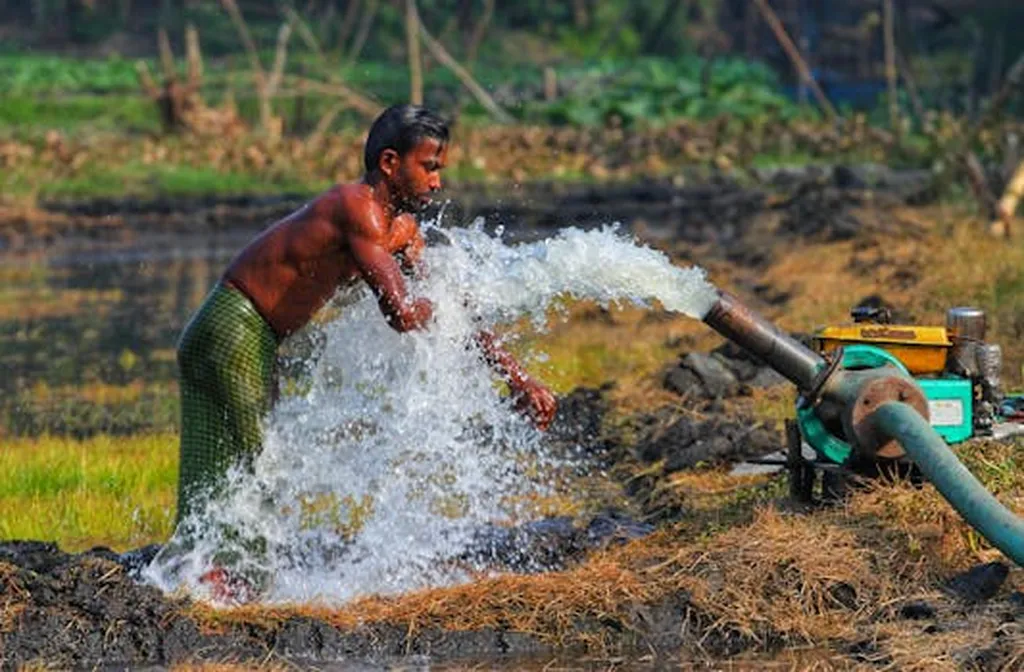
For the agriculture sector, these findings are particularly alarming. Groundwater is a critical resource for irrigation, and its depletion could have severe commercial impacts. “The decline in groundwater levels threatens water and food security, which in turn affects the economic stability of the region,” warns Waindeshkar. The study underscores the urgent need for integrated management strategies that balance the competing demands on land resources.
The research also demonstrates the power of Google Earth Engine (GEE) as a tool for examining LULC changes. The GEE-based approach proved to be efficient and provided actionable insights for urban planning and land-use management strategies. This method could be a game-changer for future studies, offering a scalable and cost-effective way to monitor land use changes and their impacts on groundwater recharge.
As India continues to grapple with the challenges of urbanization and climate change, this study serves as a stark reminder of the need for sustainable land-use policies. The findings call for rigorous implementation of regulations that ensure balanced development and protect critical water resources. The research not only highlights the urgent need for action but also provides a roadmap for future developments in the field, emphasizing the importance of integrating advanced technologies like GEE into land-use planning and management strategies.