
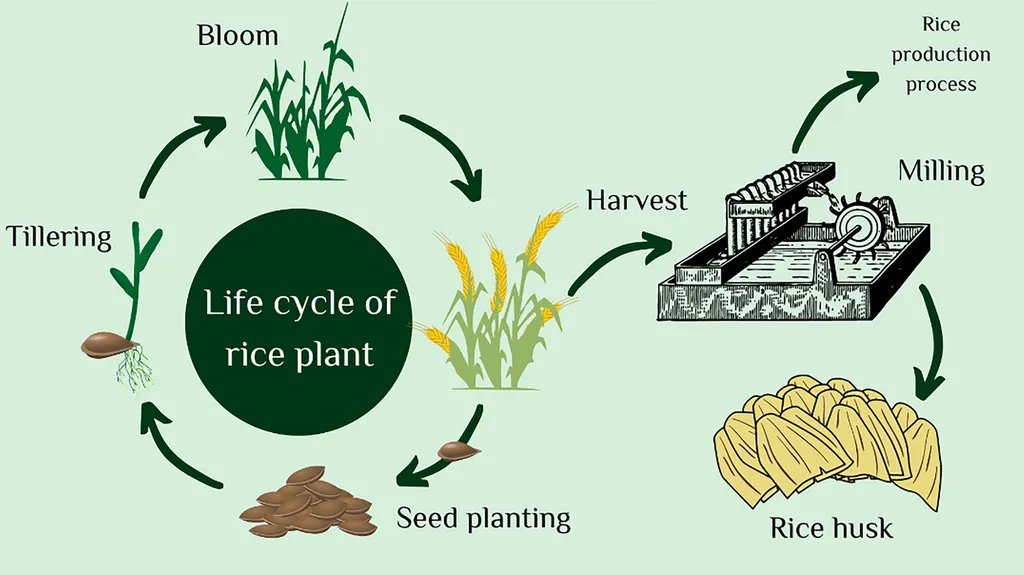
In the heart of Indonesia’s agricultural landscape, a humble byproduct of rice cultivation is emerging as a potential game-changer for renewable energy and sustainable farming practices. Rice husk, typically discarded as waste, is now being recognized for its significant potential as a biomass resource, according to a recent study published in the ‘BIO Web of Conferences’.
The research, led by Novananda Ella Dwiva from the Department of Biology at Institut Teknologi Sepuluh Nopember, focuses on the Inpari 32 rice variety cultivated in the agricultural areas of Tuban, East Java. The findings highlight the dual functionality of rice husk as both a renewable solid fuel and an organic soil enhancer, offering promising opportunities for the agriculture sector.
Rice husk, a lignocellulosic byproduct, has long been overlooked despite its abundance. However, this study reveals its potential through detailed physicochemical analysis. “The proximate analysis indicates a stable fixed carbon content of 44–45% and a calorific value ranging from 4,365 to 4,847 Kcal/kg,” explains Dwiva. These properties confirm the suitability of rice husk for co-firing in thermochemical energy conversion processes, making it a viable option for renewable energy systems.
The study also assesses the biomass productivity of rice husk, revealing an average dry husk yield of 5–7 grams per plant. This yield supports the feasibility of large-scale energy recovery, presenting an exciting opportunity for farmers to diversify their income streams. “The potential for energy recovery at scale is significant,” notes Dwiva. “This could transform the way we view agricultural waste, turning it into a valuable resource.”
Environmental conditions play a crucial role in determining the quality and potential use of rice husk. The study compares two districts, Jenu and Palang, within Tuban Regency. Jenu District’s near-neutral soil pH (6.14) and high organic carbon content (4.43%) result in improved carbon stability, making its rice husk more suitable for energy conversion. In contrast, Palang District’s more acidic soil (pH 5.64) with elevated phosphorus (120.2 mg/100g) and potassium (185 mg/100g) levels makes its rice husk better suited as a soil amendment.
These findings underscore the versatility of rice husk from the Inpari 32 cultivar, offering a dual benefit for both energy production and soil enhancement. This dual functionality could contribute to integrated energy-agriculture sustainability strategies, particularly in rural areas where agricultural waste is abundant.
The commercial implications for the agriculture sector are substantial. By utilizing rice husk as a renewable energy source, farmers can reduce their reliance on fossil fuels and lower their carbon footprint. Additionally, using rice husk as a soil amendment can improve soil health and fertility, leading to increased crop yields and long-term sustainability.
The research also opens up new avenues for innovation in the agritech industry. As the demand for renewable energy sources continues to grow, the development of technologies that can efficiently convert rice husk into energy becomes increasingly important. This study provides a foundation for further research and development in this area, potentially leading to the creation of new products and services that can benefit both farmers and the environment.
In conclusion, the study published in the ‘BIO Web of Conferences’ by Novananda Ella Dwiva from the Department of Biology at Institut Teknologi Sepuluh Nopember sheds light on the untapped potential of rice husk as a biomass resource. The findings highlight the dual functionality of rice husk as both a renewable energy source and a soil enhancer, offering promising opportunities for the agriculture sector. As the world seeks sustainable solutions to meet its energy needs, this research could shape future developments in the field, contributing to a more sustainable and integrated approach to energy and agriculture.