
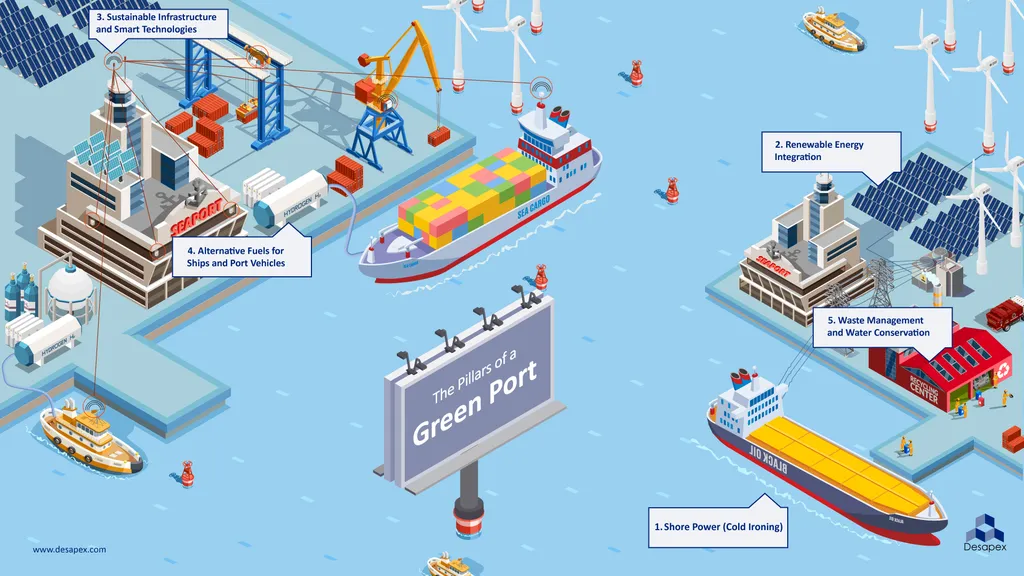
In the dynamic world of sustainable coastal development, a new study published in the *BIO Web of Conferences* is challenging conventional wisdom about maritime education and its role in fostering innovation. Led by Simanjuntak Marudut Bernadtua of the Maritime Institute at Sekolah Tinggi Ilmu Pelayaran Jakarta, the research delves into how maritime professionals perceive the integration of urban agriculture and renewable energy systems in smart port cities. The findings suggest that these professionals, often assumed to be narrowly focused on technical skills, are surprisingly adept at envisioning and supporting sustainable, interdisciplinary approaches to port development.
The study, which interviewed ten maritime professionals with extensive education and a decade of industry experience, reveals a nuanced understanding of sustainable technology integration. “Our participants demonstrated a strong capacity for understanding how urban agriculture and renewable energy systems can coexist within smart port cities,” Bernadtua explains. “This challenges the common assumption that maritime professionals are limited by their technical education.”
One of the most compelling findings is that maritime education’s emphasis on systematic thinking and operational planning actually enhances rather than hinders innovative approaches to sustainable development. “The analytical foundations provided by maritime programs are invaluable,” says one of the interviewed professionals. “But we also need to develop skills in interdisciplinary collaboration and community engagement to fully realize the potential of smart port cities.”
The research highlights a critical gap in current maritime education programs: while they excel in technical training, they often fall short in preparing graduates for the collaborative leadership required for sustainable development. This insight has significant implications for the agriculture sector, particularly in coastal regions where urban agriculture is gaining traction. By integrating renewable energy systems with urban farming, smart port cities could create more resilient and sustainable food systems, reducing reliance on traditional agricultural practices and enhancing food security.
The study suggests that enhancing rather than replacing current maritime education could bridge this gap. By maintaining technical excellence while expanding skills in interdisciplinary collaboration and community engagement, maritime programs could better prepare graduates to lead in sustainable development initiatives. This could open new avenues for commercial impact in the agriculture sector, as smart port cities become hubs for innovation in urban farming and renewable energy.
As coastal regions around the world grapple with the challenges of sustainable development, this research offers a timely and thought-provoking perspective. By leveraging the strengths of maritime education and fostering interdisciplinary collaboration, smart port cities could become models for sustainable coastal development, benefiting not only the maritime industry but also the agriculture sector and local communities. The findings published in the *BIO Web of Conferences* by Simanjuntak Marudut Bernadtua of the Maritime Institute at Sekolah Tinggi Ilmu Pelayaran Jakarta provide a compelling case for rethinking the role of maritime professionals in shaping the future of sustainable urban agriculture and maritime energy networks.