
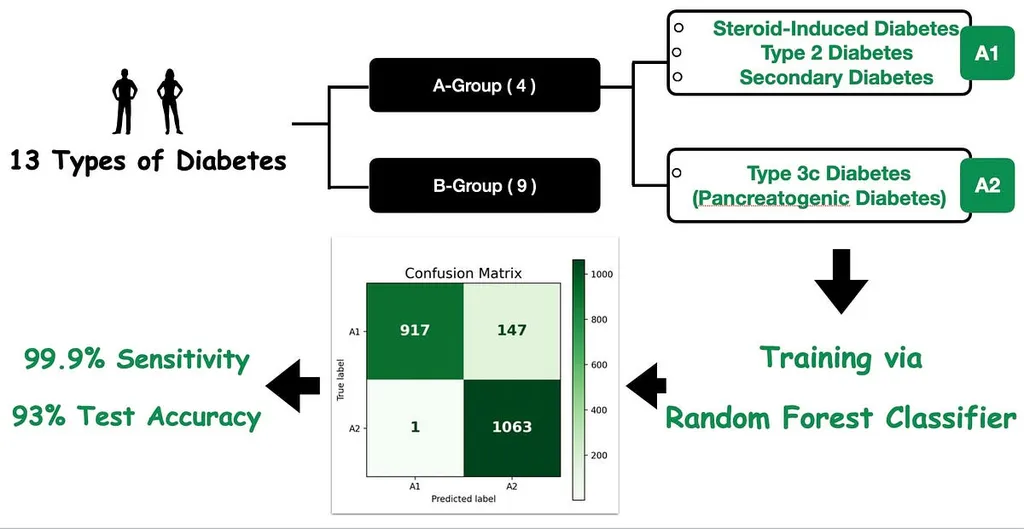
In the ever-evolving landscape of machine learning (ML), researchers are continually pushing the boundaries of what’s possible, and a recent study published in *Acta Scientiarum: Technology* offers a compelling glimpse into the future of diabetes prediction. Led by Mehtab Alam from Jamia Hamdard, the research delves into the efficacy of supervised ML algorithms, with a particular focus on the Random Forest algorithm, to predict diabetes with remarkable accuracy.
The study utilized a publicly available dataset comprising information from 768 individuals, with 500 control cases and 268 patients. The primary objective was to evaluate the performance of various supervised ML algorithms in classifying diabetes risk. The results were striking, with the Random Forest algorithm emerging as the top performer. In its initial iteration, the algorithm achieved an impressive accuracy rate of 78.44%. However, the researchers didn’t stop there. Through a series of tweaks and optimizations, they managed to enhance the algorithm’s performance, ultimately reaching an accuracy rate of 79.52%.
“This improvement, though seemingly modest, represents a significant leap in our ability to predict diabetes,” Alam explained. “The tweaks we implemented allowed the algorithm to make 173 correct predictions out of 218 test data, showcasing its potential to revolutionize early diagnosis and intervention strategies.”
The implications of this research extend far beyond the healthcare sector. In agriculture, for instance, the ability to predict and manage health risks can have profound commercial impacts. Farmers, who are often at an increased risk of diabetes due to their physically demanding lifestyles and dietary habits, could benefit immensely from early detection and prevention programs powered by such algorithms. “Imagine a future where farmers receive personalized health alerts and recommendations based on their unique risk profiles,” Alam envisioned. “This could lead to a healthier workforce, increased productivity, and ultimately, greater economic stability for the agricultural sector.”
The study also highlights the broader potential of ML in shaping future developments in healthcare and beyond. As Alam noted, “The success of the Random Forest algorithm in this context underscores the importance of exploring and optimizing various ML techniques. Each algorithm has its strengths and weaknesses, and understanding these nuances is key to unlocking their full potential.”
In conclusion, the research led by Mehtab Alam offers a promising glimpse into the future of diabetes prediction and the broader applications of machine learning. As we continue to harness the power of data and advanced algorithms, the possibilities for improving health outcomes and driving economic growth are truly boundless.