
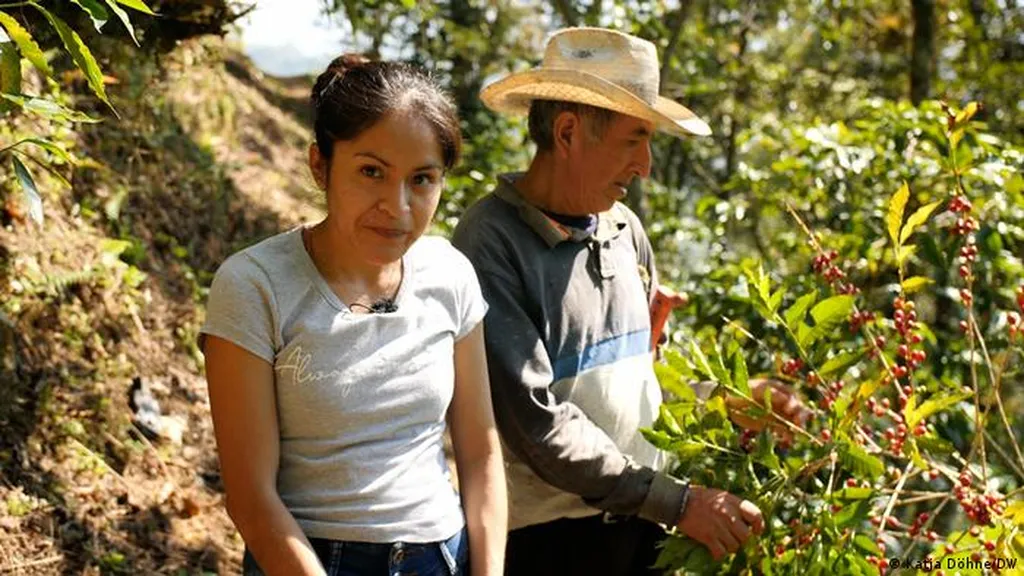
In the heart of Mexico’s coffee-growing regions, a novel approach to monitoring biodiversity is brewing, one that could reshape how the agriculture sector balances productivity and ecological preservation. Researchers have combined passive acoustic monitoring and LiDAR technology to create a scalable, cost-effective method for tracking avian biodiversity and habitat quality across coffee production landscapes.
The study, published in *Remote Sensing in Ecology and Conservation*, focuses on the gradient of habitat degradation associated with coffee production intensification. Coffee systems range from forest-like shaded polycultures to dense sun-exposed monocultures, offering a unique opportunity to study the impact of agricultural practices on biodiversity. “We wanted to see if we could capture the variation in vegetation and bird communities across this gradient in a consistent and scalable way,” says Marius Somveille, lead author of the study and a researcher at the Department of Genetics, Evolution and Environment at University College London.
Using LiDAR (Light Detection and Ranging) technology, the team surveyed the habitat, revealing that coffee production intensification is indeed associated with a decrease in vegetation density and complexity. Simultaneously, autonomous recording units collected audio data, which were analyzed using a vocalization classifier to assess bird community composition. The results were promising: bioacoustics captured known functional signatures of avian communities across the habitat degradation gradient.
This method offers a significant advantage for the agriculture sector. By providing a reliable, scalable way to monitor biodiversity, it can help farmers and agribusinesses design and certify biodiversity-friendly productive landscapes. “This approach has the potential to be deployed cost-effectively at large scales,” Somveille explains. “It could help us understand how biodiversity responds to land use changes and inform strategies to mitigate negative impacts.”
The implications for the coffee industry, and agriculture more broadly, are substantial. As consumer demand for sustainably produced goods grows, so does the need for verifiable, data-driven methods to assess and certify sustainable practices. This research could pave the way for more informed decision-making, benefiting both the environment and the bottom line.
Moreover, the study’s findings could inspire similar applications in other agricultural contexts. From cocoa to cocoa plantations, the integration of remote sensing and bioacoustics could become a powerful tool for monitoring and managing biodiversity in tropical landscapes.
As the agriculture sector grapples with the challenges of feeding a growing population while preserving the planet’s biodiversity, innovations like these offer a glimmer of hope. By harnessing the power of technology, researchers and farmers alike can work towards a future where productivity and ecological sustainability go hand in hand.