
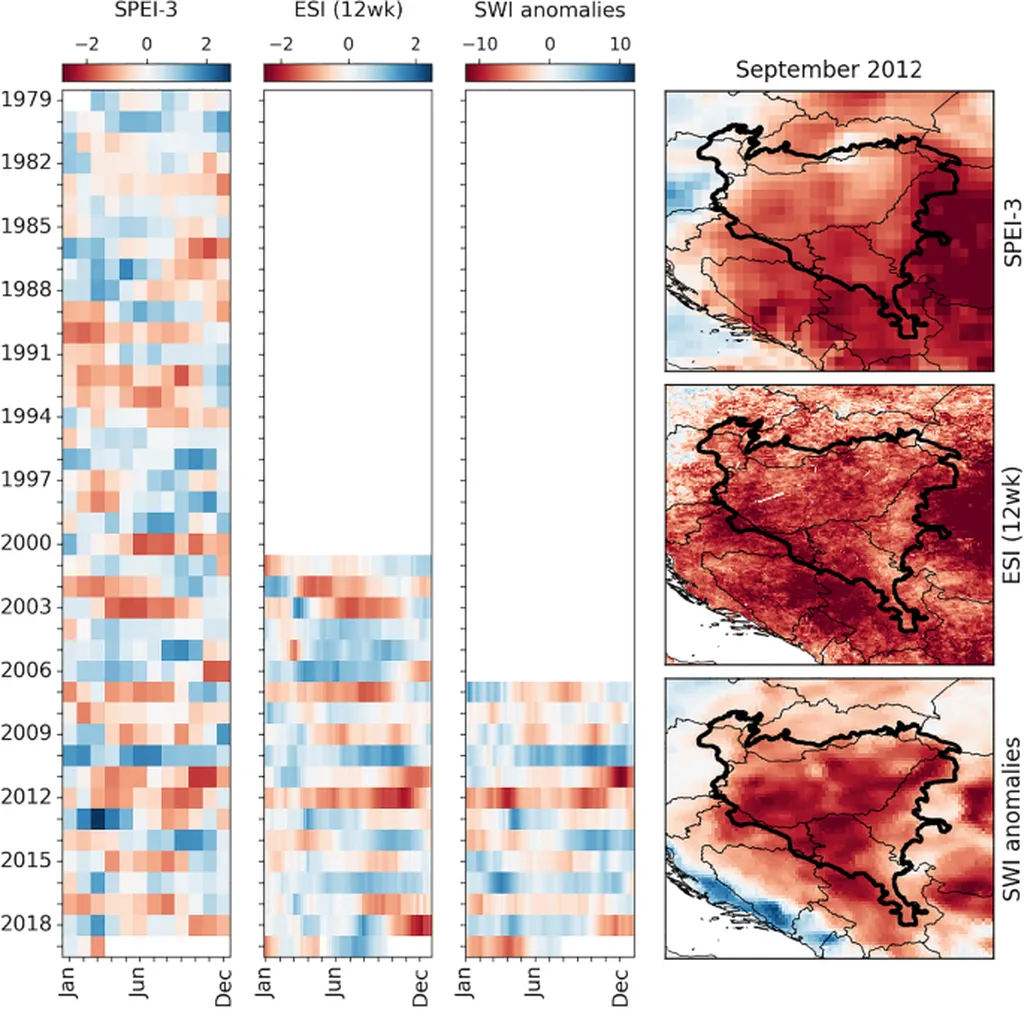
In the face of intensifying droughts, farmers in southern Europe are grappling with significant challenges to crop yields, particularly for staple grains like wheat. A recent study published in *Agricultural Water Management* offers a promising approach to monitoring and mitigating these impacts, leveraging remote sensing technology to provide a clearer picture of agricultural drought. Led by Mahsa Bozorgi of the Efficient Use of Water in Agriculture Program at the Institute of AgriFood, Research and Technology (IRTA) in Spain, the research quantifies wheat yield responses to drought across four Spanish regions—La Rioja, Castilla y León, Castilla-La Mancha, and Andalucía—using a combination of meteorological and remote sensing-based drought indices.
The study, which analyzed data from 2003 to 2021, employed three key drought indicators: the Standardized Precipitation-Evapotranspiration Index (SPEI), the Standardized Precipitation-Actual Evapotranspiration Index (SPET), and the Standardized Evapotranspiration Deficit Index (SEDI). These indices were aggregated at various timescales to identify the most relevant periods for wheat yield variability in each region. The findings revealed significant spatial variability in drought impacts, with the strongest correlations observed in La Rioja and the weakest in Andalucía.
“Our results highlight the importance of tailoring drought monitoring strategies to specific regions,” Bozorgi explained. “In Mediterranean regions like Andalucía and Castilla-La Mancha, short-term drought conditions during late spring had the greatest impact on wheat yields, while in temperate continental regions like Castilla y León and La Rioja, longer-term drought conditions in early summer were more critical.”
Among the drought indices, SEDI emerged as the most consistent and reliable predictor of wheat yield variability. This index, derived from a physical model estimating actual crop evapotranspiration (ETc act), offers a more precise measure of water stress experienced by crops. The integration of remotely sensed ETc act with ERA5 reanalysis data provides a robust tool for region-specific drought monitoring, which could be instrumental in developing adaptive water management strategies.
The commercial implications of this research are substantial. As droughts become more frequent and severe due to climate change, farmers and agricultural stakeholders need accurate, real-time data to make informed decisions about water use and crop management. The study’s findings suggest that remote sensing technologies can play a pivotal role in this effort, offering a scalable and cost-effective solution for monitoring agricultural drought impacts.
“By leveraging remote sensing, we can provide farmers with timely and accurate information about water stress in their crops,” Bozorgi noted. “This can help them optimize irrigation practices, reduce water waste, and ultimately improve crop yields.”
The research also underscores the need for region-specific approaches to drought monitoring and management. As Bozorgi and her team demonstrated, the timing and duration of drought conditions that most affect wheat yields can vary significantly from one region to another. This nuanced understanding is crucial for developing effective water management strategies that can adapt to the unique challenges posed by climate change.
Looking ahead, the integration of remote sensing technologies with advanced data analytics and machine learning algorithms could further enhance the precision and predictive power of drought monitoring systems. By continuously refining these tools, researchers and agricultural stakeholders can better anticipate and mitigate the impacts of drought on crop yields, ensuring food security and economic stability in the face of a changing climate.
As the agriculture sector continues to grapple with the challenges posed by climate change, studies like this one offer a beacon of hope. By harnessing the power of technology and data, farmers and agricultural stakeholders can adapt to the evolving challenges of drought and build a more resilient and sustainable future for the industry.