
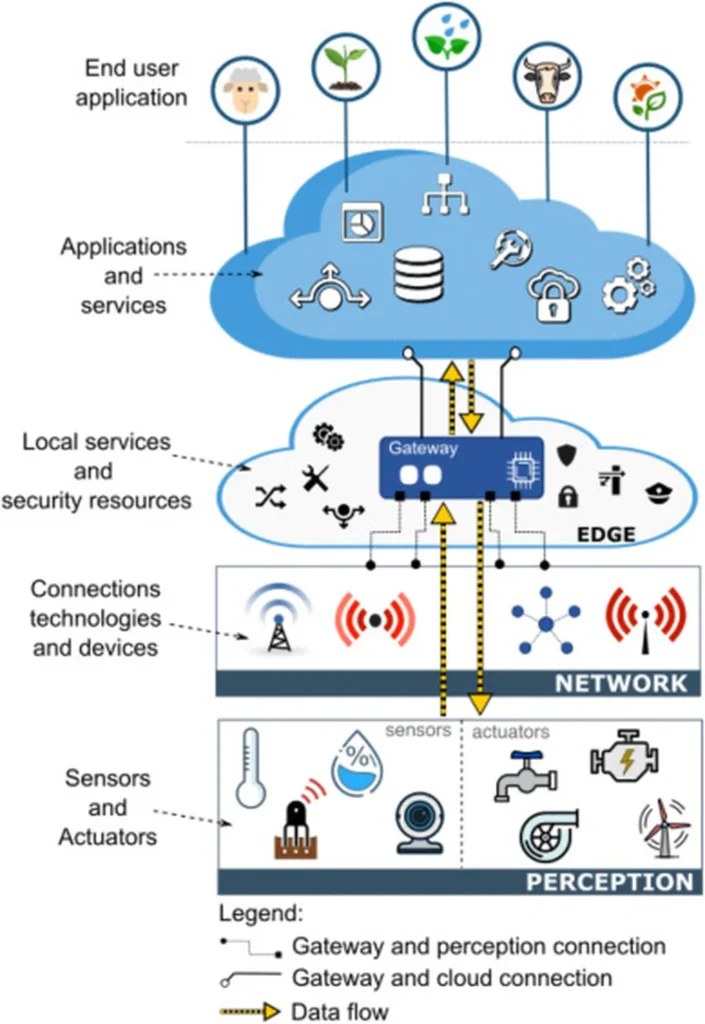
In the sprawling fields of modern agriculture, where precision and efficiency reign supreme, a silent revolution is underway. Wireless Sensor Networks (WSNs) are becoming the backbone of smart farming, enabling real-time monitoring of soil conditions, crop health, and environmental factors. However, as these networks become more integral to agricultural operations, ensuring their security is paramount. A recent survey published in *Franklin Open* sheds light on the challenges and innovations in securing WSNs, offering insights that could shape the future of agritech.
The survey, led by R. Sudha of the Department of ECE at SSM Institute of Engineering and Technology in Dindigul, India, delves into the myriad security threats that WSNs face. These networks, though low-power and resource-constrained, are vulnerable to various forms of cyber-attacks. “The more advanced these threats become, the higher is the need to have strong and flexible security measures,” Sudha notes, highlighting the critical need for robust security protocols.
The research encompasses a broad spectrum of studies, from secure data transmission and key management to trust and reputation systems. It also explores novel concepts such as applying blockchain and machine learning to identify and mitigate security problems. “Some of the studies in the research are based on straightforward solutions that can be applied effectively with the available limited resources of WSNs, whereas others attempt to achieve the balance between security and efficiency,” Sudha explains.
For the agriculture sector, the implications are significant. WSNs are used for real-time monitoring of soil moisture, temperature, and crop health, enabling farmers to make data-driven decisions. However, any breach in these networks could lead to compromised data, affecting crop yields and farm management. The survey underscores the need for energy-efficient and adaptable security solutions that can keep pace with the dynamic conditions of agricultural environments.
Despite the advancements, challenges remain. Many proposed solutions are energy-consuming or rigid, struggling to adapt to changing network conditions. There is also a disconnect between theoretical concepts and practical implementation, particularly with complex technologies like artificial intelligence. “The disconnect between the concepts in studies and their practical implementation is also present, in particular, the use of complex technologies, such as AI, in practice,” Sudha points out.
The survey aims to bridge this gap by uniting significant conclusions from recent research and emphasizing unresolved issues. It provides an up-to-date image of current trends in WSN security, offering researchers and developers a roadmap to develop more efficient and profound strategies. As the agriculture sector continues to embrace smart technologies, the insights from this survey could be instrumental in shaping the future of secure and reliable WSNs.
In the ever-evolving landscape of agritech, securing WSNs is not just a technical challenge but a necessity for sustainable and efficient farming. The research led by Sudha serves as a beacon, guiding the way towards a more secure and resilient future for smart agriculture.