
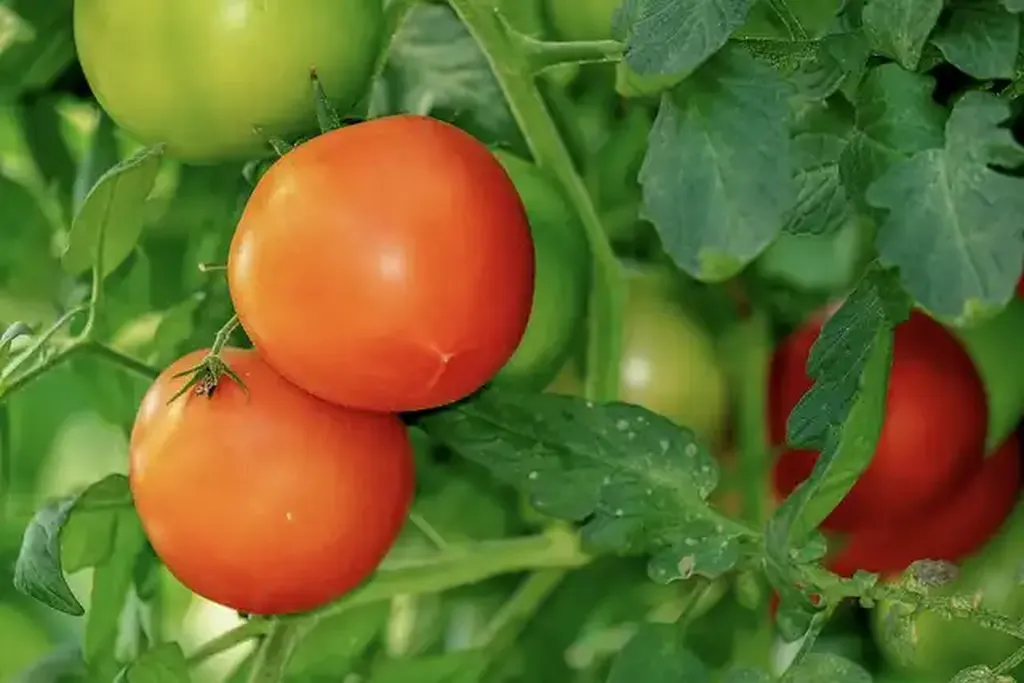
In the face of escalating soil salinization, a silent crisis that threatens over 1.3 million hectares of arable land worldwide, researchers are turning to wild relatives of our most important crops for solutions. A recent study published in *Environmental and Experimental Botany* has shed light on the remarkable salt tolerance of the wild tomato species *Solanum pimpinellifolium L.*, offering promising insights for improving cultivated tomatoes and enhancing agricultural resilience.
The study, led by Susanna Cialli of the Crop Science Research Center at the School of Advanced Studies Sant’Anna in Pisa, Italy, compared the salt stress responses of the cultivated tomato (*Solanum lycopersicum L.*) and its wild counterpart, *S. pimpinellifolium L.* The findings reveal that the wild species has evolved sophisticated mechanisms to thrive in high-salinity environments, providing a blueprint for enhancing the salt tolerance of cultivated varieties.
Cialli and her team grew the plants hydroponically in a closed-loop system, exposing them to nutrient solutions that mimicked seawater irrigation (33% seawater, EC = 21 dS m⁻¹) and a salt-free control (0% seawater, EC = 3.22 dS m⁻¹). By assessing a range of traits—phenological, morphological, biochemical, physiological, and hormonal—the researchers uncovered the secrets behind the wild tomato’s resilience.
“Solanum pimpinellifolium L. effectively modulates the production of osmolytes and photoprotective compounds, the translocation of toxic ions, and improves leaf function,” Cialli explained. “These processes, in synergy with a more integrated and temporally coordinated hormonal network, sustain better growth, yield, and fruit quality under saline conditions.”
The implications for the agriculture sector are profound. As soil salinization continues to encroach on arable land, the ability to cultivate salt-tolerant crops could mitigate significant losses in productivity. By leveraging the genetic resources of wild tomato species, breeders may develop new varieties of cultivated tomatoes that can thrive in saline soils, thereby expanding the range of viable agricultural land.
Moreover, the study suggests that seawater-based irrigation could serve as a sustainable water management strategy, particularly in coastal regions where freshwater resources are scarce. This approach not only addresses the pressing issue of soil salinization but also promotes the efficient use of alternative water sources, aligning with global efforts to achieve sustainable agriculture.
The research underscores the value of wild relatives in crop improvement programs. By studying the adaptive mechanisms of *S. pimpinellifolium L.*, scientists can identify key traits that confer salt tolerance and integrate them into cultivated varieties through breeding or genetic engineering. This could lead to the development of crops that are not only more resilient to abiotic stresses but also maintain high yields and quality.
As the agriculture sector grapples with the challenges posed by climate change and soil degradation, the insights from this study offer a beacon of hope. By harnessing the natural adaptations of wild species, researchers and farmers alike can pave the way for a more sustainable and productive future.
The study, published in *Environmental and Experimental Botany*, was led by Susanna Cialli of the Crop Science Research Center at the School of Advanced Studies Sant’Anna in Pisa, Italy.