
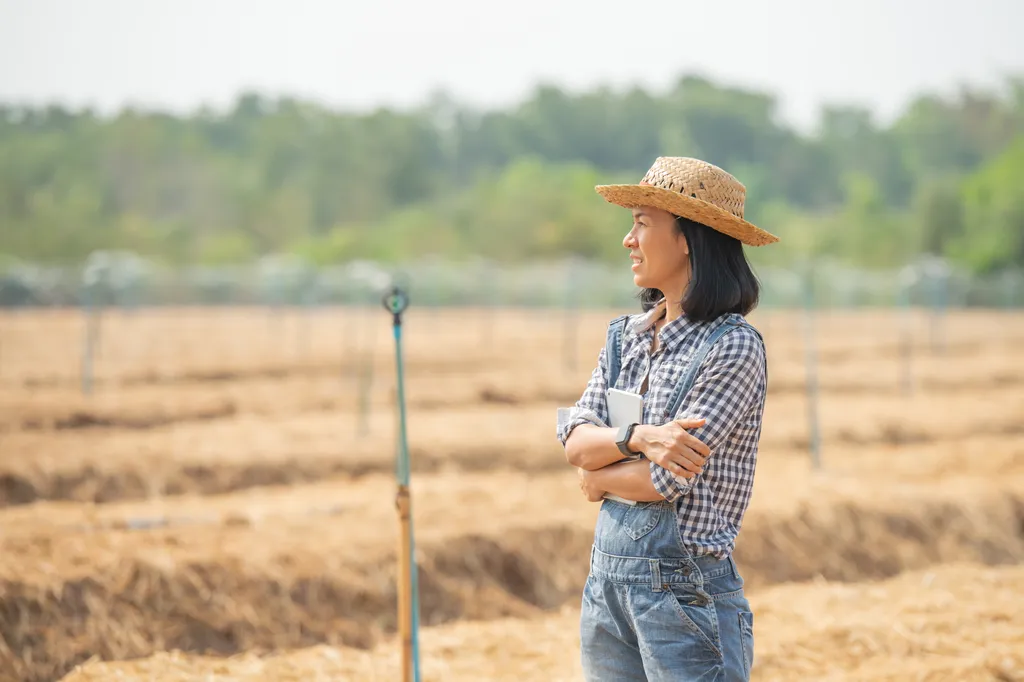
In the face of climate change, farmers worldwide are seeking ways to adapt and build resilience. A recent study published in *Cogent Food & Agriculture* sheds light on how conservation agriculture practices are helping Chinese farmers optimize resource use and enhance farm efficiency. The research, led by Liyuan Zheng from the School of Supply Chain Management at Ningbo Polytechnic University, offers valuable insights into the future of sustainable agriculture.
The study, which analyzed data from 384 farmers, reveals that diversification, water conservation, and soil conservation strategies are key to mitigating climate change impacts. These practices not only help farmers adapt but also contribute to more efficient use of farm inputs. “Farmers have been proactive in adopting these strategies,” says Zheng, “and the results show a significant improvement in farm efficiency.”
One of the most striking findings is the mean technical efficiency score of 0.69, indicating that farmers could increase their output by 31% with the same input levels. This suggests a substantial untapped potential in farm productivity. The study also highlights the positive impact of land and working capital on output, with a 1% increase in these resources leading to a 0.259% and 0.096% increase in output, respectively.
The adoption of diversified strategies also plays a crucial role. A 1 unit increase in the adoption of these strategies improved farm output by 0.037%. This underscores the importance of diversification in building resilient and resource-efficient food systems.
The study also identifies several factors that significantly affect farm efficiency. Age, training, government policies, climate change awareness, cooperative membership, and internet accessibility all play a role. This suggests that a multifaceted approach is needed to enhance farm efficiency, one that includes education, policy support, and access to digital tools.
The commercial implications of this research are significant. By adopting conservation agriculture practices and leveraging digital tools, farmers can enhance productivity and build resilience against climate change. This not only benefits individual farmers but also contributes to the overall stability and sustainability of the agriculture sector.
As we look to the future, this research provides a roadmap for enhancing farm efficiency and building climate-resilient food systems. It underscores the need for continued investment in education, policy support, and digital tools. As Zheng notes, “The outcomes of this study provide practical guidance for enhancing farm efficiency. Public policymakers should promote the adoption of digital tools in farming by increasing access and training to mobile-based digital tools.”
In the face of climate change, the insights from this study are more relevant than ever. By embracing conservation agriculture practices and leveraging digital tools, farmers can build resilience, enhance productivity, and contribute to the sustainability of the agriculture sector. The study, published in *Cogent Food & Agriculture* and led by Liyuan Zheng from the School of Supply Chain Management at Ningbo Polytechnic University, offers a valuable contribution to the ongoing conversation about the future of sustainable agriculture.