
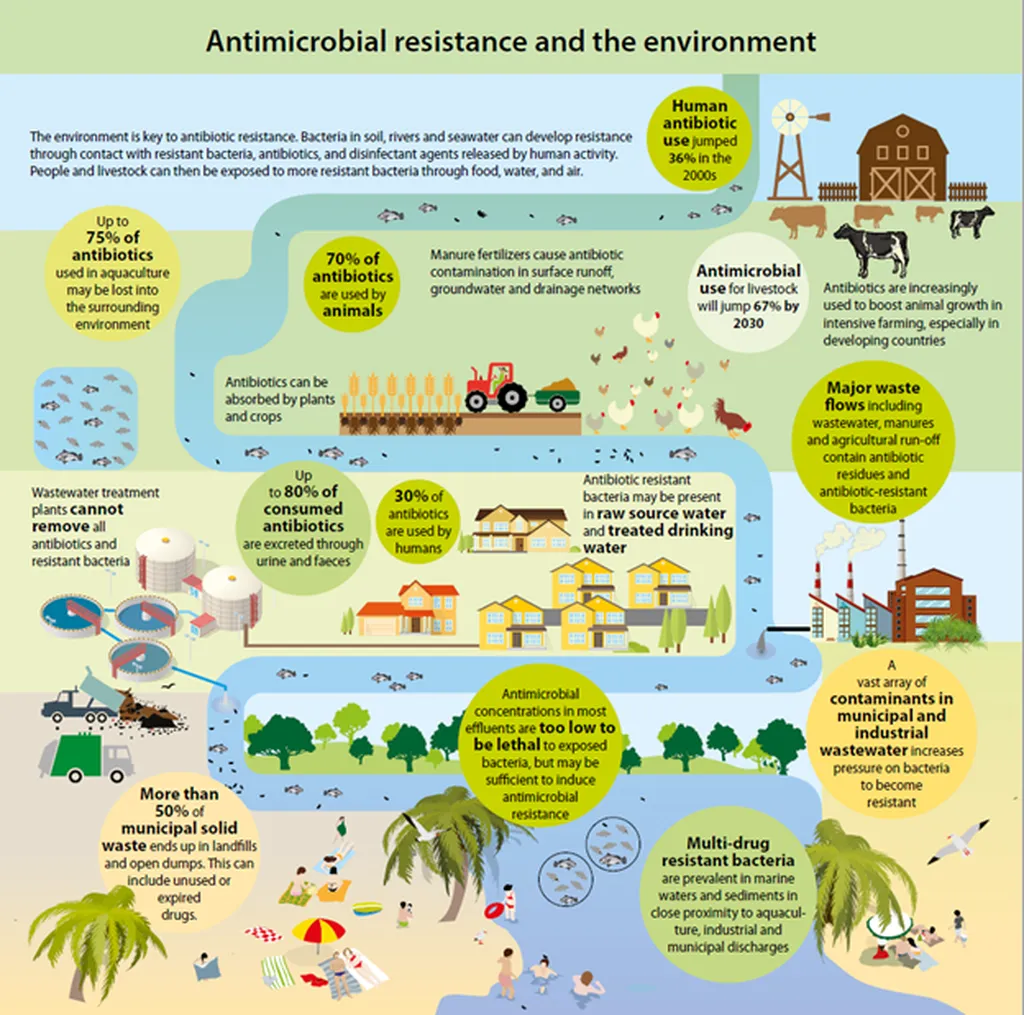
In a world where climate change and antimicrobial resistance (AMR) are increasingly intertwined, a new study published in *Animal Diseases* sheds light on the urgent challenges facing low- and middle-income countries (LMICs). The research, led by Muhammad Yasir Alhassan from the Department of Public Health at Symbiosis Institute of Health Sciences, highlights how shifting weather patterns are exacerbating the spread of resistant foodborne bacteria, posing significant risks to public health and the agriculture sector.
Climate change is altering the ecological dynamics of bacteria, creating favorable conditions for the emergence and spread of antimicrobial resistance. Rising temperatures, extreme rainfall, droughts, and flooding are not only disrupting bacterial ecology but also expanding environmental resistomes—the collective genes that confer resistance to antibiotics. This, in turn, drives greater antimicrobial use in livestock and aquaculture, further intensifying resistance in common foodborne pathogens like Salmonella, Campylobacter, Escherichia coli, Vibrio, and Listeria.
“Climate variability interacts with weak surveillance systems, inadequate veterinary stewardship, and informal food markets to accelerate resistant infections,” explains Alhassan. This interaction is particularly pronounced in LMICs, where the infrastructure to monitor and mitigate these risks is often lacking. The study underscores the need for integrated One Health strategies that combine climate-smart agriculture, strengthened food safety and water, sanitation, and hygiene (WASH) systems, robust genomic surveillance, and multisectoral governance.
The commercial impacts for the agriculture sector are substantial. As resistance trends escalate, the effectiveness of antimicrobial treatments in livestock and aquaculture diminishes, leading to increased production costs and reduced yields. This not only affects the economic viability of farmers but also threatens food security in regions already grappling with climate-related challenges.
“Without decisive and coordinated action, the convergence of climate change and AMR will deepen health inequities, undermine food security, and erode global progress toward sustainable health and development,” warns Alhassan. The study calls for a proactive approach, emphasizing the importance of longitudinal surveillance, genomic data, and climate-informed AMR risk models to guide interventions.
As the world grapples with the complexities of climate change and antimicrobial resistance, this research serves as a clarion call for integrated, cross-sectoral strategies. By addressing these challenges holistically, the agriculture sector can mitigate risks, enhance resilience, and ensure sustainable development for future generations. The findings, published in *Animal Diseases*, offer a critical roadmap for policymakers, researchers, and stakeholders to navigate the intersection of climate change and AMR, ultimately safeguarding public health and food security in LMICs.