
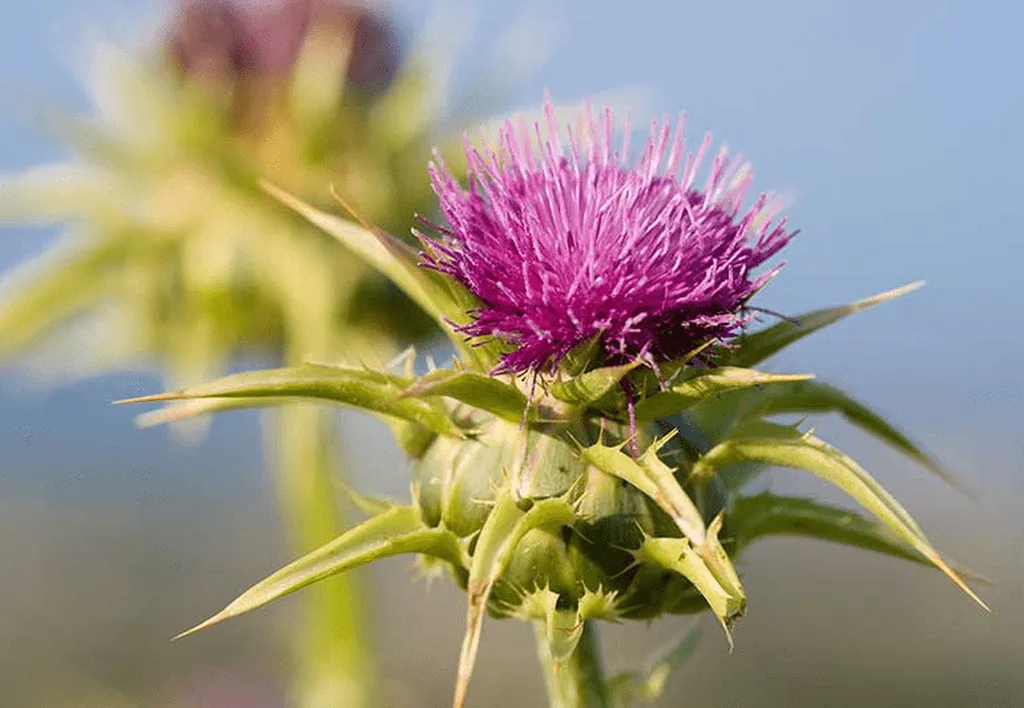
In the arid landscapes of Iran’s northwest, where the once-vast Lake Urmia has dwindled to a fraction of its former self, farmers are facing an increasingly stark reality: water scarcity. Yet, amidst this challenge, a new study published in *Scientific Reports* offers a glimmer of hope, not just for the region’s ecology, but also for its agricultural economy. The research, led by Jafar Ghaffarzadeh from the Department of Plant Production and Genetics at Urmia University, explores how milk thistle—a medicinal plant with a global market presence—can thrive under water constraints, thanks to a combination of strategic irrigation and biofertilizers.
Milk thistle, known for its immune-boosting properties, is one of the top-selling medicinal plants worldwide. However, its cultivation in water-scarce regions like northwest Iran has been a challenge. Ghaffarzadeh’s study sought to address this by investigating the effects of different irrigation regimes and biofertilizers on the plant’s yield and quality. The findings are promising. “The interaction of irrigation and biofertilizers was significant for several key traits, including biological yield, capitule number, and even the plant’s antioxidant properties,” Ghaffarzadeh explains. This suggests that by carefully managing water use and supplementing with biofertilizers, farmers can enhance both the quantity and quality of their milk thistle crops.
The study’s experimental design was rigorous, involving a split-plot setup with two irrigation levels—full irrigation and no irrigation—and five biofertilizer treatments, including nitrogen, phosphorus, potash, and a combination of all three (NPK). The results showed that biofertilizers generally improved most morphological and biochemical traits compared to the control. Notably, the combination of NPK biofertilizer and irrigation helped the plant tolerate drought stress more effectively, boosting its medicinal properties.
For the agriculture sector, these findings could be a game-changer. As water resources become increasingly scarce, the ability to cultivate high-value crops like milk thistle without excessive water use opens up new opportunities for farmers. “Biofertilizers can be a good candidate for nutrient supplements, especially in sustainable agriculture,” Ghaffarzadeh notes. This could lead to a shift in cropping patterns, moving away from water-intensive crops towards more sustainable, low-water alternatives that still deliver economic returns.
The commercial implications are significant. Milk thistle is already a valuable crop in the global market, and the ability to grow it efficiently in water-scarce regions could expand its cultivation, benefiting farmers and the broader economy. Moreover, the study’s focus on qualitative traits—such as antioxidant properties—highlights the potential for producing higher-quality medicinal plants, which could command premium prices in the market.
As the world grapples with climate change and water scarcity, research like Ghaffarzadeh’s offers a roadmap for sustainable agriculture. By leveraging biofertilizers and strategic irrigation, farmers can adapt to changing conditions while still meeting market demands. The study, published in *Scientific Reports*, not only advances our understanding of milk thistle cultivation but also paves the way for innovative agricultural practices that could shape the future of farming in arid regions.