
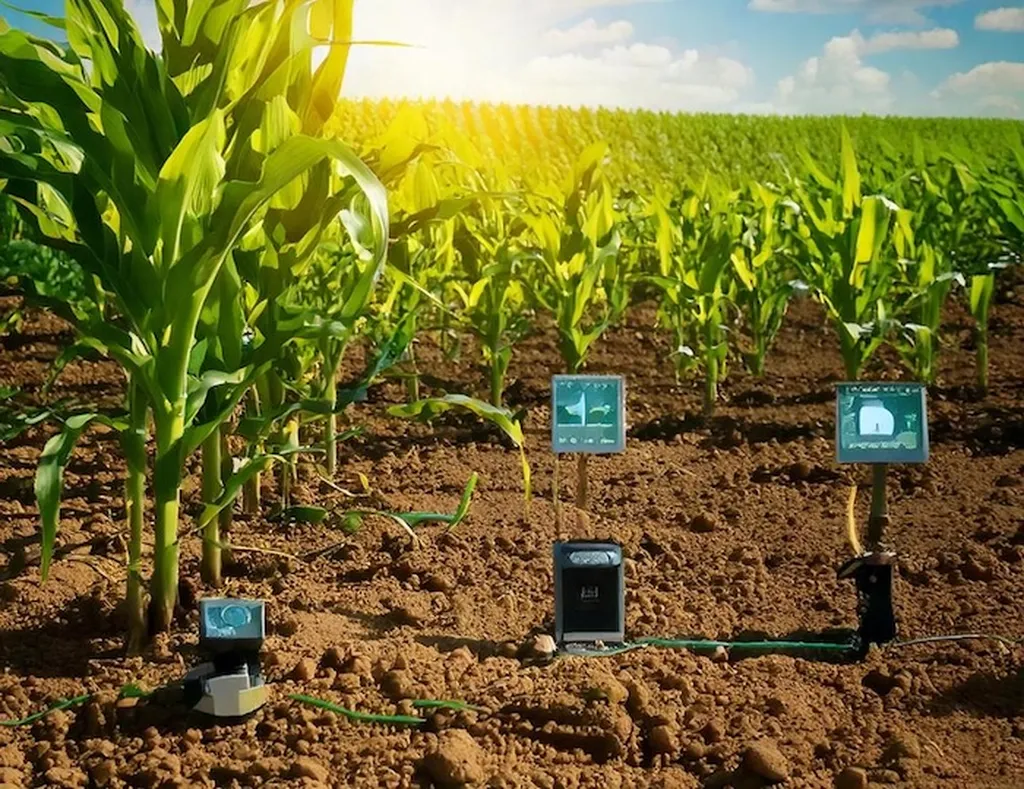
In the quest for sustainable agriculture, soil health monitoring stands as a cornerstone, directly influencing crop productivity and environmental stewardship. Recent advancements in sensor technologies are revolutionizing this field, offering unprecedented precision and efficiency. A comprehensive review published in *Discover Sensors* delves into these innovations, highlighting their transformative potential for precision agriculture.
The review, led by Umalaxmi Thingujam from the Department of Soil Science and Agricultural Chemistry at Visva-Bharati University, explores three key themes: enhanced sensor accuracy, integrated platforms for overcoming spatial and temporal limitations, and the challenges hindering widespread adoption. These advancements are not just academic exercises; they hold significant commercial implications for the agriculture sector.
“Advancements in microelectromechanical systems (MEMS), nanotechnology, and polymer-based sensors have markedly improved sensitivity and cost-effectiveness,” Thingujam notes. This progress enables rapid in-situ detection of essential nutrients like nitrogen, phosphorus, and potassium (NPK), reducing reliance on time-consuming and expensive laboratory methods. Dielectric-based moisture sensors, such as Time Domain Reflectometry (TDR) and Frequency Domain Reflectometry (FDR), have proven highly effective for real-time irrigation management, while ion-sensitive field-effect transistors (ISFETs) and optical systems have enhanced nutrient profiling through improved pH and electrical conductivity (EC) monitoring.
The integration of these sensors into Internet of Things (IoT)-enabled networks facilitates extensive, real-time data collection and predictive analytics. This data-driven approach supports farmers in making informed decisions, optimizing resource use, and enhancing crop yields. “The evolution of soil sensor technology is progressing from basic devices to sophisticated systems capable of detecting specific ions and biological processes,” Thingujam explains. This shift towards intelligent systems promises to reshape the agricultural landscape, making farming more efficient and sustainable.
However, challenges remain. Soil-specific calibration, high costs, and limited connectivity in remote areas are significant hurdles. Addressing these issues is crucial for transitioning these technologies from research labs to widespread, practical adoption. Future prospects hinge on developing durable, cost-effective sensors with universal calibration models, leveraging machine learning for predictive analytics, and employing biodegradable materials to enhance sustainability.
The review underscores the pivotal role of sensor technologies in achieving sustainable soil management. As Thingujam and her team highlight, interdisciplinary innovations are required to bridge the gap between prototyping and large-scale implementation. The commercial impacts of these advancements are profound, offering farmers and agribusinesses tools to enhance productivity, reduce environmental impact, and drive economic growth.
In the words of Thingujam, “The future of soil sensor technology lies in its ability to provide actionable insights, supporting data-driven decision-making in agriculture.” As these technologies continue to evolve, they hold the promise of transforming the agriculture sector, making it more resilient and sustainable in the face of global challenges.