
In the ever-evolving landscape of agricultural technology, a groundbreaking study has emerged that promises to revolutionize the timber grading process, with significant implications for the wood processing industry and the broader agricultural sector. Published in *Scientific Reports*, the research introduces an innovative automated timber grading system that integrates multiple factors, including defects and moisture content, to enhance the accuracy and efficiency of structural timber evaluation.
Traditional timber grading methods have long been plagued by inconsistencies and human bias, often leading to an underestimation of the timber’s true mechanical potential. The anisotropic nature of wood further complicates the grading process, making it a challenging task for visual inspection. To address these issues, the study proposes a novel grading method that combines external quality evaluation with internal elastic modulus properties, thereby providing a more comprehensive assessment of the timber’s structural integrity.
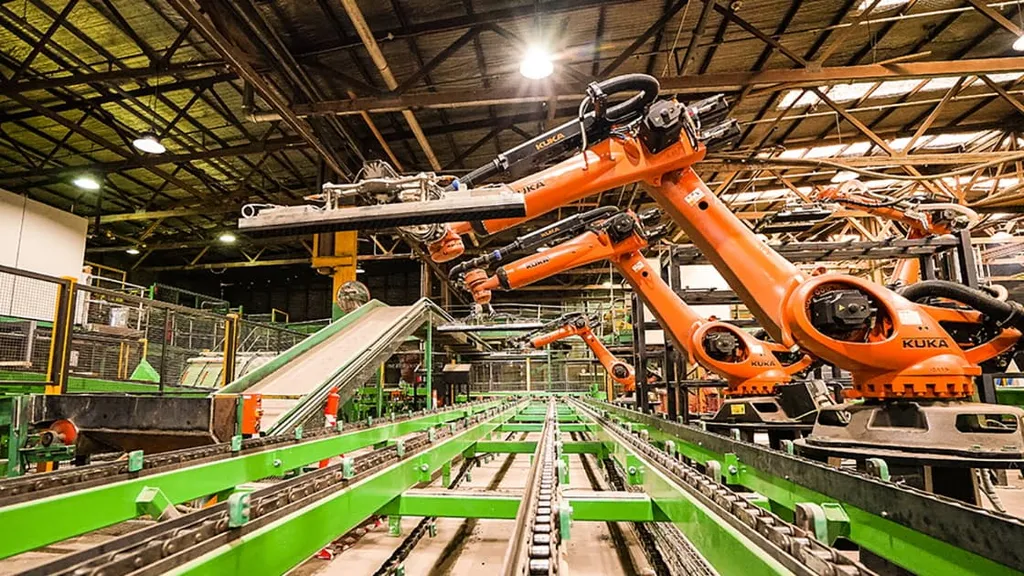
The automated production line developed as part of this research features several cutting-edge components, including automatic loading and unloading, machine vision-optimized sorting, online moisture content detection, mechanical stress grading, and multi-sensor data integration. These components work in tandem to create a seamless and efficient grading process that significantly reduces labor costs and enhances productivity.
One of the most notable aspects of this study is its integration of multiple factors, such as defects and moisture content, into the grading operations. This holistic approach not only promotes a deeper understanding of automation in the wood processing industry but also sets a new standard for advanced automation technology. As lead author Min Ji from the Research Institute of Wood Industry, Chinese Academy of Forestry, explains, “The methodologies employed in this study not only enhance grading efficiency but also provide robust technical underpinnings for the transformation and upgrading of the wood manufacturing industry.”
The practical applicability of the automated grading technology was thoroughly validated through experimental outcomes, which demonstrated a marked improvement in grading efficiency and a reduction in labor costs. This technology has already gained recognition, as the automated structural timber grading line was successfully certified by the Japanese JAS (Japanese Agricultural Standard) in 2023, ensuring that graded structural timber meets the highest standards for export to Japan.
The implications of this research extend beyond the immediate benefits of increased efficiency and reduced costs. By incorporating advanced automation technology, the grading process can be flexibly integrated into automated wood processing production lines, paving the way for intelligent and automated production line management. This advancement is poised to shape the future of the wood manufacturing industry, driving innovation and setting new benchmarks for quality and efficiency.
As the agricultural sector continues to embrace technological advancements, the integration of automated timber grading systems represents a significant step forward. The research not only highlights the potential for enhanced productivity and cost savings but also underscores the importance of adopting advanced technologies to meet the evolving demands of the industry. With the successful certification of the automated grading line, the stage is set for broader adoption and further advancements in the field, ultimately benefiting the entire agricultural sector.