
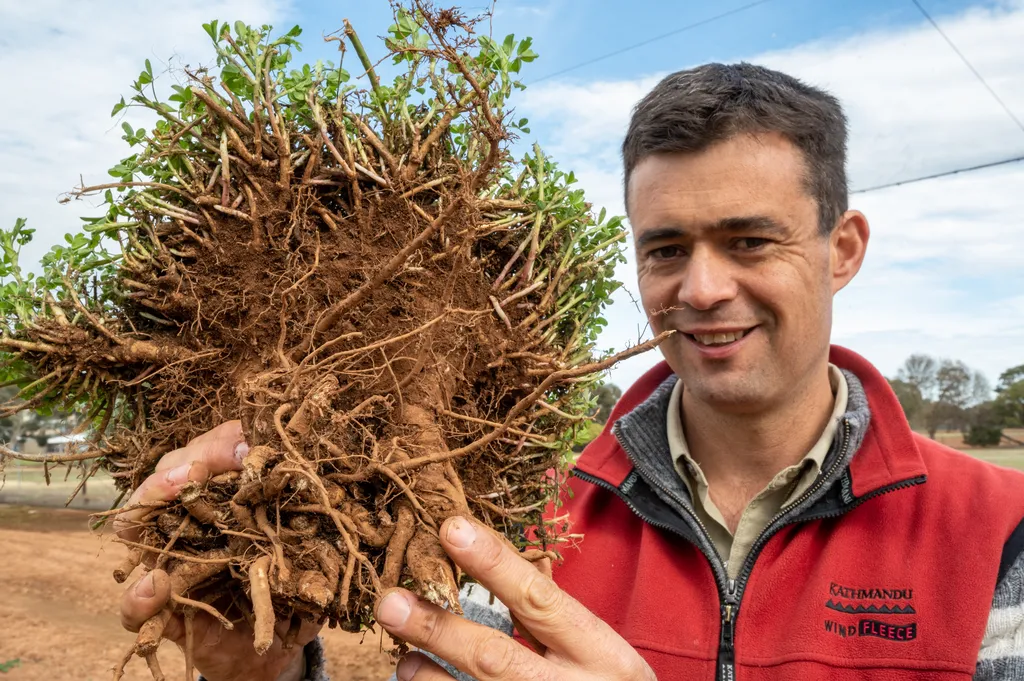
In the ever-evolving world of agriculture, understanding how crops respond to stress is crucial for developing resilient varieties that can withstand the challenges posed by climate change and pathogens. A recent study published in *Plant Signaling & Behavior* sheds light on how alfalfa, a vital forage crop, adapts to both salinity and fungal infection, offering insights that could revolutionize crop breeding and management.
The research, led by Wiem Mnafgui from the Laboratory of Extremophile Plants at the Centre of Biotechnology of Borj-Cedria, compared the responses of two alfalfa varieties, Gabes-2353 (tolerant) and Magna-601 (sensitive), to salinity, Ascochyta medicaginicola infection, and a combination of both stresses. The findings reveal a complex interplay of physiological and molecular mechanisms that could pave the way for more robust alfalfa varieties.
“Plants in real-life scenarios often face multiple stresses simultaneously,” Mnafgui explained. “Understanding how they respond to these combined challenges is key to developing crops that can thrive in adverse conditions.”
The study identified 128 differentially abundant proteins (DAPs) between the two varieties, with distinct patterns of regulation under different stress conditions. Gabes-2353, the tolerant variety, activated pathways related to photosynthesis, metabolism, redox balance, and immune responses. In contrast, Magna-601, the sensitive variety, showed disruptions in carbohydrate metabolism and activated broad stress-signaling responses under combined stress.
One of the most intriguing findings was the identification of 7-O-methyltransferase as a central hub in Gabes-2353’s protein-protein interaction network. This enzyme plays a crucial role in the plant’s ability to integrate metabolic and immune pathways, highlighting a potential target for future breeding programs.
The commercial implications of this research are significant. Alfalfa is a cornerstone of livestock feed, and its productivity is often hampered by abiotic and biotic stresses. By understanding the molecular mechanisms underlying stress tolerance, breeders can develop varieties that are more resilient to salinity and disease, ensuring a stable feed supply for the agriculture sector.
Moreover, the insights gained from this study could extend beyond alfalfa. The principles of molecular adaptation to combined stresses are universal and can be applied to other crops, enhancing overall agricultural productivity and sustainability.
As the agriculture sector grapples with the realities of climate change and the increasing prevalence of plant pathogens, research like this offers a beacon of hope. By unraveling the complex web of plant responses to stress, scientists are laying the groundwork for a more resilient and productive future.
“This study is a significant step forward in our understanding of plant stress responses,” Mnafgui noted. “It provides a roadmap for developing crops that can withstand the challenges of a changing environment, ensuring food security for future generations.”
In the quest for sustainable agriculture, every discovery brings us one step closer to a world where crops can thrive despite the odds. This research, with its focus on the molecular intricacies of stress adaptation, is a testament to the power of scientific inquiry in shaping the future of farming.