
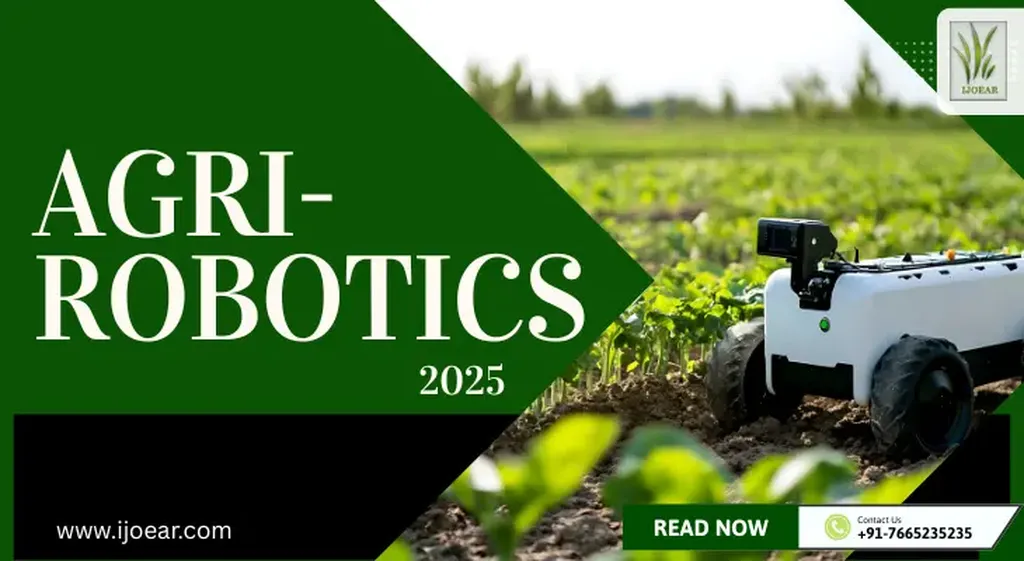
Field robots have steadily transitioned from being a niche innovation to a prominent feature in modern farming. Throughout 2025, Future Farming reported extensively on the rapid evolution of autonomous machines designed for field and harvest operations, addressing labour shortages while improving precision and efficiency. As we approach the end of 2025 and look ahead to the first days of 2026, it is timely to reflect on the content shared over the past year. In the coming days, a series of top 5 overviews will be published, featuring the best-read articles of 2025. This edition focuses on field robots, highlighting the stories, concepts, and commercial launches that attracted the most attention from our audience.
The AgBot 5.115T2 traction robot, capable of neat ploughing day and night without a driver and with minimal soil pressure, was one of the standout innovations. A range of different and varying factors makes it difficult to make a uniform comparison with a manned wheeled tractor. Nevertheless, the test result is a clear pass. The AgBot 5.115T2’s ability to operate with minimal soil pressure is a significant advancement, as it reduces soil compaction, which can lead to improved soil health and higher yields.
The Agritechnica trade fair, now in its 40th year, showcased more new autonomous field robots and applications than ever before. The New Holland R4, available in a battery-electric version with a 40 kWh battery and a hybrid version with a 59 hp diesel engine that drives a generator, was one of the striking newcomers. The R4’s versatility and efficiency are expected to make a significant impact on the market.
The AVL Motion S9000 asparagus robot, after eight years of development and fine-tuning, is now ready for real-world work. The robot’s ability to harvest asparagus with precision and speed has pleasantly surprised researchers and growers alike. The S9000’s success is a testament to the potential of robotics in agriculture, particularly in addressing labour shortages and improving efficiency.
The potential of field robots for integrated weed control was another hot topic. With declining chemical options and expensive, scarce labour, robots could be a solution. However, crop and weed specialist Timo Sprangers of Wageningen University & Research (WUR) cautions that robots should be carefully integrated into a broader weed management strategy. Integrated Weed Management (IWM) is the key to reliable weed control, and robots can play a significant role in this approach.
Marijn Vermuë, an arable farmer, has acquired an AgBot T2 traction robot to test its integration into his farm operations. Vermuë aims to advance his arable farm, striving for maximum efficiency across his 160 hectares. His primary goal is yield maximization, but he also seeks to lower costs and reduce environmental impact through precision techniques. The AgBot T2’s ability to operate without the need for a dentist or social obligations is a significant advantage, as it allows for continuous operation and improved efficiency.
In conclusion, the past year has seen significant advancements in the field of agricultural robotics. From ploughing to harvesting and weed control, robots are increasingly being integrated into farm operations. The potential of these technologies to address labour shortages, improve precision and efficiency, and reduce environmental impact is immense. As we look ahead to the new year, it is clear that the future of farming is increasingly robotic.