
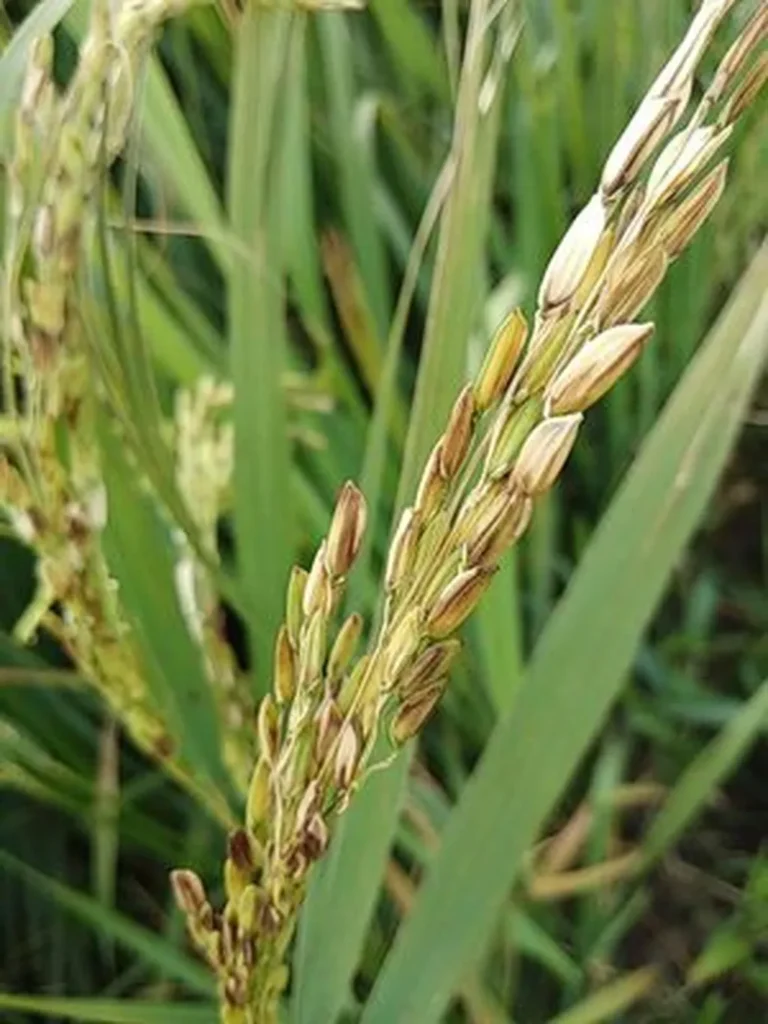
In the heart of China’s rice paddies, a silent battle rages between farmers and a stealthy pathogen, Burkholderia gladioli, the culprit behind bacterial panicle blight. This disease, a severe threat to global rice yields and grain quality, has long puzzled scientists and farmers alike. However, a recent study published in *Applied and Environmental Microbiology* has shed new light on the pathogen’s virulence, offering hope for more targeted and sustainable disease management strategies.
The research, led by Rui Cheng from the College of Agriculture and Biotechnology at Zhejiang University, has uncovered the intricate mechanisms behind the natural variation in B. gladioli’s pathogenicity. By isolating and comparing strains from two rice fields with differing disease severities, Cheng and his team discovered significant differences in phenotype and pathogenicity, despite the strains belonging to the same species.
“Initially, we were surprised to find such distinct differences in pathogenicity among strains of the same species,” Cheng said. “This prompted us to delve deeper into the genetic and transcriptional variations that might be driving these differences.”
The team’s comparative genomic and transcriptomic analyses revealed a complex interplay of genetic variations and transcriptional regulations. They identified 79 single-nucleotide polymorphisms (SNPs), 12 insertions/deletions (INDELs), and 3 structural variations (SVs) across 27 mutated genes, which could potentially affect protein function and stability. Moreover, they found significant downregulation of genes in multiple virulence-associated pathways, including two-component systems, bacterial chemotaxis, quorum sensing, and flagellar assembly.
These findings not only expand our understanding of how phytopathogens’ virulence differentiates under conditions of natural variation but also provide potential molecular targets for the development of novel bactericides. The identification of low-virulence strains and their associated gene variations offers both theoretical and practical foundations for ecological disease management and biocontrol of rice bacterial diseases.
The commercial implications of this research are substantial. By understanding the genetic basis of virulence, farmers and agritech companies can develop more precise and effective disease control strategies. This could lead to the creation of new bactericides that target specific virulence pathways, reducing the need for broad-spectrum antibiotics that can harm beneficial microbes and contribute to antibiotic resistance.
Furthermore, the identification of low-virulence strains opens up possibilities for biological control methods. These strains could potentially be used to outcompete or inhibit the growth of more virulent strains, providing a sustainable and eco-friendly approach to disease management.
As we look to the future, this research underscores the importance of integrating multi-omics analyses into agricultural research. By combining genomic, transcriptomic, and other omics data, scientists can gain a more holistic understanding of plant-pathogen interactions, paving the way for more innovative and sustainable solutions to global food security challenges.
In the words of Cheng, “Our study is just the beginning. The more we understand about the genetic and molecular mechanisms driving plant diseases, the better equipped we’ll be to develop targeted and sustainable solutions for the agriculture sector.”