
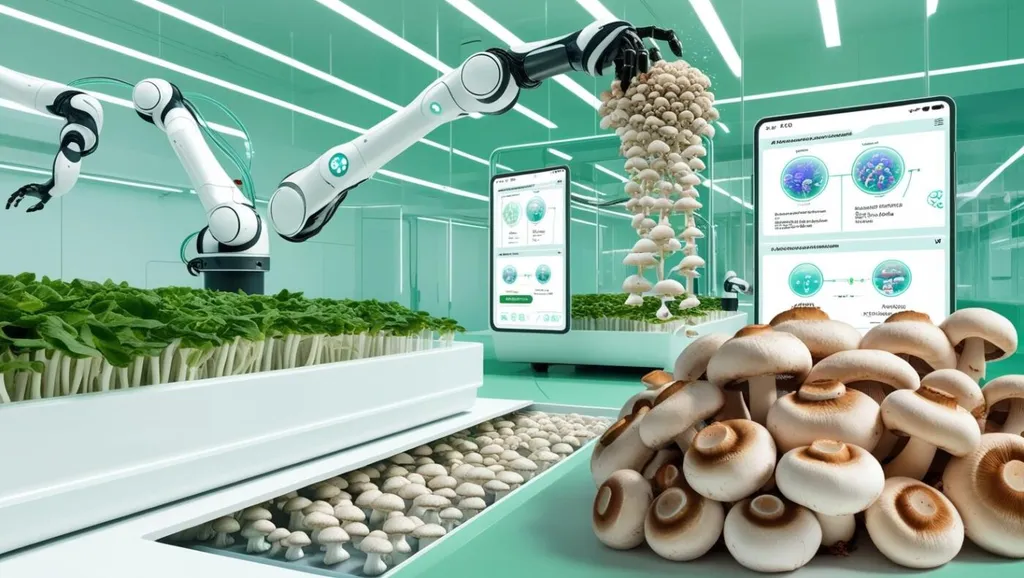
In the ever-evolving world of agriculture, a silent revolution is taking place in mushroom cultivation, blending cutting-edge technology with sustainable practices. A recent study published in *Circular Agricultural Systems* sheds light on how systems biology and synthetic biology are transforming mushroom farming, promising to boost production, enhance food security, and even contribute to healthcare. The research, led by Shilpa Malakar from the Department of Microbiology at Kalinga University in Raipur, India, explores the intersection of biotechnology, IoT, and ethical considerations in mushroom cultivation.
Mushroom farming has long been a staple of traditional agriculture, but modern techniques are pushing the boundaries of what’s possible. “The integration of nanotechnology, systems biology, and synthetic biology into mushroom cultivation is not just about increasing yields; it’s about creating a more sustainable and efficient agricultural system,” Malakar explains. These technologies enable waste transformation into valuable resources, aligning with eco-friendly practices and ensuring food security.
One of the most significant advancements highlighted in the study is the use of CRISPR-edited mushroom strains. These genetically modified strains reduce substrate colonization time by 30%, a game-changer for commercial mushroom production. Additionally, IoT systems provide digital climate control, optimizing growing conditions and further enhancing productivity. “The combination of CRISPR and IoT systems is revolutionizing precision farming, making it more sustainable and environmentally friendly,” Malakar notes.
However, the path to widespread adoption isn’t without challenges. Scalability issues and regulatory hurdles, such as REACH regulations, pose significant barriers to the commercialization of mushroom-derived nanoparticles. Ethical concerns, including data ownership disputes and the stigma surrounding genetically modified organisms (GMOs), also need to be addressed. “Public awareness campaigns and government-led high-tech mushroom schemes are crucial to bridging the adoption gap,” Malakar emphasizes.
The study also underscores the potential of mushroom-derived nanoparticles, which exhibit strong antimicrobial properties. Despite their promise, these nanoparticles face delays in commercialization due to regulatory and ethical complexities. The integration of artificial intelligence with CRISPR and IoT systems could help detect existing weaknesses, paving the way for sustainable precision farming and eco-friendly nanoparticle synthesis.
Looking ahead, the research calls for a focus on ethical standards, cost-friendly IoT technology, and metabolic information analyses to maximize the potential of fungi in sustainable agriculture and healthcare. “Future research needs to address these areas to fully unlock the benefits of mushroom biotechnology,” Malakar concludes.
As the agriculture sector continues to evolve, the insights from this study offer a glimpse into a future where technology and sustainability go hand in hand. The commercial impacts of these advancements could be profound, reshaping the way we cultivate mushrooms and harness their nutritional and economic value. With continued innovation and collaboration, the potential of mushroom biotechnology is limitless, promising a healthier, more sustainable future for all.