
In the rolling green landscapes of the Czech Republic, a quiet revolution is underway, one that’s reshaping the way dairy farmers tend to their herds. At the heart of this transformation is Agrosoft, a small but innovative company that’s harnessing the power of artificial intelligence (AI) to redefine dairy farming. Their story, recently detailed in a study published in ‘Ekonomika Poljoprivrede (1979)’, offers a glimpse into the future of agriculture, where technology and tradition intersect to create more sustainable, efficient, and humane farming practices.
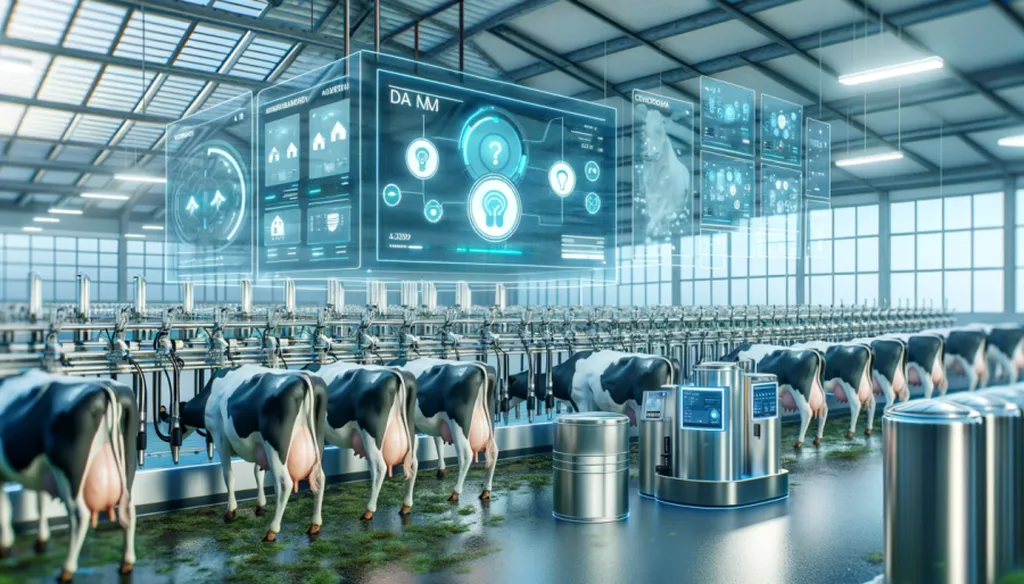
Agrosoft’s journey into AI-driven dairy farming is not just about adopting new tools; it’s about reimagining the entire farming process. The company has integrated AI-based management systems that automate milking, monitor cattle health through thermal imaging, and control barn environments using Internet of Things (IoT) devices. These technologies are not merely gadgets; they are tools that promise to enhance operational efficiency, animal welfare, and environmental sustainability.
The impact of these technologies is profound. “AI enables earlier detection of health issues, more efficient feeding, and barn-climate control,” says Lucie Sara Zavodna, lead author of the study and a researcher at the College of Polytechnics Jihlava. This early detection can mean the difference between life and death for an animal, and it can significantly reduce the need for veterinary interventions, lowering costs for farmers.
The commercial implications of this research are substantial. For the agriculture sector, which has long been grappling with labor shortages and rising costs, AI offers a beacon of hope. By automating routine tasks, AI frees up farmers to focus on more strategic aspects of their operations. This shift can lead to improved herd welfare and lower operating costs, making dairy farming more profitable and sustainable.
However, the path to AI adoption is not without its challenges. The study highlights the need for staff training and gradual workflow adaptation. As Zavodna notes, “The key to successful implementation lies in ensuring sufficient technological readiness and human-centered change management.” This means that while the technology is crucial, the human factor is equally important. Farmers and their staff need to be equipped with the skills and knowledge to use these tools effectively.
The research also underscases the importance of a gradual, thoughtful approach to technology adoption. It’s not just about implementing new tools; it’s about integrating them into existing workflows in a way that enhances rather than disrupts operations. This requires a deep understanding of both the technology and the farming process, as well as a willingness to adapt and evolve.
Looking ahead, the findings from Agrosoft’s case study could shape future developments in the field. As more farms adopt AI and smart technologies, we can expect to see a shift towards more data-driven, precision farming practices. This could lead to improved resource management, enhanced animal welfare, and more sustainable agricultural practices.
In the end, the story of Agrosoft is a testament to the power of innovation and adaptation. It shows that even in an age of rapid technological change, the principles of good farming remain the same: a commitment to animal welfare, a focus on efficiency, and a dedication to sustainability. As the agriculture sector continues to evolve, these principles will guide the way, ensuring that technology serves not just as a tool, but as a force for good.