
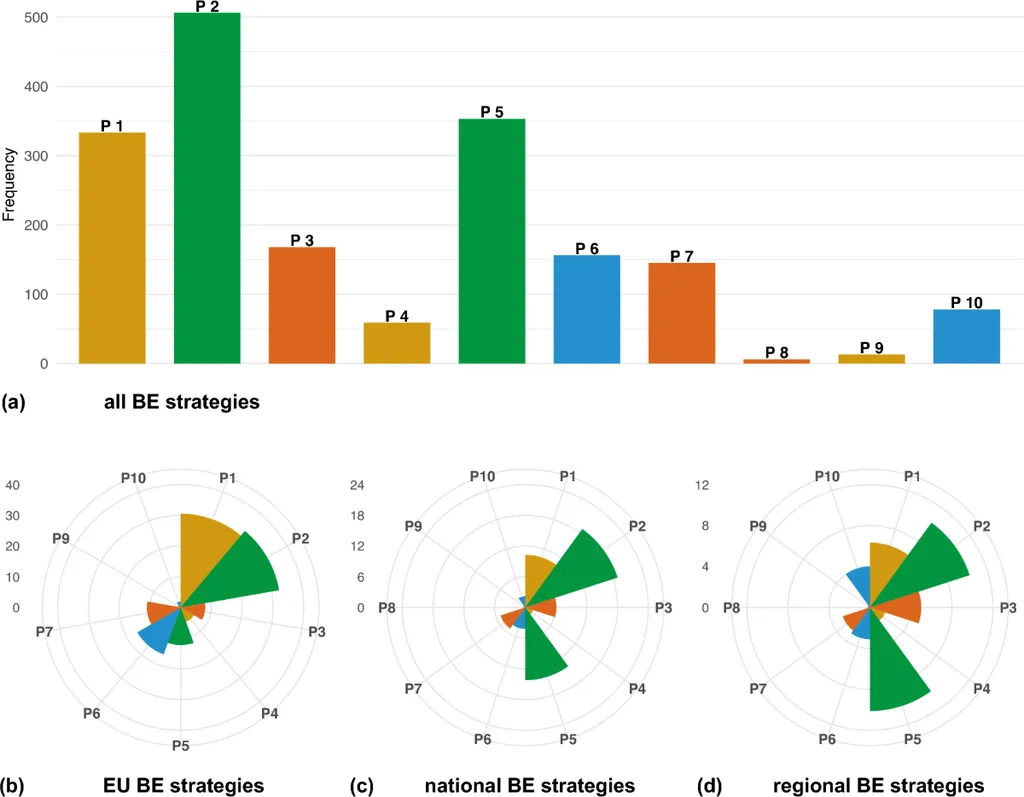
In the heart of Europe, a study led by Yelizaveta Chernysh at the Czech University of Life Sciences Prague is making waves in the agricultural sector, offering a roadmap to a more sustainable future through the lens of the bioeconomy. Published in the journal Agricultural Economics (AGRICECON), this research delves into the applied aspects of implementing a closed-circle bioeconomy, focusing on bioenergy and waste management in agriculture.
The bioeconomy, a transformative shift based on biological processes and minimal energy use, is gaining traction as a solution to global challenges. Chernysh’s study highlights the potential of this approach, particularly in agriculture, which faces ecosystem degradation, water scarcity, and poverty. “The bioeconomy isn’t just a buzzword,” Chernysh asserts. “It’s a practical pathway to sustainable development, offering tangible benefits for farmers and the environment alike.”
The research presents a conditional roadmap for bioeconomy implementation, emphasizing bioenergy and food security. This roadmap is not just a theoretical construct; it’s a practical guide for farmers and policymakers to navigate the transition towards a bio-based economy. The study underscores the potential of biotechnology in agriculture, including soil conservation, cost reduction, job creation, and improved food quality.
The commercial impacts of this research are substantial. By integrating resources into ecosystems and minimizing waste, farmers can reduce costs and increase efficiency. Moreover, the bioeconomy offers new revenue streams, such as the production of bioenergy and bioproducts. “This isn’t just about sustainability,” Chernysh explains. “It’s about creating new opportunities for farmers and rural communities.”
The study also highlights the need for regional adaptation and innovation. The bioeconomy is not a one-size-fits-all solution, and the research emphasizes the importance of tailoring approaches to local contexts. This regional focus is crucial for the successful implementation of the bioeconomy, ensuring that it meets the specific needs and challenges of different agricultural sectors.
Looking ahead, this research could shape future developments in the field by providing a clear, practical roadmap for the bioeconomy. It offers a blueprint for farmers, policymakers, and researchers to work together towards a more sustainable and profitable agricultural sector. As Chernysh notes, “The bioeconomy is not just a future possibility; it’s a present reality. And with the right strategies, it can be a game-changer for agriculture.”
In the quest for sustainable development, the bioeconomy offers a promising pathway. Chernysh’s research provides valuable insights into this transition, highlighting the potential benefits and the need for regional adaptation. As the agricultural sector grapples with global challenges, the bioeconomy could be the key to a more sustainable and profitable future.